











wealthtrend
  • Home
  • Top News
  • Global

    The Global Interest Rate Turning Point: How Central Banks Are Changing Their Policies

    The New Shape of Global Trade and Finance: How Supply Chains and Currencies Are Moving

    The Rise of Digital Money:

    Finance in a Time of Geopolitical Tension:

    The New Shape of Work: How Technology Is Changing U.S. Jobs

    The New Forces Driving Global Markets:Technology, Demographics, and the Rise of Emerging Economies

    Global Payments at an Inflection Point: How Infrastructure, Regulation, and Geopolitics Are Rewriting the Future of Money

  • Asia-Pacific
    Japan’s Slow but Steady Recovery: How an Aging Nation Is Searching for New Growth

    Japan and South Korea: Comparative Economic Analysis and Future Prospects

    Japan’s Slow but Steady Recovery: How an Aging Nation Is Searching for New Growth

    South Korea’s Economy in Transition: Challenges, Opportunities, and the Path Ahead

    Japan’s Slow but Steady Recovery: How an Aging Nation Is Searching for New Growth

    South Korea’s Economic Transformation: From Manufacturing to Technology and Services

    Japan’s Slow but Steady Recovery: How an Aging Nation Is Searching for New Growth

    Japan’s Slow but Steady Recovery: How an Aging Nation Is Searching for New Growth

    Japan’s Slow but Steady Recovery: How an Aging Nation Is Searching for New Growth

    The Rise of Asia as the Next Global Financial Center

  • Europe

    The Social Foundations of Economic Stability: How France and Germany Are Managing Inequality, Welfare, and the Future of Work

    The Energy Transition Challenge: How France and Germany Are Rebuilding Their Economic Power Through Green Transformation

    France and Germany in a Shifting Global Economy: How Both Countries Are Rebuilding Their Competitiveness

    Germany’s Economy at a Turning Point: Slow Growth, Industrial Pressure, and the Search for a New Future

    France’s Economy in a Time of Slow Growth and Social Pressure

    The New Monetary Landscape of Europe: How the Eurozone Is Redefining Its Financial Future

  • viewpoint
  • America
  • Europe and America
wealthtrend
  • Home
  • Top News
  • Global

    The Global Interest Rate Turning Point: How Central Banks Are Changing Their Policies

    The New Shape of Global Trade and Finance: How Supply Chains and Currencies Are Moving

    The Rise of Digital Money:

    Finance in a Time of Geopolitical Tension:

    The New Shape of Work: How Technology Is Changing U.S. Jobs

    The New Forces Driving Global Markets:Technology, Demographics, and the Rise of Emerging Economies

    Global Payments at an Inflection Point: How Infrastructure, Regulation, and Geopolitics Are Rewriting the Future of Money

  • Asia-Pacific
    Japan’s Slow but Steady Recovery: How an Aging Nation Is Searching for New Growth

    Japan and South Korea: Comparative Economic Analysis and Future Prospects

    Japan’s Slow but Steady Recovery: How an Aging Nation Is Searching for New Growth

    South Korea’s Economy in Transition: Challenges, Opportunities, and the Path Ahead

    Japan’s Slow but Steady Recovery: How an Aging Nation Is Searching for New Growth

    South Korea’s Economic Transformation: From Manufacturing to Technology and Services

    Japan’s Slow but Steady Recovery: How an Aging Nation Is Searching for New Growth

    Japan’s Slow but Steady Recovery: How an Aging Nation Is Searching for New Growth

    Japan’s Slow but Steady Recovery: How an Aging Nation Is Searching for New Growth

    The Rise of Asia as the Next Global Financial Center

  • Europe

    The Social Foundations of Economic Stability: How France and Germany Are Managing Inequality, Welfare, and the Future of Work

    The Energy Transition Challenge: How France and Germany Are Rebuilding Their Economic Power Through Green Transformation

    France and Germany in a Shifting Global Economy: How Both Countries Are Rebuilding Their Competitiveness

    Germany’s Economy at a Turning Point: Slow Growth, Industrial Pressure, and the Search for a New Future

    France’s Economy in a Time of Slow Growth and Social Pressure

    The New Monetary Landscape of Europe: How the Eurozone Is Redefining Its Financial Future

  • viewpoint
  • America
  • Europe and America
wealthtrend
Home Europe

ECB Signals End of Quantitative Easing: Is the Safe-Haven Window for Risk Assets Closing?

August 1, 2025
in Europe, Financial express, Futures information
ECB Signals End of Quantitative Easing: Is the Safe-Haven Window for Risk Assets Closing?

Introduction

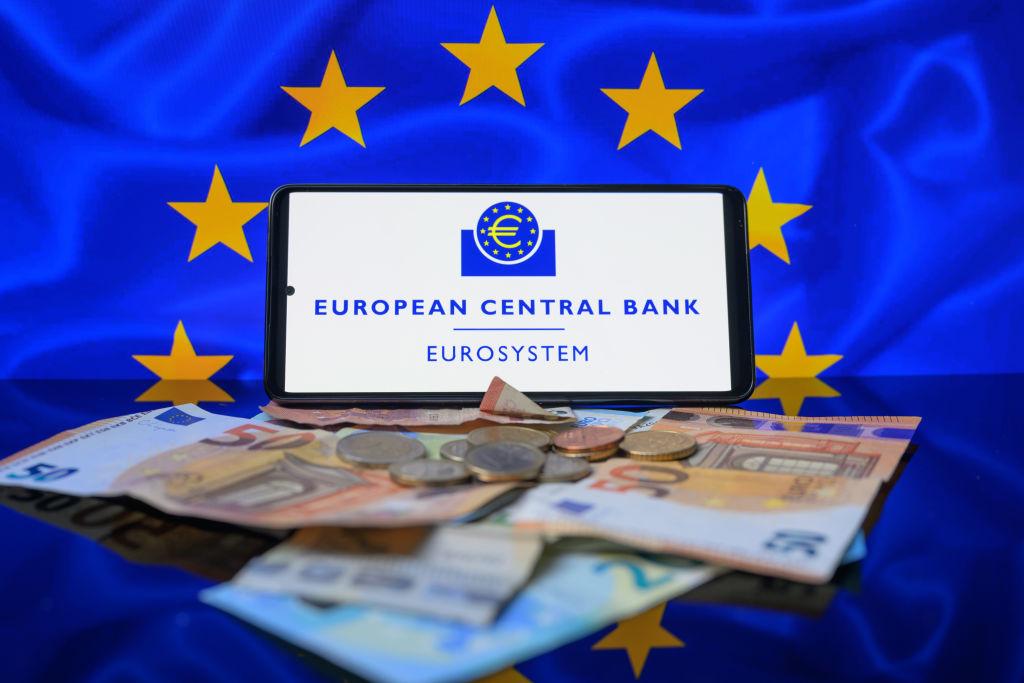
The European Central Bank (ECB) has recently delivered its clearest signal yet: the era of quantitative easing (QE) in the eurozone is drawing to a close. After more than a decade of extraordinary monetary support, the ECB is preparing to shift decisively away from asset purchases, citing persistent inflationary pressures, rising fiscal risks, and the need to normalize its balance sheet. This policy pivot has profound implications—particularly for the performance of risk assets that have long benefited from abundant liquidity.

For investors across equities, corporate credit, real estate, and emerging markets, the looming question is: with the ECB withdrawing its support, is the protective cushion beneath risk assets finally gone? And if so, how should portfolios adapt to this new reality?


I. The End of QE: What the ECB is Signaling

1. From Expansion to Balance Sheet Reduction

Since 2015, the ECB has used asset purchase programs (APP and PEPP) to suppress yields and stimulate credit across the eurozone. But in recent statements, ECB officials have made clear:

  • New net asset purchases have already stopped.
  • Maturing bonds from past programs will no longer be fully reinvested.
  • A gradual process of quantitative tightening (QT) is now underway, with plans to shrink the ECB’s €5+ trillion balance sheet.

2. Inflation Still Above Target

Despite the eurozone’s economic slowdown, core inflation remains sticky—especially in services and wage-heavy sectors. This has reduced the political and economic room for further monetary support. The ECB now emphasizes price stability over growth stimulus, suggesting limited appetite to return to QE in the absence of a major crisis.

3. Policy Normalization Is Here to Stay

ECB President Christine Lagarde has explicitly stated that policymakers want to “exit from unconventional policy” in a durable way. This means no more “QE reflex” when volatility rises—a significant psychological shift for markets long accustomed to central bank backstops.


II. How QE Shaped the Risk Asset Landscape

For over a decade, QE created a favorable backdrop for risk-taking by:

  • Compressing sovereign and corporate bond yields, forcing investors into higher-risk instruments.
  • Fueling equity market multiples, especially in growth and momentum stocks.
  • Supporting real estate prices through low funding costs and abundant liquidity.
  • Weakening the euro, thereby boosting export earnings and multinational valuations.

Now, with that tailwind fading, the relative safety and valuation appeal of these assets is being reassessed.


III. Where the Impact Will Hit First

1. Corporate Credit: Spread Repricing Ahead

  • Investment-grade bonds, particularly those reliant on ECB buying, are likely to see spread widening as central bank demand disappears.
  • High-yield bonds face dual pressures: higher refinancing costs and rising default risks in a sluggish economy.
  • ESG-linked debt, which surged under green-supportive ECB mandates, may face recalibrated risk premiums if fiscal support is also reduced.

Investors should expect less forgiving credit conditions and reprice accordingly.

2. Equities: From Liquidity to Earnings

Without QE support, equity valuations will depend more heavily on earnings quality and profitability, not liquidity flows. Sectors previously inflated by easy money—like tech, renewable infrastructure, and speculative biotech—may face sharper corrections.

  • Dividend-paying, cash-rich firms may outperform in a higher-rate, lower-liquidity environment.
  • Financials, such as banks and insurers, may benefit from wider margins if rates stay elevated—though this is offset by credit cycle risks.
  • Exporters could be pressured by a stronger euro and weak global demand, now that monetary depreciation is no longer the norm.

3. Real Estate: A Changing Yield Equation

ECB bond purchases helped compress yields across the real asset space, especially commercial property and infrastructure assets with bond-like return profiles. That anchor is now gone.

  • Cap rates are beginning to adjust upward, especially in office and retail sectors.
  • Green-certified buildings and logistics centers with strong fundamentals may still attract capital, but at more realistic valuations.
  • Residential housing, especially in over-leveraged metro markets, could see increased correction risks as mortgage costs normalize.

IV. The Return of Market Discipline

With QE gone, markets are rediscovering risk in pricing:

  • Volatility is structurally higher, with central banks less willing to intervene.
  • Risk premia are rising across asset classes—both in developed and emerging markets.
  • Liquidity is more valuable; investors are demanding higher compensation for holding long-duration or illiquid positions.

This is a return to a more “normal” market structure—though for a generation of investors raised on QE, it may feel like foreign territory.


V. Safe-Haven Window: Is It Closed?

1. Defensive Assets May Not Be Safe

Traditionally “safe” risk assets—like investment-grade credit, low-volatility equities, or dividend payers—may not offer the same cushion without ECB buying. In fact, they could suffer valuation compression if yields rise across the board.

2. Duration Risk Is Back

With no central bank suppressing long-end yields, duration risk is re-emerging as a key portfolio concern. Assets with long cash flow horizons—like growth stocks and real estate—are more exposed.

3. Currency Risk Returns

Without QE-induced euro weakening, currency effects may surprise. A stronger euro could pressure exporters, multinational earnings, and foreign returns on euro-denominated assets.

VI. How Investors Should Respond

1. Rebalance Toward Quality and Fundamentals

With liquidity support fading, investors should prioritize:

  • Companies with strong balance sheets and pricing power
  • Assets with real earnings visibility
  • Regions and sectors where policy remains accommodative, such as parts of Asia or select emerging markets

2. Watch Fiscal Policy Closely

In the absence of QE, government spending and debt issuance may now face more rigorous market scrutiny. Countries with high debt-to-GDP ratios, weak growth, and political instability may see bond yields spike.

Peripheral eurozone countries—like Italy, Spain, and Greece—could be exposed if fiscal risk returns and ECB is no longer a backstop.

3. Diversify Across Real Assets

Real assets that can reprice with inflation—such as infrastructure, energy, and agriculture—remain appealing, but must be chosen with care. Avoid overleveraged or policy-dependent segments.

4. Embrace Tactical Flexibility

Without a central bank “put,” market cycles may become sharper and faster. Investors will need:

  • Greater use of hedging and dynamic asset allocation
  • Readiness to hold cash or short-duration instruments
  • Active monitoring of macro signals, not just central bank rhetoric

Conclusion

The ECB’s signal to end quantitative easing marks the closing of a decade-long era of extraordinary monetary support. For risk assets, this doesn’t mean an imminent crash—but it does end the automatic safety net investors have come to rely on.

As liquidity tightens, markets will reward fundamentals over flows, discipline over leverage, and selectivity over beta. The safe-haven window for many risk assets isn’t shut completely—but it is now smaller, more selective, and less forgiving.

In this new environment, the winners will be those who adapt early, stay nimble, and invest with precision—not hope.

Tags: economyEuropeEurope and AmericaEuropean Central BankfinanceFinance and economicsglobal
ShareTweetShare

Related Posts

Europe

The Social Foundations of Economic Stability: How France and Germany Are Managing Inequality, Welfare, and the Future of Work

December 2, 2025
Europe

The Energy Transition Challenge: How France and Germany Are Rebuilding Their Economic Power Through Green Transformation

December 2, 2025
Europe

France and Germany in a Shifting Global Economy: How Both Countries Are Rebuilding Their Competitiveness

December 2, 2025
Europe

Germany’s Economy at a Turning Point: Slow Growth, Industrial Pressure, and the Search for a New Future

December 2, 2025
Europe

France’s Economy in a Time of Slow Growth and Social Pressure

December 2, 2025
Europe

The New Monetary Landscape of Europe: How the Eurozone Is Redefining Its Financial Future

November 26, 2025
Load More
Leave Comment
  • Bitcoin on a rollercoaster ride The whole network more than 110,000 people exploded warehouse 2.9 billion yuan evaporation in 24 hours! What’s going on?

    Bitcoin on a rollercoaster ride The whole network more than 110,000 people exploded warehouse 2.9 billion yuan evaporation in 24 hours! What’s going on?

    0 shares
    Share 0 Tweet 0
  • There are always unconvinced want to try! The size of Nvidia’s short position is now comparable to Apple and Tesla combined

    0 shares
    Share 0 Tweet 0
  • The probability is about 75%! Will the G7 fall?

    0 shares
    Share 0 Tweet 0
  • A number of data point to the Japanese government intervention in the currency market after the “5 trillion” still depends on the United States

    0 shares
    Share 0 Tweet 0
  • How far can Tech stocks go to split on Fed expectations?

    0 shares
    Share 0 Tweet 0

Hot

The New Inflation Puzzle: Why Europe and the United States Are Struggling With Different Price Pressures

The New Economic Landscape of Europe and the United States: How 2025 is Reshaping Growth Models

December 3, 2025
The New Inflation Puzzle: Why Europe and the United States Are Struggling With Different Price Pressures

Transatlantic Trade Shifts: How Europe and the United States Are Redefining Economic Partnerships in 2025

December 3, 2025
The New Inflation Puzzle: Why Europe and the United States Are Struggling With Different Price Pressures

The Energy Transition Divide: How Europe and the United States Are Taking Different Paths Toward a Green Economy

December 3, 2025
The New Inflation Puzzle: Why Europe and the United States Are Struggling With Different Price Pressures

The New Workforce Challenge: How Europe and the United States Are Struggling With Talent Shortages and Productivity Slowdowns

December 3, 2025
The New Inflation Puzzle: Why Europe and the United States Are Struggling With Different Price Pressures

The New Inflation Puzzle: Why Europe and the United States Are Struggling With Different Price Pressures

December 3, 2025

The Social Foundations of Economic Stability: How France and Germany Are Managing Inequality, Welfare, and the Future of Work

December 2, 2025

The Energy Transition Challenge: How France and Germany Are Rebuilding Their Economic Power Through Green Transformation

December 2, 2025

France and Germany in a Shifting Global Economy: How Both Countries Are Rebuilding Their Competitiveness

December 2, 2025

Germany’s Economy at a Turning Point: Slow Growth, Industrial Pressure, and the Search for a New Future

December 2, 2025

France’s Economy in a Time of Slow Growth and Social Pressure

December 2, 2025
The New Inflation Puzzle: Why Europe and the United States Are Struggling With Different Price Pressures
Europe and America

The New Economic Landscape of Europe and the United States: How 2025 is Reshaping Growth Models

December 3, 2025
The New Inflation Puzzle: Why Europe and the United States Are Struggling With Different Price Pressures
Europe and America

Transatlantic Trade Shifts: How Europe and the United States Are Redefining Economic Partnerships in 2025

December 3, 2025
The New Inflation Puzzle: Why Europe and the United States Are Struggling With Different Price Pressures
Europe and America

The Energy Transition Divide: How Europe and the United States Are Taking Different Paths Toward a Green Economy

December 3, 2025
The New Inflation Puzzle: Why Europe and the United States Are Struggling With Different Price Pressures
Europe and America

The New Workforce Challenge: How Europe and the United States Are Struggling With Talent Shortages and Productivity Slowdowns

December 3, 2025
wealthtrend

WealthTrend, as the leading financial information service platform in the industry, provides comprehensive, timely and accurate financial information services for investors and financial practitioners by virtue of its deep industry background, clear service purpose and unique characteristics.

Copyright © 2025 Contact: [email protected]

No Result
View All Result
  • Home
  • Top News
  • Global
  • Asia-Pacific
  • Europe
  • viewpoint
  • America
  • Europe and America

Copyright © 2025 Contact: [email protected]

Welcome Back!

Login to your account below

Forgotten Password?

Retrieve your password

Please enter your username or email address to reset your password.

Log In