














wealthtrend
  • Home
  • Top News
  • Global

    The Global Interest Rate Turning Point: How Central Banks Are Changing Their Policies

    The New Shape of Global Trade and Finance: How Supply Chains and Currencies Are Moving

    The Rise of Digital Money:

    Finance in a Time of Geopolitical Tension:

    The New Shape of Work: How Technology Is Changing U.S. Jobs

    The New Forces Driving Global Markets:Technology, Demographics, and the Rise of Emerging Economies

    Global Payments at an Inflection Point: How Infrastructure, Regulation, and Geopolitics Are Rewriting the Future of Money

  • Asia-Pacific
    Japan’s Slow but Steady Recovery: How an Aging Nation Is Searching for New Growth

    Japan and South Korea: Comparative Economic Analysis and Future Prospects

    Japan’s Slow but Steady Recovery: How an Aging Nation Is Searching for New Growth

    South Korea’s Economy in Transition: Challenges, Opportunities, and the Path Ahead

    Japan’s Slow but Steady Recovery: How an Aging Nation Is Searching for New Growth

    South Korea’s Economic Transformation: From Manufacturing to Technology and Services

    Japan’s Slow but Steady Recovery: How an Aging Nation Is Searching for New Growth

    Japan’s Slow but Steady Recovery: How an Aging Nation Is Searching for New Growth

    Japan’s Slow but Steady Recovery: How an Aging Nation Is Searching for New Growth

    The Rise of Asia as the Next Global Financial Center

  • Europe

    The Social Foundations of Economic Stability: How France and Germany Are Managing Inequality, Welfare, and the Future of Work

    The Energy Transition Challenge: How France and Germany Are Rebuilding Their Economic Power Through Green Transformation

    France and Germany in a Shifting Global Economy: How Both Countries Are Rebuilding Their Competitiveness

    Germany’s Economy at a Turning Point: Slow Growth, Industrial Pressure, and the Search for a New Future

    France’s Economy in a Time of Slow Growth and Social Pressure

    The New Monetary Landscape of Europe: How the Eurozone Is Redefining Its Financial Future

  • viewpoint
  • America
  • Europe and America
wealthtrend
  • Home
  • Top News
  • Global

    The Global Interest Rate Turning Point: How Central Banks Are Changing Their Policies

    The New Shape of Global Trade and Finance: How Supply Chains and Currencies Are Moving

    The Rise of Digital Money:

    Finance in a Time of Geopolitical Tension:

    The New Shape of Work: How Technology Is Changing U.S. Jobs

    The New Forces Driving Global Markets:Technology, Demographics, and the Rise of Emerging Economies

    Global Payments at an Inflection Point: How Infrastructure, Regulation, and Geopolitics Are Rewriting the Future of Money

  • Asia-Pacific
    Japan’s Slow but Steady Recovery: How an Aging Nation Is Searching for New Growth

    Japan and South Korea: Comparative Economic Analysis and Future Prospects

    Japan’s Slow but Steady Recovery: How an Aging Nation Is Searching for New Growth

    South Korea’s Economy in Transition: Challenges, Opportunities, and the Path Ahead

    Japan’s Slow but Steady Recovery: How an Aging Nation Is Searching for New Growth

    South Korea’s Economic Transformation: From Manufacturing to Technology and Services

    Japan’s Slow but Steady Recovery: How an Aging Nation Is Searching for New Growth

    Japan’s Slow but Steady Recovery: How an Aging Nation Is Searching for New Growth

    Japan’s Slow but Steady Recovery: How an Aging Nation Is Searching for New Growth

    The Rise of Asia as the Next Global Financial Center

  • Europe

    The Social Foundations of Economic Stability: How France and Germany Are Managing Inequality, Welfare, and the Future of Work

    The Energy Transition Challenge: How France and Germany Are Rebuilding Their Economic Power Through Green Transformation

    France and Germany in a Shifting Global Economy: How Both Countries Are Rebuilding Their Competitiveness

    Germany’s Economy at a Turning Point: Slow Growth, Industrial Pressure, and the Search for a New Future

    France’s Economy in a Time of Slow Growth and Social Pressure

    The New Monetary Landscape of Europe: How the Eurozone Is Redefining Its Financial Future

  • viewpoint
  • America
  • Europe and America
wealthtrend
Home Europe

Post-Brexit Sterling Volatility: Which Overseas Market Investors Are Most Directly Affected?

August 2, 2025
in Europe, Financial express, Futures information
Post-Brexit Sterling Volatility: Which Overseas Market Investors Are Most Directly Affected?

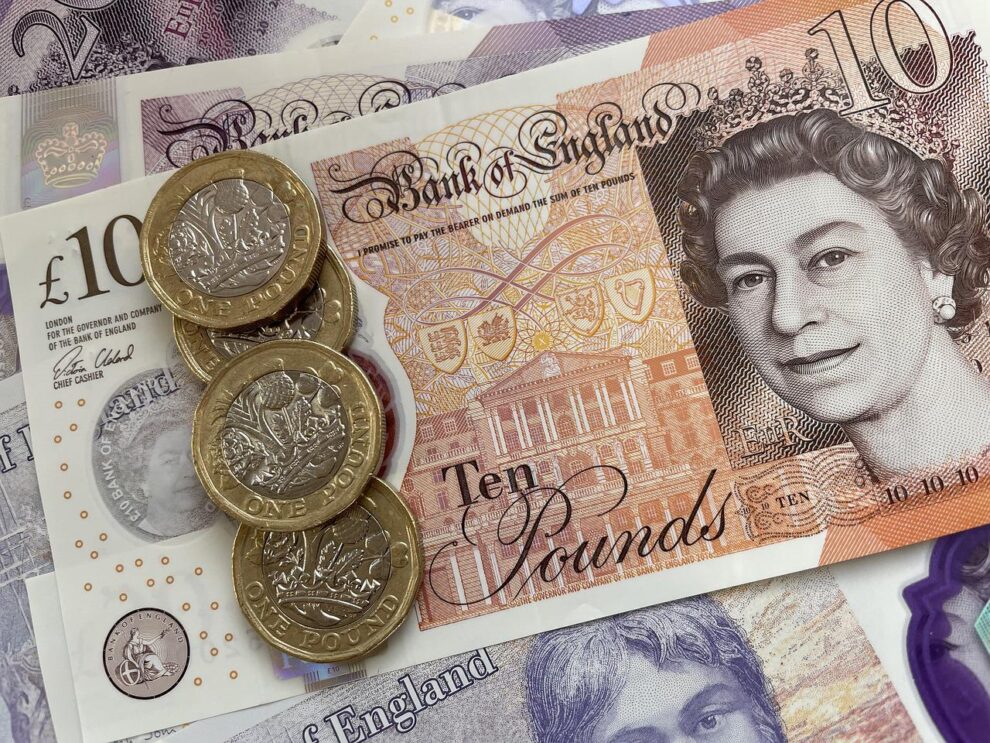
Since the United Kingdom formally left the European Union, the British pound (GBP) has undergone a structural transformation—not just in its political symbolism, but in its behavior as a global currency. Once considered a relatively stable and predictable major currency, sterling has become more volatile, reactive, and vulnerable to political and policy shocks. This change has not only impacted UK domestic markets, but also reverberated across the global financial landscape.

While much attention has focused on how UK investors and consumers are coping with sterling swings, less discussed—but equally important—is the significant impact on overseas investors who are directly exposed to the pound’s fluctuations. From institutional asset managers in Europe and the U.S. to sovereign wealth funds in Asia and exporters in emerging markets, the consequences of sterling volatility extend far beyond the UK’s borders.

So, which overseas market participants are most directly affected by the pound’s post-Brexit volatility, and how are they responding?


EU Investors in UK Assets: Caught in the Currency Crossfire

European investors have long been significant holders of British assets, given the UK’s deep capital markets, London’s status as a financial center, and historically close economic ties within Europe. Post-Brexit, however, many of these ties have been disrupted, and currency risk has become an unavoidable feature of investing in the UK.

Eurozone pension funds, insurance companies, and real estate firms that hold UK equities, gilts, or property must now contend with a pound that moves more erratically in response to local political shifts, Bank of England policy signals, and trade disruptions. For euro-based investors, even a 5–10% swing in sterling can dramatically alter the total return profile of an asset.

For example, a German asset manager who owns a London office building might see the local value of the property remain stable, but if the pound depreciates against the euro, their euro-denominated return declines. Similarly, eurozone investors in UK dividend-paying stocks find their income stream vulnerable to exchange rate losses—even if company fundamentals are sound.

In response, many EU investors have increased their use of currency hedging strategies, while others have reduced exposure to sterling assets altogether, reallocating toward domestic or pan-European alternatives. Currency volatility has also pushed up the return expectations and risk premiums required to justify new UK allocations.


US Institutional Investors: Balancing Opportunity and Currency Uncertainty

For American investors, the UK has traditionally represented a familiar, business-friendly, and legally aligned market—an attractive gateway to Europe and a useful counterbalance to eurozone exposure. Post-Brexit, however, the risk calculus has shifted.

Large U.S. institutions—including pension funds, endowments, and asset managers—continue to hold significant stakes in UK equities, corporate bonds, and infrastructure. But with GBP/USD now far more sensitive to rate differentials and geopolitical events, returns on British assets have become harder to forecast. The same GBP volatility that creates tactical opportunities for hedge funds creates hedging headaches for long-term investors.

For multinationals with operations in the UK, sterling swings add further complexity. U.S.-based companies that repatriate earnings from their British divisions must constantly reassess the value of their profits in dollar terms. In cases where expenses are in GBP but revenue is in USD (or vice versa), profit margins can suffer dramatically from adverse currency movements.

Despite the increased risk, many U.S. investors still view UK assets as attractively priced—particularly during periods of sterling weakness, which effectively “discounts” British companies and properties. Indeed, U.S. private equity firms have seized on moments of pound depreciation to acquire UK-based companies, often funding deals in USD to gain FX advantages.


Asian Sovereign Funds and Property Investors: Recalibrating London Exposure

Asian investors—especially from Singapore, Hong Kong, South Korea, and the Gulf states—have historically viewed London as a cornerstone of global real estate allocation. From trophy buildings in the City to high-end residential properties in Mayfair, billions have flowed into the UK’s real estate market.

Sterling’s post-Brexit volatility, however, has added a layer of risk and complexity to these long-horizon investments. Many Asian sovereign wealth funds, family offices, and pension institutions invest on multi-decade timelines. A sharp, sustained decline in GBP can materially erode returns over that time, particularly for investments that generate income in sterling (e.g., rental streams) but are measured against dollar or renminbi-based benchmarks.

In response, some investors have shifted toward UK assets with built-in inflation linkage, such as infrastructure or social housing projects that generate indexed cash flows. Others have diversified toward continental European property markets, which—while often less liquid—offer lower FX volatility. Still, for long-term capital allocators, London remains too globally significant to ignore; the strategy has shifted from unconditional enthusiasm to disciplined risk-pricing.


Emerging Market Exporters: Margin Pressure from FX Misalignment

Beyond financial markets, sterling volatility has had serious implications for emerging market (EM) exporters whose trade links with the UK remain strong. Nations like India, Bangladesh, Vietnam, Turkey, and Kenya depend heavily on UK demand for goods such as textiles, electronics, food, and tea. Many of these exports are invoiced in GBP, especially when UK retailers are the buyers.

When the pound weakens, the effective revenue for EM producers declines—especially if their raw materials or debts are priced in USD. The result is margin compression, delayed payments, or even contract renegotiation. For small and medium-sized exporters, the swings in GBP can determine profitability or survival.

In parallel, remittance flows from the UK to EM countries—particularly in South Asia and Africa—have become more volatile in value. For recipient families who convert GBP into rupees, naira, or shillings, a weaker pound means less purchasing power at home.

Governments and central banks in these countries increasingly track sterling as a strategic external variable, and businesses have begun shifting trade contracts into dollars or euros where possible to reduce exposure.

Global FX and Bond Markets: Trading Sterling as a Risk Proxy

In global currency and bond markets, sterling has become a key instrument for expressing macro views. Once seen as a predictable component of G10 FX portfolios, GBP is now actively traded for its volatility, its political sensitivity, and its role as a liquidity-rich alternative to more volatile emerging market currencies.

Macro hedge funds and algorithmic trading platforms often use GBP as a proxy for European political risk or to express views on global interest rate divergence. For example, when political risk rises in France or Italy but euro liquidity is thin, traders may short GBP instead, expecting similar market psychology to prevail.

Sterling is also heavily traded around Bank of England announcements, UK inflation prints, and labor market data. Its newfound volatility has led to higher intraday ranges and increased options volumes, making it a staple of macro and event-driven trading strategies.

For long-only bond investors, however, this increased volatility is less welcome. International holders of UK gilts face price swings not just from interest rate expectations, but also from currency movements. A rally in gilts can be undermined by GBP depreciation, resulting in weak or even negative returns when measured in foreign currency.


Capital Flows and Strategic Adjustments

The broader effect of sterling volatility is a shift in global capital allocation behavior. Some of the visible trends include:

  • FX-hedged investment vehicles gaining popularity among risk-averse foreign investors
  • Global asset managers building UK-specific currency risk models
  • Strategic asset allocation models raising the required risk premium on GBP assets
  • Multinationals re-evaluating whether to expand or contract their UK operations based on FX-linked cost-benefit analysis

In this context, the pound is no longer just a currency—it’s a risk factor. For many investors, it has become a central variable in assessing whether to allocate capital to the UK, how to structure that capital, and how to manage the downside.


Conclusion

The post-Brexit world has made the British pound more volatile, more political, and more consequential in global finance. While the UK continues to offer attractive investment opportunities across sectors—particularly in equities, real estate, and infrastructure—the embedded FX risk now plays a more dominant role in how foreign investors perceive and price these assets.

Those most directly affected include:

  • European institutions holding UK assets and facing EUR/GBP volatility
  • American investors and corporates with exposure to GBP-denominated income or assets
  • Asian sovereign and property investors recalibrating return models amid FX risk
  • Emerging market exporters and families experiencing income pressure from sterling moves
  • Global macro traders exploiting GBP volatility as part of broader portfolio strategies

For these groups, understanding and managing sterling volatility is no longer optional. It is a core element of cross-border financial strategy. As the UK economy evolves in a post-Brexit world, so too must the tools and frameworks used by international investors to navigate its currency—and its risks.

Tags: economyEuropeEurope and AmericafinanceFinance and economicsglobalInvestmentPound sterling
ShareTweetShare

Related Posts

Europe

The Social Foundations of Economic Stability: How France and Germany Are Managing Inequality, Welfare, and the Future of Work

December 2, 2025
Europe

The Energy Transition Challenge: How France and Germany Are Rebuilding Their Economic Power Through Green Transformation

December 2, 2025
Europe

France and Germany in a Shifting Global Economy: How Both Countries Are Rebuilding Their Competitiveness

December 2, 2025
Europe

Germany’s Economy at a Turning Point: Slow Growth, Industrial Pressure, and the Search for a New Future

December 2, 2025
Europe

France’s Economy in a Time of Slow Growth and Social Pressure

December 2, 2025
Europe

The New Monetary Landscape of Europe: How the Eurozone Is Redefining Its Financial Future

November 26, 2025
Load More
Leave Comment
  • Bitcoin on a rollercoaster ride The whole network more than 110,000 people exploded warehouse 2.9 billion yuan evaporation in 24 hours! What’s going on?

    Bitcoin on a rollercoaster ride The whole network more than 110,000 people exploded warehouse 2.9 billion yuan evaporation in 24 hours! What’s going on?

    0 shares
    Share 0 Tweet 0
  • There are always unconvinced want to try! The size of Nvidia’s short position is now comparable to Apple and Tesla combined

    0 shares
    Share 0 Tweet 0
  • The probability is about 75%! Will the G7 fall?

    0 shares
    Share 0 Tweet 0
  • A number of data point to the Japanese government intervention in the currency market after the “5 trillion” still depends on the United States

    0 shares
    Share 0 Tweet 0
  • How far can Tech stocks go to split on Fed expectations?

    0 shares
    Share 0 Tweet 0

Hot

The New Inflation Puzzle: Why Europe and the United States Are Struggling With Different Price Pressures

The New Economic Landscape of Europe and the United States: How 2025 is Reshaping Growth Models

December 3, 2025
The New Inflation Puzzle: Why Europe and the United States Are Struggling With Different Price Pressures

Transatlantic Trade Shifts: How Europe and the United States Are Redefining Economic Partnerships in 2025

December 3, 2025
The New Inflation Puzzle: Why Europe and the United States Are Struggling With Different Price Pressures

The Energy Transition Divide: How Europe and the United States Are Taking Different Paths Toward a Green Economy

December 3, 2025
The New Inflation Puzzle: Why Europe and the United States Are Struggling With Different Price Pressures

The New Workforce Challenge: How Europe and the United States Are Struggling With Talent Shortages and Productivity Slowdowns

December 3, 2025
The New Inflation Puzzle: Why Europe and the United States Are Struggling With Different Price Pressures

The New Inflation Puzzle: Why Europe and the United States Are Struggling With Different Price Pressures

December 3, 2025

The Social Foundations of Economic Stability: How France and Germany Are Managing Inequality, Welfare, and the Future of Work

December 2, 2025

The Energy Transition Challenge: How France and Germany Are Rebuilding Their Economic Power Through Green Transformation

December 2, 2025

France and Germany in a Shifting Global Economy: How Both Countries Are Rebuilding Their Competitiveness

December 2, 2025

Germany’s Economy at a Turning Point: Slow Growth, Industrial Pressure, and the Search for a New Future

December 2, 2025

France’s Economy in a Time of Slow Growth and Social Pressure

December 2, 2025
The New Inflation Puzzle: Why Europe and the United States Are Struggling With Different Price Pressures
Europe and America

The New Economic Landscape of Europe and the United States: How 2025 is Reshaping Growth Models

December 3, 2025
The New Inflation Puzzle: Why Europe and the United States Are Struggling With Different Price Pressures
Europe and America

Transatlantic Trade Shifts: How Europe and the United States Are Redefining Economic Partnerships in 2025

December 3, 2025
The New Inflation Puzzle: Why Europe and the United States Are Struggling With Different Price Pressures
Europe and America

The Energy Transition Divide: How Europe and the United States Are Taking Different Paths Toward a Green Economy

December 3, 2025
The New Inflation Puzzle: Why Europe and the United States Are Struggling With Different Price Pressures
Europe and America

The New Workforce Challenge: How Europe and the United States Are Struggling With Talent Shortages and Productivity Slowdowns

December 3, 2025
wealthtrend

WealthTrend, as the leading financial information service platform in the industry, provides comprehensive, timely and accurate financial information services for investors and financial practitioners by virtue of its deep industry background, clear service purpose and unique characteristics.

Copyright © 2025 Contact: [email protected]

No Result
View All Result
  • Home
  • Top News
  • Global
  • Asia-Pacific
  • Europe
  • viewpoint
  • America
  • Europe and America

Copyright © 2025 Contact: [email protected]

Welcome Back!

Login to your account below

Forgotten Password?

Retrieve your password

Please enter your username or email address to reset your password.

Log In