










wealthtrend
  • Home
  • Top News
  • Global

    The Global Interest Rate Turning Point: How Central Banks Are Changing Their Policies

    The New Shape of Global Trade and Finance: How Supply Chains and Currencies Are Moving

    The Rise of Digital Money:

    Finance in a Time of Geopolitical Tension:

    The New Shape of Work: How Technology Is Changing U.S. Jobs

    The New Forces Driving Global Markets:Technology, Demographics, and the Rise of Emerging Economies

    Global Payments at an Inflection Point: How Infrastructure, Regulation, and Geopolitics Are Rewriting the Future of Money

  • Asia-Pacific
    Japan’s Slow but Steady Recovery: How an Aging Nation Is Searching for New Growth

    Japan and South Korea: Comparative Economic Analysis and Future Prospects

    Japan’s Slow but Steady Recovery: How an Aging Nation Is Searching for New Growth

    South Korea’s Economy in Transition: Challenges, Opportunities, and the Path Ahead

    Japan’s Slow but Steady Recovery: How an Aging Nation Is Searching for New Growth

    South Korea’s Economic Transformation: From Manufacturing to Technology and Services

    Japan’s Slow but Steady Recovery: How an Aging Nation Is Searching for New Growth

    Japan’s Slow but Steady Recovery: How an Aging Nation Is Searching for New Growth

    Japan’s Slow but Steady Recovery: How an Aging Nation Is Searching for New Growth

    The Rise of Asia as the Next Global Financial Center

  • Europe

    The Social Foundations of Economic Stability: How France and Germany Are Managing Inequality, Welfare, and the Future of Work

    The Energy Transition Challenge: How France and Germany Are Rebuilding Their Economic Power Through Green Transformation

    France and Germany in a Shifting Global Economy: How Both Countries Are Rebuilding Their Competitiveness

    Germany’s Economy at a Turning Point: Slow Growth, Industrial Pressure, and the Search for a New Future

    France’s Economy in a Time of Slow Growth and Social Pressure

    The New Monetary Landscape of Europe: How the Eurozone Is Redefining Its Financial Future

  • viewpoint
  • America
  • Europe and America
wealthtrend
  • Home
  • Top News
  • Global

    The Global Interest Rate Turning Point: How Central Banks Are Changing Their Policies

    The New Shape of Global Trade and Finance: How Supply Chains and Currencies Are Moving

    The Rise of Digital Money:

    Finance in a Time of Geopolitical Tension:

    The New Shape of Work: How Technology Is Changing U.S. Jobs

    The New Forces Driving Global Markets:Technology, Demographics, and the Rise of Emerging Economies

    Global Payments at an Inflection Point: How Infrastructure, Regulation, and Geopolitics Are Rewriting the Future of Money

  • Asia-Pacific
    Japan’s Slow but Steady Recovery: How an Aging Nation Is Searching for New Growth

    Japan and South Korea: Comparative Economic Analysis and Future Prospects

    Japan’s Slow but Steady Recovery: How an Aging Nation Is Searching for New Growth

    South Korea’s Economy in Transition: Challenges, Opportunities, and the Path Ahead

    Japan’s Slow but Steady Recovery: How an Aging Nation Is Searching for New Growth

    South Korea’s Economic Transformation: From Manufacturing to Technology and Services

    Japan’s Slow but Steady Recovery: How an Aging Nation Is Searching for New Growth

    Japan’s Slow but Steady Recovery: How an Aging Nation Is Searching for New Growth

    Japan’s Slow but Steady Recovery: How an Aging Nation Is Searching for New Growth

    The Rise of Asia as the Next Global Financial Center

  • Europe

    The Social Foundations of Economic Stability: How France and Germany Are Managing Inequality, Welfare, and the Future of Work

    The Energy Transition Challenge: How France and Germany Are Rebuilding Their Economic Power Through Green Transformation

    France and Germany in a Shifting Global Economy: How Both Countries Are Rebuilding Their Competitiveness

    Germany’s Economy at a Turning Point: Slow Growth, Industrial Pressure, and the Search for a New Future

    France’s Economy in a Time of Slow Growth and Social Pressure

    The New Monetary Landscape of Europe: How the Eurozone Is Redefining Its Financial Future

  • viewpoint
  • America
  • Europe and America
wealthtrend
Home viewpoint

The Asian Century in Flux: Financial Centers, Capital Flows, and Geopolitical Risk

November 11, 2025
in viewpoint
The Asian Century in Flux: Financial Centers, Capital Flows, and Geopolitical Risk

1. Introduction: Asia at the Crossroads

By 2025, Asia is no longer a peripheral player in global finance; it is a strategic epicenter.
Economic growth, technological innovation, and regional integration are shifting the balance of global capital.
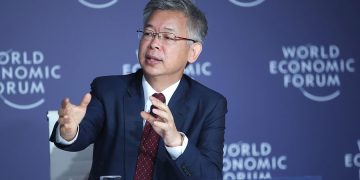
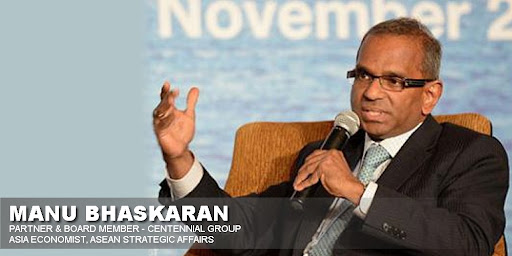
Yet, as Manu Bhaskaran, an authority on Asian geopolitics and economics, emphasizes, this rise is neither linear nor uniform.

The continent faces competing financial hubs, volatile capital flows, and geopolitical friction that threaten to reshape the region’s economic trajectory.
This essay explores the dynamics of Asian financial centers, investment flows, and risk management, drawing on Bhaskaran’s insights to understand the opportunities and challenges of the Asian Century.


2. Asia’s Financial Centers: Competition and Complementarity

Asia hosts multiple emerging and established financial centers, each with unique strengths:

  • Hong Kong: Remains a gateway for international capital, benefiting from legal infrastructure, offshore renminbi markets, and proximity to mainland China.
  • Singapore: Known for regulatory stability, wealth management, and fintech innovation, Singapore attracts both regional and global investors.
  • Shanghai and Shenzhen: China’s domestic financial hubs drive capital allocation, technology financing, and RMB internationalization.
  • Mumbai: India’s financial heart, focused on banking, insurance, and capital markets, increasingly integrates with global investment flows.

Bhaskaran emphasizes that competition among these centers is dynamic and contextual:

  • Regulatory environments influence cross-border flows.
  • Infrastructure quality, talent pools, and innovation ecosystems shape market efficiency.
  • Political and geopolitical risk can shift investor preference rapidly.

While competition is intense, Bhaskaran notes that complementarity is equally important: collaboration on payment systems, cross-listing, and financial technology enhances the resilience of regional markets.


3. Capital Flows and Market Integration

Capital movements in Asia are rapid, large, and complex:

  • Foreign Direct Investment (FDI): Continues to target infrastructure, technology, and energy sectors.
  • Portfolio investment: Short-term capital seeks yield across equities and debt, sensitive to interest rates and policy signals.
  • Reserve accumulation: Asian central banks maintain large holdings of foreign currency, hedging against volatility and currency risk.

Bhaskaran observes that financial integration is accelerating:

  • Regional trade agreements (RCEP, CPTPP) support investment harmonization.
  • Cross-border payment systems reduce settlement times and transaction costs.
  • Digital finance, including CBDCs, is creating seamless regional networks.

Yet, integration also creates interconnected vulnerabilities:
Capital volatility in one market can propagate rapidly, amplifying shocks across borders.
Bhaskaran stresses that risk management and policy coordination are crucial to sustain growth.


4. Geopolitical Risks: Navigating the Storm

Asia’s financial ascent is intertwined with geopolitical uncertainty:

  • U.S.–China competition: Trade restrictions, technology bans, and sanctions influence capital allocation.
  • Regional conflicts: Territorial disputes, military posturing, and political instability threaten market confidence.
  • Policy divergence: Different monetary, regulatory, and fiscal strategies create fragmentation in capital flows.

Bhaskaran emphasizes that geopolitics is not external to finance; it shapes investor behavior, valuation, and liquidity.
Markets are increasingly pricing in geopolitical risk, making political awareness essential for investors operating in the region.


5. Technological Innovation and Financial Transformation

Technology is reshaping Asian finance:

  • Fintech: Mobile payments, online lending, and digital banking expand financial inclusion and capital access.
  • Artificial Intelligence: AI-driven portfolio management, risk analytics, and trading optimize efficiency.
  • Blockchain and DeFi: Distributed ledgers reduce transaction costs and improve transparency, but also introduce novel systemic risks.

Bhaskaran argues that financial technology is a double-edged sword: while it democratizes access and enhances efficiency, it also increases the speed and complexity of systemic shocks.
Regulatory foresight and technological literacy are essential for sustainable financial growth.


6. Currency Dynamics and the RMB Challenge

The renminbi’s internationalization is central to Asia’s financial future:

  • Cross-border settlements in RMB are increasing, challenging the historical dominance of the U.S. dollar.
  • Regional trade agreements facilitate RMB use in commerce and finance.
  • Policy coordination between China and neighboring economies affects exchange rate stability.

Bhaskaran emphasizes the strategic dimension: currency influence is not only economic but geopolitical, affecting trade power, capital flows, and regional influence.
Asian markets must balance monetary sovereignty with the benefits of regional and global integration.


7. Policy Innovation and Financial Resilience

Bhaskaran stresses that policy agility distinguishes Asia’s leading financial centers:

  • Macroprudential tools: Controls on credit growth, leverage, and capital inflows/outflows mitigate volatility.
  • Crisis preparedness: Central banks maintain foreign exchange reserves and liquidity facilities.
  • Regulatory frameworks: Flexible, innovation-friendly policies attract investors while maintaining stability.

He notes that resilience is built through both regulation and strategic foresight.
Financial centers that anticipate shocks and coordinate across borders will attract sustainable capital, while reactive policies may exacerbate crises.


8. Emerging Risks: Debt, Climate, and Demographics

Despite growth, Asia faces persistent vulnerabilities:

  • Debt accumulation: Corporate and sovereign debt in China, India, and Southeast Asia is rising, increasing exposure to interest rate shocks.
  • Climate risk: Natural disasters and transition risks can affect asset values and infrastructure investments.
  • Demographics: Aging populations in East Asia challenge labor markets and long-term growth prospects.

Bhaskaran emphasizes that risk is multidimensional: markets must consider financial, environmental, and social factors simultaneously.
Integrated risk assessment is essential for sustaining the Asian Century.


9. The Future of Regional Cooperation

Asia’s financial future depends on cooperation among major economies:

  • Cross-border payment networks, capital market harmonization, and crisis-sharing mechanisms enhance resilience.
  • Multilateral institutions, both formal (ADB, IMF) and informal (regional forums), facilitate knowledge and risk sharing.
  • Policy dialogue is crucial to balance competition with stability, particularly in a fragmented geopolitical landscape.

Bhaskaran concludes that regional cohesion is not optional; it is the foundation for long-term financial influence and sustainable growth.


10. Conclusion: Navigating a Century in Flux

Manu Bhaskaran’s perspective underscores the complexity of Asia’s financial ascent:

  • Multiple financial centers compete and complement each other.
  • Capital flows are abundant but sensitive to policy and geopolitical shifts.
  • Technological innovation accelerates growth but amplifies risk.
  • Ethical and sustainable finance frameworks are increasingly necessary to ensure resilience.

Asia’s financial rise is dynamic, promising, and fraught with challenges.
The next decade will test the region’s ability to integrate markets, manage risk, and maintain political and economic stability.

Bhaskaran reminds us that the Asian Century is not predetermined; it is shaped by choices in governance, strategy, and foresight.
For investors, policymakers, and citizens alike, understanding the interplay of finance, policy, and geopolitics is essential to navigate a century in flux.

Tags: economyfinanceglobalviewpoint
ShareTweetShare

Related Posts

The Asian Century in Flux: Financial Centers, Capital Flows, and Geopolitical Risk
Europe

The Silent Strain: Europe’s Structural Challenges in a Post-Globalization Era

November 12, 2025
The Asian Century in Flux: Financial Centers, Capital Flows, and Geopolitical Risk
viewpoint

The Fragile Order: Rethinking Financial Regulation in a Post-Crisis World

November 11, 2025
The Asian Century in Flux: Financial Centers, Capital Flows, and Geopolitical Risk
viewpoint

The Asian Balance: How Emerging Markets Will Shape Global Finance in 2025

November 11, 2025
The Asian Century in Flux: Financial Centers, Capital Flows, and Geopolitical Risk
viewpoint

November 11, 2025
The Asian Century in Flux: Financial Centers, Capital Flows, and Geopolitical Risk
viewpoint

Ethics of Capital: The Human Cost of Financial Efficiency

November 11, 2025
Regional Economic Integration Is Accelerating—Is Globalization Retreating or Evolving?
Financial express

Regional Economic Integration Is Accelerating—Is Globalization Retreating or Evolving?

August 4, 2025
Load More
Leave Comment
  • Bitcoin on a rollercoaster ride The whole network more than 110,000 people exploded warehouse 2.9 billion yuan evaporation in 24 hours! What’s going on?

    Bitcoin on a rollercoaster ride The whole network more than 110,000 people exploded warehouse 2.9 billion yuan evaporation in 24 hours! What’s going on?

    0 shares
    Share 0 Tweet 0
  • There are always unconvinced want to try! The size of Nvidia’s short position is now comparable to Apple and Tesla combined

    0 shares
    Share 0 Tweet 0
  • The probability is about 75%! Will the G7 fall?

    0 shares
    Share 0 Tweet 0
  • A number of data point to the Japanese government intervention in the currency market after the “5 trillion” still depends on the United States

    0 shares
    Share 0 Tweet 0
  • How far can Tech stocks go to split on Fed expectations?

    0 shares
    Share 0 Tweet 0

Hot

The New Inflation Puzzle: Why Europe and the United States Are Struggling With Different Price Pressures

The New Economic Landscape of Europe and the United States: How 2025 is Reshaping Growth Models

December 3, 2025
The New Inflation Puzzle: Why Europe and the United States Are Struggling With Different Price Pressures

Transatlantic Trade Shifts: How Europe and the United States Are Redefining Economic Partnerships in 2025

December 3, 2025
The New Inflation Puzzle: Why Europe and the United States Are Struggling With Different Price Pressures

The Energy Transition Divide: How Europe and the United States Are Taking Different Paths Toward a Green Economy

December 3, 2025
The New Inflation Puzzle: Why Europe and the United States Are Struggling With Different Price Pressures

The New Workforce Challenge: How Europe and the United States Are Struggling With Talent Shortages and Productivity Slowdowns

December 3, 2025
The New Inflation Puzzle: Why Europe and the United States Are Struggling With Different Price Pressures

The New Inflation Puzzle: Why Europe and the United States Are Struggling With Different Price Pressures

December 3, 2025

The Social Foundations of Economic Stability: How France and Germany Are Managing Inequality, Welfare, and the Future of Work

December 2, 2025

The Energy Transition Challenge: How France and Germany Are Rebuilding Their Economic Power Through Green Transformation

December 2, 2025

France and Germany in a Shifting Global Economy: How Both Countries Are Rebuilding Their Competitiveness

December 2, 2025

Germany’s Economy at a Turning Point: Slow Growth, Industrial Pressure, and the Search for a New Future

December 2, 2025

France’s Economy in a Time of Slow Growth and Social Pressure

December 2, 2025
The New Inflation Puzzle: Why Europe and the United States Are Struggling With Different Price Pressures
Europe and America

The New Economic Landscape of Europe and the United States: How 2025 is Reshaping Growth Models

December 3, 2025
The New Inflation Puzzle: Why Europe and the United States Are Struggling With Different Price Pressures
Europe and America

Transatlantic Trade Shifts: How Europe and the United States Are Redefining Economic Partnerships in 2025

December 3, 2025
The New Inflation Puzzle: Why Europe and the United States Are Struggling With Different Price Pressures
Europe and America

The Energy Transition Divide: How Europe and the United States Are Taking Different Paths Toward a Green Economy

December 3, 2025
The New Inflation Puzzle: Why Europe and the United States Are Struggling With Different Price Pressures
Europe and America

The New Workforce Challenge: How Europe and the United States Are Struggling With Talent Shortages and Productivity Slowdowns

December 3, 2025
wealthtrend

WealthTrend, as the leading financial information service platform in the industry, provides comprehensive, timely and accurate financial information services for investors and financial practitioners by virtue of its deep industry background, clear service purpose and unique characteristics.

Copyright © 2025 Contact: [email protected]

No Result
View All Result
  • Home
  • Top News
  • Global
  • Asia-Pacific
  • Europe
  • viewpoint
  • America
  • Europe and America

Copyright © 2025 Contact: [email protected]

Welcome Back!

Login to your account below

Forgotten Password?

Retrieve your password

Please enter your username or email address to reset your password.

Log In