















wealthtrend
  • Home
  • Top News
  • Global

    The Global Interest Rate Turning Point: How Central Banks Are Changing Their Policies

    The New Shape of Global Trade and Finance: How Supply Chains and Currencies Are Moving

    The Rise of Digital Money:

    Finance in a Time of Geopolitical Tension:

    The New Shape of Work: How Technology Is Changing U.S. Jobs

    The New Forces Driving Global Markets:Technology, Demographics, and the Rise of Emerging Economies

    Global Payments at an Inflection Point: How Infrastructure, Regulation, and Geopolitics Are Rewriting the Future of Money

  • Asia-Pacific
    Japan’s Slow but Steady Recovery: How an Aging Nation Is Searching for New Growth

    Japan and South Korea: Comparative Economic Analysis and Future Prospects

    Japan’s Slow but Steady Recovery: How an Aging Nation Is Searching for New Growth

    South Korea’s Economy in Transition: Challenges, Opportunities, and the Path Ahead

    Japan’s Slow but Steady Recovery: How an Aging Nation Is Searching for New Growth

    South Korea’s Economic Transformation: From Manufacturing to Technology and Services

    Japan’s Slow but Steady Recovery: How an Aging Nation Is Searching for New Growth

    Japan’s Slow but Steady Recovery: How an Aging Nation Is Searching for New Growth

    Japan’s Slow but Steady Recovery: How an Aging Nation Is Searching for New Growth

    The Rise of Asia as the Next Global Financial Center

  • Europe

    The Social Foundations of Economic Stability: How France and Germany Are Managing Inequality, Welfare, and the Future of Work

    The Energy Transition Challenge: How France and Germany Are Rebuilding Their Economic Power Through Green Transformation

    France and Germany in a Shifting Global Economy: How Both Countries Are Rebuilding Their Competitiveness

    Germany’s Economy at a Turning Point: Slow Growth, Industrial Pressure, and the Search for a New Future

    France’s Economy in a Time of Slow Growth and Social Pressure

    The New Monetary Landscape of Europe: How the Eurozone Is Redefining Its Financial Future

  • viewpoint
  • America
  • Europe and America
wealthtrend
  • Home
  • Top News
  • Global

    The Global Interest Rate Turning Point: How Central Banks Are Changing Their Policies

    The New Shape of Global Trade and Finance: How Supply Chains and Currencies Are Moving

    The Rise of Digital Money:

    Finance in a Time of Geopolitical Tension:

    The New Shape of Work: How Technology Is Changing U.S. Jobs

    The New Forces Driving Global Markets:Technology, Demographics, and the Rise of Emerging Economies

    Global Payments at an Inflection Point: How Infrastructure, Regulation, and Geopolitics Are Rewriting the Future of Money

  • Asia-Pacific
    Japan’s Slow but Steady Recovery: How an Aging Nation Is Searching for New Growth

    Japan and South Korea: Comparative Economic Analysis and Future Prospects

    Japan’s Slow but Steady Recovery: How an Aging Nation Is Searching for New Growth

    South Korea’s Economy in Transition: Challenges, Opportunities, and the Path Ahead

    Japan’s Slow but Steady Recovery: How an Aging Nation Is Searching for New Growth

    South Korea’s Economic Transformation: From Manufacturing to Technology and Services

    Japan’s Slow but Steady Recovery: How an Aging Nation Is Searching for New Growth

    Japan’s Slow but Steady Recovery: How an Aging Nation Is Searching for New Growth

    Japan’s Slow but Steady Recovery: How an Aging Nation Is Searching for New Growth

    The Rise of Asia as the Next Global Financial Center

  • Europe

    The Social Foundations of Economic Stability: How France and Germany Are Managing Inequality, Welfare, and the Future of Work

    The Energy Transition Challenge: How France and Germany Are Rebuilding Their Economic Power Through Green Transformation

    France and Germany in a Shifting Global Economy: How Both Countries Are Rebuilding Their Competitiveness

    Germany’s Economy at a Turning Point: Slow Growth, Industrial Pressure, and the Search for a New Future

    France’s Economy in a Time of Slow Growth and Social Pressure

    The New Monetary Landscape of Europe: How the Eurozone Is Redefining Its Financial Future

  • viewpoint
  • America
  • Europe and America
wealthtrend
Home America

The Slow-Motion Shift: Why U.S. Growth Is Grinding Lower

November 14, 2025
in America
U.S. Investment and Innovation in the Age of Uncertainty

1. A Cooling Engine

By mid-2025, the U.S. economy is showing unmistakable signs of deceleration. After a surprisingly resilient 2023–2024 expansion — fueled by fiscal stimulus, pent-up consumer demand, and the technology investment boom — the pace of growth is grinding lower.
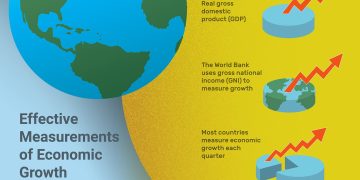
According to the IMF’s April 2025 update, U.S. GDP growth is expected to slow to around 2.1% in 2025, down from 2.5% in 2024, with projections pointing toward a further easing into 2026.
What is remarkable is not the slowdown itself, but the nature of the deceleration: broad-based, structural, and gradual — like a great machine losing torque rather than seizing up.

Consumer spending, long the engine of U.S. economic dynamism, is softening. Real wage growth has stalled as inflation, while easing, remains sticky in services. Retail sales, adjusted for inflation, have flattened, and the household savings rate — which spiked during the pandemic — has normalized to pre-2019 lows.
Meanwhile, businesses are holding back on capital expenditures amid uncertain demand, elevated borrowing costs, and geopolitical unpredictability.

2. Labor Market: Tight but Tiring

For two years, America’s job market appeared almost superhuman — consistently generating over 200,000 new jobs per month even as rates climbed. But 2025 marks the beginning of normalization.
Job openings have fallen below 8 million for the first time since 2021, labor force participation has plateaued at 62.7%, and wage growth is slowing from 4% to 3% year-on-year.
While these numbers still reflect relative strength, the underlying composition is shifting: high-skill, high-productivity sectors such as tech and professional services are expanding, while retail, construction, and manufacturing show early signs of fatigue.

Automation and AI are also subtly reshaping employment dynamics. A Goldman Sachs study estimates that AI integration could affect up to 25% of tasks in white-collar industries by 2026. Yet, instead of mass layoffs, the transition has produced what economists call a “productivity lag” — companies investing heavily in digital systems before reaping tangible efficiency gains.

3. Productivity and the Innovation Paradox

At the heart of America’s slowdown lies a paradox: a nation at the frontier of technological innovation but facing sluggish productivity growth.
Despite record investments in artificial intelligence, clean energy, and semiconductor manufacturing, labor productivity grew only 1.2% annually in 2024 — below the post-war average.

Economists attribute this lag to diffusion delays: technologies such as AI and advanced robotics often take years to translate into measurable output improvements.
Moreover, the U.S. economy is grappling with fragmentation effects — divergent productivity between large firms (which adopt new tech quickly) and small/medium enterprises (which lag behind due to cost and expertise barriers).
The result is a two-speed economy — one propelled by capital-intensive innovation hubs, the other mired in stagnation.

4. Structural Headwinds: Demographics, Debt, and Distrust

Three structural challenges weigh heavily on U.S. long-term growth:

  • Demographic drag: The aging population is slowing labor force expansion. By 2030, one in five Americans will be over 65. This constrains potential output and increases fiscal burdens through healthcare and social security spending.
  • Public debt and fiscal overhang: U.S. federal debt surpassed $35 trillion in early 2025 — roughly 123% of GDP. Interest payments are now the fastest-growing item in the federal budget, crowding out productive investment.
  • Erosion of institutional trust: Polarization and political gridlock have undermined the predictability of U.S. fiscal and regulatory policy. The repeated brinkmanship over the debt ceiling and government shutdowns has begun to weigh on business confidence and international credibility.

5. Global Realignment and Competitive Pressure

Externally, America faces intensifying competition from Asia’s rising powers.
India’s growth, projected at 6.5%, stands in stark contrast to the U.S. deceleration. Meanwhile, China’s industrial and financial rebalancing continues to shape global supply chains — even amid its domestic slowdown.
The U.S. has responded with strategic industrial policies — notably the CHIPS Act and the Inflation Reduction Act — to secure technological dominance and supply chain autonomy. However, these same policies risk distorting trade dynamics and fueling protectionist retaliation.

Moreover, the global pivot toward “de-risking” rather than “decoupling” has led multinational firms to diversify production — often away from the U.S. and China toward neutral economies like Mexico, Vietnam, and Indonesia.
This diversification, while stabilizing globally, has reduced America’s share of manufacturing investment flows.

6. The Fed’s Balancing Act

The Federal Reserve remains the pivotal actor in this drama. With core inflation hovering around 2.7%, the Fed faces a difficult choice: cut rates to prevent a hard landing, or maintain restrictive policy to ensure price stability.
Markets currently expect two 25-basis-point cuts in late 2025, but Fed officials remain cautious, citing persistent service-sector inflation and strong asset markets.

Monetary tightening has cooled credit growth, especially among small businesses and households. Yet, financial conditions remain tighter than average — a key reason GDP momentum has stalled.
The Fed’s credibility, restored after the 2022–23 inflation crisis, now hinges on whether it can manage this “soft-landing 2.0” without triggering a confidence shock.

7. The Long Game: Productivity Revival and Policy Credibility

To restore growth potential, the U.S. must address structural inefficiencies rather than rely solely on monetary cycles.
Investment in human capital, infrastructure modernization, and digital inclusion could lift productivity and narrow inequality.
Fiscal reform — including a more sustainable debt trajectory and targeted industrial strategy — remains critical.

Perhaps most importantly, policy credibility is now an economic variable.
The U.S. has historically thrived on institutional reliability and global investor confidence. As that reputation comes under strain, the challenge of the next decade will be rebuilding not only economic growth — but trust in the system itself.

Tags: AmericaeconomyfinanceFinance and economics
ShareTweetShare

Related Posts

The New Shape of Work: How Technology Is Changing U.S. Jobs
America

The Changing Shape of the U.S. Labor Market in 2025

November 29, 2025
The New Shape of Work: How Technology Is Changing U.S. Jobs
America

How American Consumers Are Changing in 2025

November 29, 2025
The New Shape of Work: How Technology Is Changing U.S. Jobs
America

The Changing Landscape of U.S. Financial Markets in 2025

November 29, 2025
The New Shape of Work: How Technology Is Changing U.S. Jobs
America

The New Shape of Work: How Technology Is Changing U.S. Jobs

November 29, 2025
America

The Uneven Recovery: Why Some American Workers Are Doing Better Than Others”

November 29, 2025
Can Rising ROE in Japan and Australia’s Core Corporates Sustain Local Market Rallies?
America

The Future of the Digital Dollar: How a U.S. CBDC Could Reshape Global Finance and Domestic Monetary Power

November 24, 2025
Load More
Leave Comment
  • Bitcoin on a rollercoaster ride The whole network more than 110,000 people exploded warehouse 2.9 billion yuan evaporation in 24 hours! What’s going on?

    Bitcoin on a rollercoaster ride The whole network more than 110,000 people exploded warehouse 2.9 billion yuan evaporation in 24 hours! What’s going on?

    0 shares
    Share 0 Tweet 0
  • There are always unconvinced want to try! The size of Nvidia’s short position is now comparable to Apple and Tesla combined

    0 shares
    Share 0 Tweet 0
  • The probability is about 75%! Will the G7 fall?

    0 shares
    Share 0 Tweet 0
  • A number of data point to the Japanese government intervention in the currency market after the “5 trillion” still depends on the United States

    0 shares
    Share 0 Tweet 0
  • How far can Tech stocks go to split on Fed expectations?

    0 shares
    Share 0 Tweet 0

Hot

The New Inflation Puzzle: Why Europe and the United States Are Struggling With Different Price Pressures

The New Economic Landscape of Europe and the United States: How 2025 is Reshaping Growth Models

December 3, 2025
The New Inflation Puzzle: Why Europe and the United States Are Struggling With Different Price Pressures

Transatlantic Trade Shifts: How Europe and the United States Are Redefining Economic Partnerships in 2025

December 3, 2025
The New Inflation Puzzle: Why Europe and the United States Are Struggling With Different Price Pressures

The Energy Transition Divide: How Europe and the United States Are Taking Different Paths Toward a Green Economy

December 3, 2025
The New Inflation Puzzle: Why Europe and the United States Are Struggling With Different Price Pressures

The New Workforce Challenge: How Europe and the United States Are Struggling With Talent Shortages and Productivity Slowdowns

December 3, 2025
The New Inflation Puzzle: Why Europe and the United States Are Struggling With Different Price Pressures

The New Inflation Puzzle: Why Europe and the United States Are Struggling With Different Price Pressures

December 3, 2025

The Social Foundations of Economic Stability: How France and Germany Are Managing Inequality, Welfare, and the Future of Work

December 2, 2025

The Energy Transition Challenge: How France and Germany Are Rebuilding Their Economic Power Through Green Transformation

December 2, 2025

France and Germany in a Shifting Global Economy: How Both Countries Are Rebuilding Their Competitiveness

December 2, 2025

Germany’s Economy at a Turning Point: Slow Growth, Industrial Pressure, and the Search for a New Future

December 2, 2025

France’s Economy in a Time of Slow Growth and Social Pressure

December 2, 2025
The New Inflation Puzzle: Why Europe and the United States Are Struggling With Different Price Pressures
Europe and America

The New Economic Landscape of Europe and the United States: How 2025 is Reshaping Growth Models

December 3, 2025
The New Inflation Puzzle: Why Europe and the United States Are Struggling With Different Price Pressures
Europe and America

Transatlantic Trade Shifts: How Europe and the United States Are Redefining Economic Partnerships in 2025

December 3, 2025
The New Inflation Puzzle: Why Europe and the United States Are Struggling With Different Price Pressures
Europe and America

The Energy Transition Divide: How Europe and the United States Are Taking Different Paths Toward a Green Economy

December 3, 2025
The New Inflation Puzzle: Why Europe and the United States Are Struggling With Different Price Pressures
Europe and America

The New Workforce Challenge: How Europe and the United States Are Struggling With Talent Shortages and Productivity Slowdowns

December 3, 2025
wealthtrend

WealthTrend, as the leading financial information service platform in the industry, provides comprehensive, timely and accurate financial information services for investors and financial practitioners by virtue of its deep industry background, clear service purpose and unique characteristics.

Copyright © 2025 Contact: [email protected]

No Result
View All Result
  • Home
  • Top News
  • Global
  • Asia-Pacific
  • Europe
  • viewpoint
  • America
  • Europe and America

Copyright © 2025 Contact: [email protected]

Welcome Back!

Login to your account below

Forgotten Password?

Retrieve your password

Please enter your username or email address to reset your password.

Log In