















wealthtrend
  • Home
  • Top News
  • Global

    The Global Interest Rate Turning Point: How Central Banks Are Changing Their Policies

    The New Shape of Global Trade and Finance: How Supply Chains and Currencies Are Moving

    The Rise of Digital Money:

    Finance in a Time of Geopolitical Tension:

    The New Shape of Work: How Technology Is Changing U.S. Jobs

    The New Forces Driving Global Markets:Technology, Demographics, and the Rise of Emerging Economies

    Global Payments at an Inflection Point: How Infrastructure, Regulation, and Geopolitics Are Rewriting the Future of Money

  • Asia-Pacific
    Japan’s Slow but Steady Recovery: How an Aging Nation Is Searching for New Growth

    Japan and South Korea: Comparative Economic Analysis and Future Prospects

    Japan’s Slow but Steady Recovery: How an Aging Nation Is Searching for New Growth

    South Korea’s Economy in Transition: Challenges, Opportunities, and the Path Ahead

    Japan’s Slow but Steady Recovery: How an Aging Nation Is Searching for New Growth

    South Korea’s Economic Transformation: From Manufacturing to Technology and Services

    Japan’s Slow but Steady Recovery: How an Aging Nation Is Searching for New Growth

    Japan’s Slow but Steady Recovery: How an Aging Nation Is Searching for New Growth

    Japan’s Slow but Steady Recovery: How an Aging Nation Is Searching for New Growth

    The Rise of Asia as the Next Global Financial Center

  • Europe

    The Social Foundations of Economic Stability: How France and Germany Are Managing Inequality, Welfare, and the Future of Work

    The Energy Transition Challenge: How France and Germany Are Rebuilding Their Economic Power Through Green Transformation

    France and Germany in a Shifting Global Economy: How Both Countries Are Rebuilding Their Competitiveness

    Germany’s Economy at a Turning Point: Slow Growth, Industrial Pressure, and the Search for a New Future

    France’s Economy in a Time of Slow Growth and Social Pressure

    The New Monetary Landscape of Europe: How the Eurozone Is Redefining Its Financial Future

  • viewpoint
  • America
  • Europe and America
wealthtrend
  • Home
  • Top News
  • Global

    The Global Interest Rate Turning Point: How Central Banks Are Changing Their Policies

    The New Shape of Global Trade and Finance: How Supply Chains and Currencies Are Moving

    The Rise of Digital Money:

    Finance in a Time of Geopolitical Tension:

    The New Shape of Work: How Technology Is Changing U.S. Jobs

    The New Forces Driving Global Markets:Technology, Demographics, and the Rise of Emerging Economies

    Global Payments at an Inflection Point: How Infrastructure, Regulation, and Geopolitics Are Rewriting the Future of Money

  • Asia-Pacific
    Japan’s Slow but Steady Recovery: How an Aging Nation Is Searching for New Growth

    Japan and South Korea: Comparative Economic Analysis and Future Prospects

    Japan’s Slow but Steady Recovery: How an Aging Nation Is Searching for New Growth

    South Korea’s Economy in Transition: Challenges, Opportunities, and the Path Ahead

    Japan’s Slow but Steady Recovery: How an Aging Nation Is Searching for New Growth

    South Korea’s Economic Transformation: From Manufacturing to Technology and Services

    Japan’s Slow but Steady Recovery: How an Aging Nation Is Searching for New Growth

    Japan’s Slow but Steady Recovery: How an Aging Nation Is Searching for New Growth

    Japan’s Slow but Steady Recovery: How an Aging Nation Is Searching for New Growth

    The Rise of Asia as the Next Global Financial Center

  • Europe

    The Social Foundations of Economic Stability: How France and Germany Are Managing Inequality, Welfare, and the Future of Work

    The Energy Transition Challenge: How France and Germany Are Rebuilding Their Economic Power Through Green Transformation

    France and Germany in a Shifting Global Economy: How Both Countries Are Rebuilding Their Competitiveness

    Germany’s Economy at a Turning Point: Slow Growth, Industrial Pressure, and the Search for a New Future

    France’s Economy in a Time of Slow Growth and Social Pressure

    The New Monetary Landscape of Europe: How the Eurozone Is Redefining Its Financial Future

  • viewpoint
  • America
  • Europe and America
wealthtrend
Home Asia-Pacific

Japan’s currency intervention has had little effect

June 5, 2024
in Asia-Pacific, Europe and America, Global, Top News
The yen is on the brink again! Foreign exchange arbitrage trade popular intervention ‘efficacy has been difficult to sustain’?

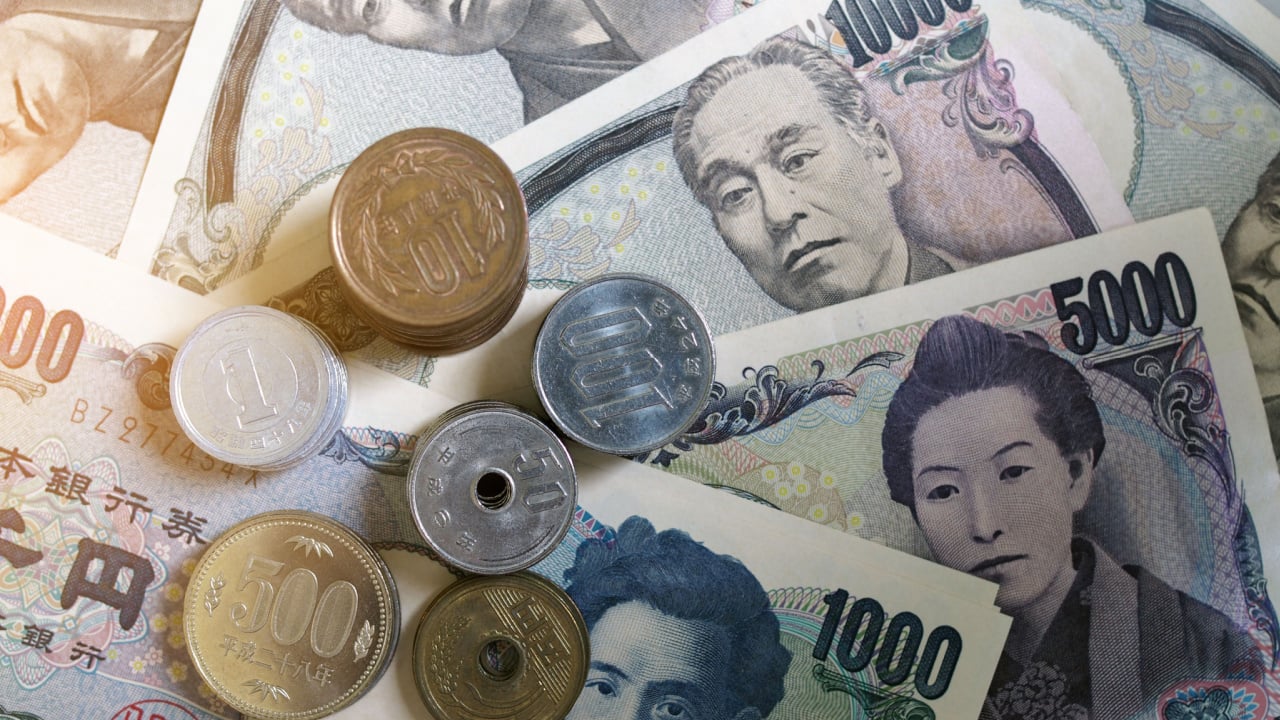
Japan’s foreign exchange intervention has little effect 】 The Japanese authorities entered the “rescue market” at a heavy cost. According to data released by the Japanese Ministry of Finance, from April 26 to May 29, the total amount of foreign exchange intervention operations by the Japanese authorities was about 9.8 trillion yen, setting a new monthly record. This amount also exceeds the total foreign exchange intervention operation of about 9.2 trillion yen in the whole of 2022.

The Japanese authorities’ entrance into the “rescue” has been costly.

According to data released by the Japanese Ministry of Finance, from April 26 to May 29, the total amount of foreign exchange intervention operations by the Japanese authorities was about 9.8 trillion yen, setting a new monthly record. This amount also exceeds the total foreign exchange intervention operation of about 9.2 trillion yen in the whole of 2022.

The large-scale foreign exchange intervention operation highlights the attitude of the Japanese authorities to “defend the yen”. How effective is unprecedented foreign exchange intervention? From the trend of the yen exchange rate, foreign exchange intervention in the short term to stop the fall of the yen, but ultimately little effect.

The market is widely speculated that the Japanese authorities’ first entry into the “rescue” point occurred on April 29. On the same day, the yen fell below the 160 mark against the dollar, then quickly rebounded and rose to near 154.53. In subsequent sessions, the yen briefly strengthened to 151.85 against the dollar. But the yen’s decline did not stop there, and by Friday’s close, the yen had fallen below the 157 mark against the dollar, once again falling back to its lowest level since 1990.

Market analysts believe that the foreign exchange intervention of the Japanese authorities has slowed down the decline of the yen to some extent, but the foreign exchange intervention “treats the symptoms rather than the root cause” and cannot fundamentally reverse the depreciation trend of the yen.

“Foreign exchange intervention works in the short term, but not against the trend.” Zhang Meng, senior researcher at Industrial Research, said that the Japanese authorities intervened near the 160 level, strengthening the resistance to this level, and from this point of view, the foreign exchange intervention is effective. Looking ahead, there is limited room for the yen to depreciate, but the yen’s trend appreciation still requires a sharp fall in the US dollar exchange rate or a large-scale flight to safety driven by global funds.

Hu Jie, a professor of practice at Shanghai Advanced Institute of Finance, Shanghai Jiao Tong University, said that the fundamental factor driving the depreciation of the yen is still the interest rate difference between Japan and the United States, and the pressure on the depreciation of the yen will still exist when the interest rate maintains a large gap. Only when dollar interest rates start to fall or yen interest rates start to rise can this depreciation be fundamentally reversed. Hu Jie believes that in the future, the Japanese authorities may still intervene in foreign exchange to curb excessive speculative market behavior and control the speed of the depreciation of the yen.

With the rapid depreciation of the yen, its stimulative effect on the Japanese economy gradually fades.

Citic Securities research report said that the depreciation of the yen is not always good for the Japanese economy: the number of Japanese exports has not increased significantly due to the depreciation of the yen, and the rapid depreciation of the yen is not conducive to the repair of residents’ real income and purchasing power, and may reduce the international appeal of yen assets in the short term.

Against this backdrop, the weakness of the yen has become a major problem for the Bank of Japan. The Bank of Japan is facing a dilemma: on the one hand, the yen needs to be lifted by the BOJ; On the other hand, weak domestic consumption in Japan is also difficult to support a rapid rate hike.

For the follow-up monetary policy path of the Bank of Japan, Zhang Meng believes that the current Japanese economy is still on the brink of recession, and the Bank of Japan may raise interest rates again only if it sees significant growth in potential inflation and household inflation expectations. As for the pace of rate hikes, it is not expected to be continuous.


Tags: Asia-PacificForeign exchangefuturesJapan
ShareTweetShare

Related Posts

The New Inflation Puzzle: Why Europe and the United States Are Struggling With Different Price Pressures
Europe and America

The New Economic Landscape of Europe and the United States: How 2025 is Reshaping Growth Models

December 3, 2025
The New Inflation Puzzle: Why Europe and the United States Are Struggling With Different Price Pressures
Europe and America

Transatlantic Trade Shifts: How Europe and the United States Are Redefining Economic Partnerships in 2025

December 3, 2025
The New Inflation Puzzle: Why Europe and the United States Are Struggling With Different Price Pressures
Europe and America

The Energy Transition Divide: How Europe and the United States Are Taking Different Paths Toward a Green Economy

December 3, 2025
The New Inflation Puzzle: Why Europe and the United States Are Struggling With Different Price Pressures
Europe and America

The New Workforce Challenge: How Europe and the United States Are Struggling With Talent Shortages and Productivity Slowdowns

December 3, 2025
The New Inflation Puzzle: Why Europe and the United States Are Struggling With Different Price Pressures
Europe and America

The New Inflation Puzzle: Why Europe and the United States Are Struggling With Different Price Pressures

December 3, 2025
Japan’s Slow but Steady Recovery: How an Aging Nation Is Searching for New Growth
Asia-Pacific

Japan and South Korea: Comparative Economic Analysis and Future Prospects

December 1, 2025
Load More
Leave Comment
  • Bitcoin on a rollercoaster ride The whole network more than 110,000 people exploded warehouse 2.9 billion yuan evaporation in 24 hours! What’s going on?

    Bitcoin on a rollercoaster ride The whole network more than 110,000 people exploded warehouse 2.9 billion yuan evaporation in 24 hours! What’s going on?

    0 shares
    Share 0 Tweet 0
  • There are always unconvinced want to try! The size of Nvidia’s short position is now comparable to Apple and Tesla combined

    0 shares
    Share 0 Tweet 0
  • The probability is about 75%! Will the G7 fall?

    0 shares
    Share 0 Tweet 0
  • A number of data point to the Japanese government intervention in the currency market after the “5 trillion” still depends on the United States

    0 shares
    Share 0 Tweet 0
  • How far can Tech stocks go to split on Fed expectations?

    0 shares
    Share 0 Tweet 0

Hot

The New Inflation Puzzle: Why Europe and the United States Are Struggling With Different Price Pressures

The New Economic Landscape of Europe and the United States: How 2025 is Reshaping Growth Models

December 3, 2025
The New Inflation Puzzle: Why Europe and the United States Are Struggling With Different Price Pressures

Transatlantic Trade Shifts: How Europe and the United States Are Redefining Economic Partnerships in 2025

December 3, 2025
The New Inflation Puzzle: Why Europe and the United States Are Struggling With Different Price Pressures

The Energy Transition Divide: How Europe and the United States Are Taking Different Paths Toward a Green Economy

December 3, 2025
The New Inflation Puzzle: Why Europe and the United States Are Struggling With Different Price Pressures

The New Workforce Challenge: How Europe and the United States Are Struggling With Talent Shortages and Productivity Slowdowns

December 3, 2025
The New Inflation Puzzle: Why Europe and the United States Are Struggling With Different Price Pressures

The New Inflation Puzzle: Why Europe and the United States Are Struggling With Different Price Pressures

December 3, 2025

The Social Foundations of Economic Stability: How France and Germany Are Managing Inequality, Welfare, and the Future of Work

December 2, 2025

The Energy Transition Challenge: How France and Germany Are Rebuilding Their Economic Power Through Green Transformation

December 2, 2025

France and Germany in a Shifting Global Economy: How Both Countries Are Rebuilding Their Competitiveness

December 2, 2025

Germany’s Economy at a Turning Point: Slow Growth, Industrial Pressure, and the Search for a New Future

December 2, 2025

France’s Economy in a Time of Slow Growth and Social Pressure

December 2, 2025
The New Inflation Puzzle: Why Europe and the United States Are Struggling With Different Price Pressures
Europe and America

The New Economic Landscape of Europe and the United States: How 2025 is Reshaping Growth Models

December 3, 2025
The New Inflation Puzzle: Why Europe and the United States Are Struggling With Different Price Pressures
Europe and America

Transatlantic Trade Shifts: How Europe and the United States Are Redefining Economic Partnerships in 2025

December 3, 2025
The New Inflation Puzzle: Why Europe and the United States Are Struggling With Different Price Pressures
Europe and America

The Energy Transition Divide: How Europe and the United States Are Taking Different Paths Toward a Green Economy

December 3, 2025
The New Inflation Puzzle: Why Europe and the United States Are Struggling With Different Price Pressures
Europe and America

The New Workforce Challenge: How Europe and the United States Are Struggling With Talent Shortages and Productivity Slowdowns

December 3, 2025
wealthtrend

WealthTrend, as the leading financial information service platform in the industry, provides comprehensive, timely and accurate financial information services for investors and financial practitioners by virtue of its deep industry background, clear service purpose and unique characteristics.

Copyright © 2025 Contact: [email protected]

No Result
View All Result
  • Home
  • Top News
  • Global
  • Asia-Pacific
  • Europe
  • viewpoint
  • America
  • Europe and America

Copyright © 2025 Contact: [email protected]

Welcome Back!

Login to your account below

Forgotten Password?

Retrieve your password

Please enter your username or email address to reset your password.

Log In