













wealthtrend
  • Home
  • Top News
  • Global

    The Global Interest Rate Turning Point: How Central Banks Are Changing Their Policies

    The New Shape of Global Trade and Finance: How Supply Chains and Currencies Are Moving

    The Rise of Digital Money:

    Finance in a Time of Geopolitical Tension:

    The New Shape of Work: How Technology Is Changing U.S. Jobs

    The New Forces Driving Global Markets:Technology, Demographics, and the Rise of Emerging Economies

    Global Payments at an Inflection Point: How Infrastructure, Regulation, and Geopolitics Are Rewriting the Future of Money

  • Asia-Pacific
    Japan’s Slow but Steady Recovery: How an Aging Nation Is Searching for New Growth

    Japan and South Korea: Comparative Economic Analysis and Future Prospects

    Japan’s Slow but Steady Recovery: How an Aging Nation Is Searching for New Growth

    South Korea’s Economy in Transition: Challenges, Opportunities, and the Path Ahead

    Japan’s Slow but Steady Recovery: How an Aging Nation Is Searching for New Growth

    South Korea’s Economic Transformation: From Manufacturing to Technology and Services

    Japan’s Slow but Steady Recovery: How an Aging Nation Is Searching for New Growth

    Japan’s Slow but Steady Recovery: How an Aging Nation Is Searching for New Growth

    Japan’s Slow but Steady Recovery: How an Aging Nation Is Searching for New Growth

    The Rise of Asia as the Next Global Financial Center

  • Europe

    The Social Foundations of Economic Stability: How France and Germany Are Managing Inequality, Welfare, and the Future of Work

    The Energy Transition Challenge: How France and Germany Are Rebuilding Their Economic Power Through Green Transformation

    France and Germany in a Shifting Global Economy: How Both Countries Are Rebuilding Their Competitiveness

    Germany’s Economy at a Turning Point: Slow Growth, Industrial Pressure, and the Search for a New Future

    France’s Economy in a Time of Slow Growth and Social Pressure

    The New Monetary Landscape of Europe: How the Eurozone Is Redefining Its Financial Future

  • viewpoint
  • America
  • Europe and America
wealthtrend
  • Home
  • Top News
  • Global

    The Global Interest Rate Turning Point: How Central Banks Are Changing Their Policies

    The New Shape of Global Trade and Finance: How Supply Chains and Currencies Are Moving

    The Rise of Digital Money:

    Finance in a Time of Geopolitical Tension:

    The New Shape of Work: How Technology Is Changing U.S. Jobs

    The New Forces Driving Global Markets:Technology, Demographics, and the Rise of Emerging Economies

    Global Payments at an Inflection Point: How Infrastructure, Regulation, and Geopolitics Are Rewriting the Future of Money

  • Asia-Pacific
    Japan’s Slow but Steady Recovery: How an Aging Nation Is Searching for New Growth

    Japan and South Korea: Comparative Economic Analysis and Future Prospects

    Japan’s Slow but Steady Recovery: How an Aging Nation Is Searching for New Growth

    South Korea’s Economy in Transition: Challenges, Opportunities, and the Path Ahead

    Japan’s Slow but Steady Recovery: How an Aging Nation Is Searching for New Growth

    South Korea’s Economic Transformation: From Manufacturing to Technology and Services

    Japan’s Slow but Steady Recovery: How an Aging Nation Is Searching for New Growth

    Japan’s Slow but Steady Recovery: How an Aging Nation Is Searching for New Growth

    Japan’s Slow but Steady Recovery: How an Aging Nation Is Searching for New Growth

    The Rise of Asia as the Next Global Financial Center

  • Europe

    The Social Foundations of Economic Stability: How France and Germany Are Managing Inequality, Welfare, and the Future of Work

    The Energy Transition Challenge: How France and Germany Are Rebuilding Their Economic Power Through Green Transformation

    France and Germany in a Shifting Global Economy: How Both Countries Are Rebuilding Their Competitiveness

    Germany’s Economy at a Turning Point: Slow Growth, Industrial Pressure, and the Search for a New Future

    France’s Economy in a Time of Slow Growth and Social Pressure

    The New Monetary Landscape of Europe: How the Eurozone Is Redefining Its Financial Future

  • viewpoint
  • America
  • Europe and America
wealthtrend
Home Asia-Pacific

DHL Global Freight: In the next three or four months, the problem of shipping capacity will not be significantly eased

June 6, 2024
in Asia-Pacific, Futures information, Global, Top News, viewpoint
DHL Global Freight: In the next three or four months, the problem of shipping capacity will not be significantly eased

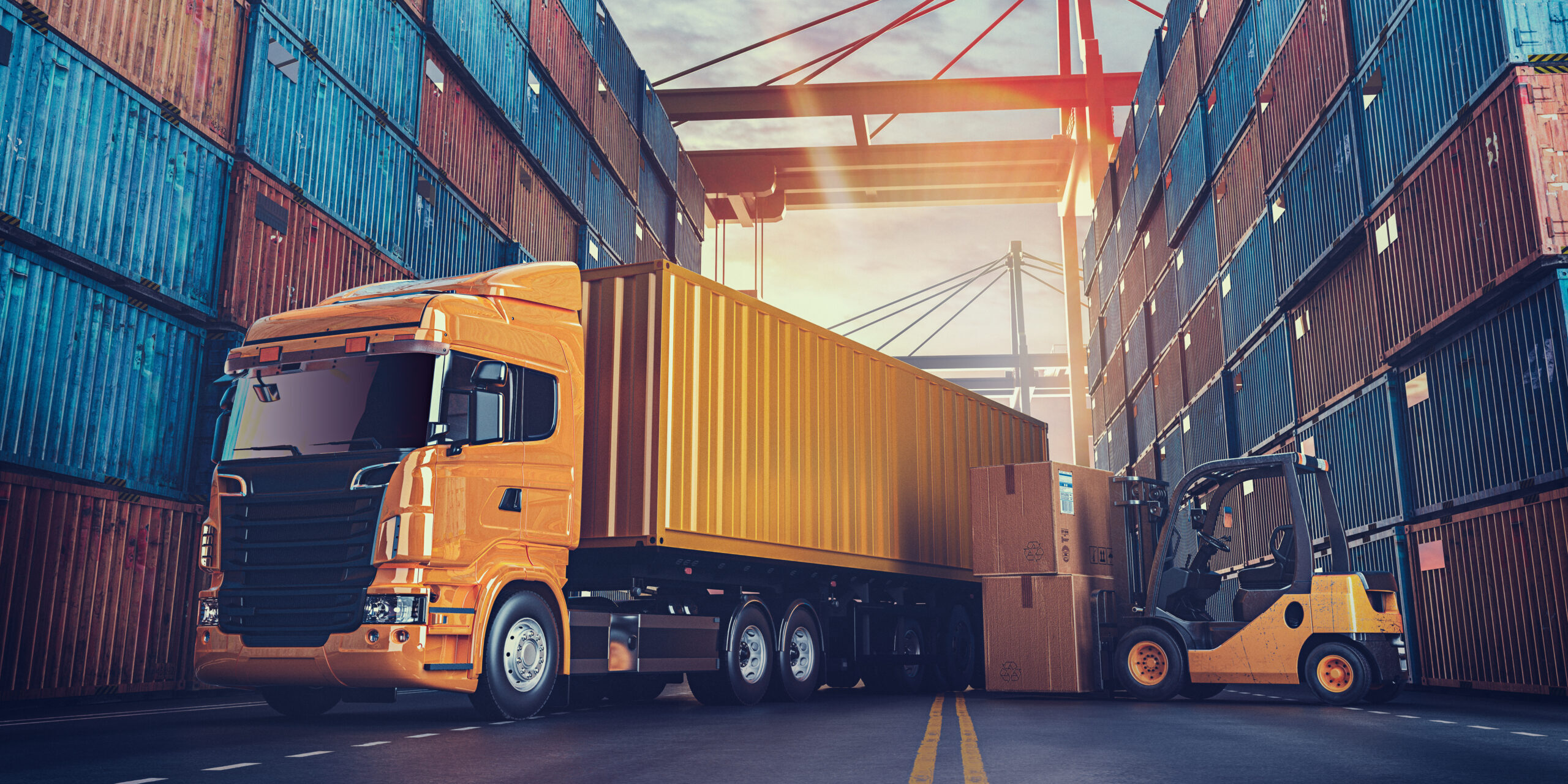
Transportation and logistics of Container Cargo ship and Cargo plane. 3d rendering and illustration.

China is the largest market in the Asia Pacific region by volume, and although DHL freight has already covered most cities and major regions in China, we still see a lot of growth potential in the Chinese market, and we will continue to increase our investment in the Chinese market.”

On June 5, Niki Frank, CEO of DHL Global Freight Asia Pacific, made the above statement in an interview with a small group of media, including The Paper.

DHL Global Freight, part of the DHL Group, is a logistics company serving the world. The DHL Group consists of DHL Global Freight, DHL Express, DHL Supply Chain, DHL E-commerce, and the German Post and Parcel business.

Niki Frank introduced that last year DHL global freight China air cargo volume of more than 500,000 tons, sea cargo volume of nearly 600,000 tons, in the field of customs clearance processed about 500,000 pieces of tickets. In addition, there are more than 2,000 employees in 50 branches and offices in the Chinese market, basically covering major cities in China.

According to the Surging news, at present, DHL global freight mainly obtains air capacity through cooperation with airlines, and some of the capacity comes from the group’s air fleet deployment. In terms of shipping, DHL Global Freight is currently a commercial operation, purchasing shipping capacity from shipping companies, and has no own ship capacity or leased ships.

The shortage of shipping capacity is not expected to ease significantly in the next three to four months

“The current maritime market has returned to a situation similar to that seen during the pandemic, such as port congestion, equipment shortages, capacity shortages, etc., driving up maritime freight rates.” Niki Frank told Surging news reporters that the shipping situation is different from that during the epidemic, which is driven by the lack of supply of shipping capacity brought about by the Red Sea crisis and the rise in demand.

Specifically, Niki Frank told the Surging news that the Red Sea crisis caused ships to circumnavigate the Cape of Good Hope, further increasing transport time and costs, and the situation worsened from December last year to the beginning of this year, and has been relatively stable in March and April this year. Since then there has been a sharp rise in transport demand, putting a lot of pressure on the system in the absence of new capacity. In addition, due to the shortage of capacity, some shipping companies will wait to fill empty containers before shipping them back, further exacerbating the shortage problem.
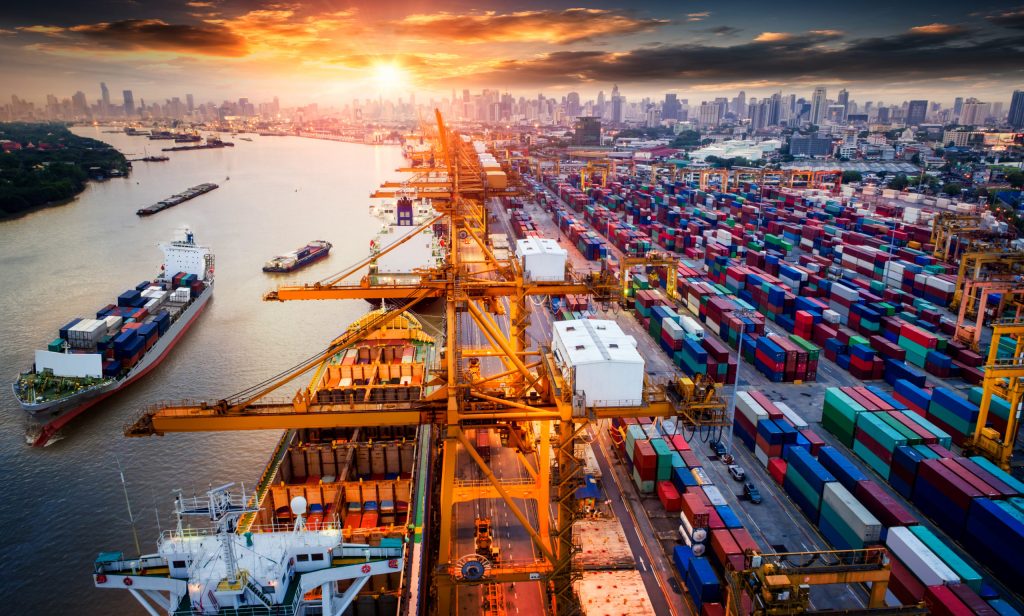
It is reported that the Suez Canal-Red Sea, an international shipping artery, is the throat of Asia to the Mediterranean Sea and Europe. Usually, the Asia-Europe route mainly takes the Red Sea channel, which is the main channel for Asia-Europe maritime trade. Since the outbreak of the new round of Israeli-Palestinian conflict on October 7 last year, the Houthi armed forces have continuously attacked ships in the Red Sea waters. In order to avoid risks, a number of international shipping companies have made decisions to suspend or detour.

“In this situation, the most important thing is to see whether logistics companies can provide flexible transportation solutions.” Niki Frank told Surging news reporters that DHL Global Freight, in addition to providing customers with contract rates of different periods, can also provide different levels of capacity guarantees, such as cooperation with all shipping companies to explore the possibility of various capacity, but also through multimodal transport to reduce transportation time.

For DHL global freight, sea freight and air freight contribution is basically balanced. Niki Frank told Surging news reporters that when the general market price is low, customers will want to lock in the low price through long-term agreement prices. In the current volatile sea freight market, freight rates are constantly rising and changing, and many customers of DHL Global freight want to choose relatively short-term agreed prices, or spot market prices.

The instability of the shipping situation, but also further promote the rise in air freight, Niki Frank believes that whether air or sea freight is high, for logistics service providers like DHL Global freight, profits will not change much, “more is the customer pay to the shipping company or airline fees rise.”

How long is the capacity shortage likely to last? Niki Frank told Surging news reporters that there is no new capacity, the Red Sea crisis will not be completely solved in the short term, in addition to the current high demand is still continuing, so it is expected that at least the next three to four months of shipping capacity tension will not be significantly eased, and it is difficult to predict the situation after six months.

It is expected that the domestic automobile overseas business still has a large growth trend

“DHL Global Freight already has a large-scale presence in China, and the future direction of investment is to be closer to customers.” Niki Frank said that if you see a new demand, such as a new development in a new area, or a new factory built by a customer, DHL Global Freight will evaluate whether it is necessary to open a warehouse or establish an office in the area to better meet the needs of customers and the market. In addition, from the experience of cooperation with many Chinese customers, DHL Global Freight not only understands the needs and operational experience of Chinese customers in the local market, but also has the advantages of the integration of DHL Group, including the network layout covering the global market, which can provide more adequate business support for Chinese customers to go overseas and help them establish an ecosystem in new markets.
It is worth noting that on May 22, DHL set up a new new energy Vehicle Center of Excellence in Shanghai to provide support for new energy vehicle enterprises and customers in related fields to deepen their local market and global development. This is DHL Group’s first NEV Center of excellence in China, the world’s largest electric vehicle market, following the establishment of NEV centers of excellence in key global regions such as Indonesia, Mexico, the United Arab Emirates and the United Kingdom.

“DHL’s auto transportation business started early, but the opening of the New energy Vehicle Center of Excellence is only now because DHL Global Freight expects that there will continue to be a very large growth trend for domestic new energy vehicles to go to sea in the future.” Frank said that DHL Global Freight and most of China’s major manufacturers, whether vehicle manufacturers or battery manufacturers have cooperated to help them transport products to all major markets in the world, DHL Global Freight will continue to invest in the field of new energy vehicles.

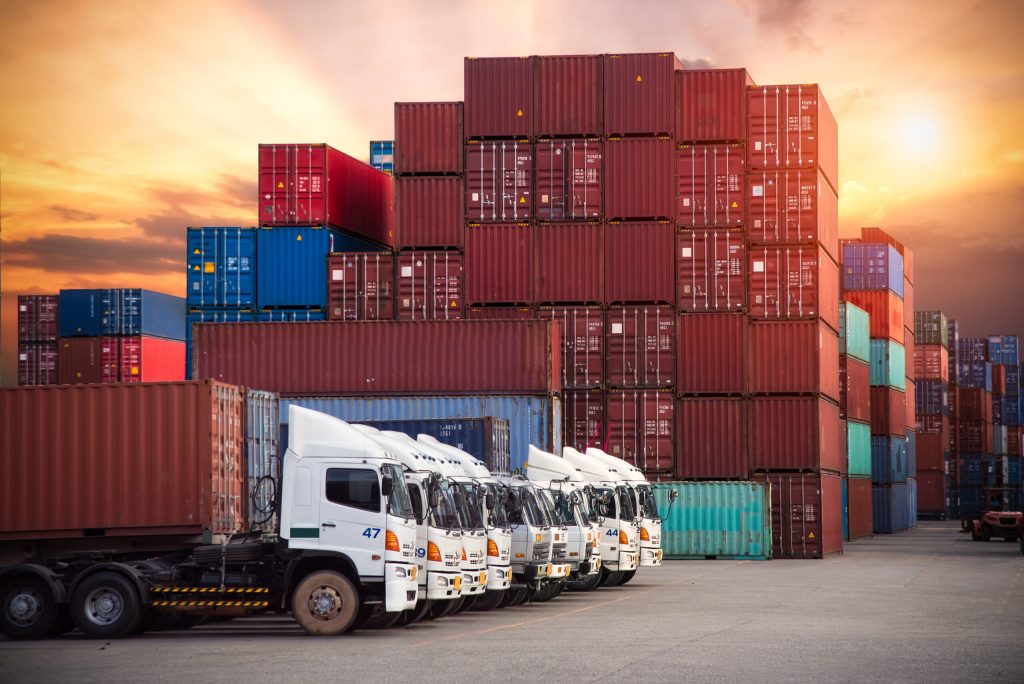
At present, with the rapid growth in the number of car exports, Niki Frank said that it has observed a shortage of car ro-ro ships to transport complete vehicles, so DHL Global Freight will also use containers for multimodal transport to help customers.

“Future investments in the Chinese market will mainly focus on manpower and IT systems, which is what differentiates DHL Global Freight from other competitors.” Niki Frank pointed out that some competitors may be reducing personnel investment in China, but DHL Global Freight is still growing the talent team, especially in the field of new energy vehicles, renewable energy, semiconductor and other industries experienced personnel recruitment. In addition, independent third-party assessments have previously found that DHL’s IT service system far outperforms its major competitors in terms of functionality, acceptability and availability.


Tags: Asia-Pacificfinanceglobal
ShareTweetShare

Related Posts

Japan’s Slow but Steady Recovery: How an Aging Nation Is Searching for New Growth
Asia-Pacific

Japan and South Korea: Comparative Economic Analysis and Future Prospects

December 1, 2025
Japan’s Slow but Steady Recovery: How an Aging Nation Is Searching for New Growth
Asia-Pacific

South Korea’s Economy in Transition: Challenges, Opportunities, and the Path Ahead

December 1, 2025
Japan’s Slow but Steady Recovery: How an Aging Nation Is Searching for New Growth
Asia-Pacific

South Korea’s Economic Transformation: From Manufacturing to Technology and Services

December 1, 2025
Japan’s Slow but Steady Recovery: How an Aging Nation Is Searching for New Growth
Asia-Pacific

December 1, 2025
Japan’s Slow but Steady Recovery: How an Aging Nation Is Searching for New Growth
Asia-Pacific

Japan’s Slow but Steady Recovery: How an Aging Nation Is Searching for New Growth

December 1, 2025
Global

The Global Interest Rate Turning Point: How Central Banks Are Changing Their Policies

November 30, 2025
Load More
Leave Comment
  • Bitcoin on a rollercoaster ride The whole network more than 110,000 people exploded warehouse 2.9 billion yuan evaporation in 24 hours! What’s going on?

    Bitcoin on a rollercoaster ride The whole network more than 110,000 people exploded warehouse 2.9 billion yuan evaporation in 24 hours! What’s going on?

    0 shares
    Share 0 Tweet 0
  • There are always unconvinced want to try! The size of Nvidia’s short position is now comparable to Apple and Tesla combined

    0 shares
    Share 0 Tweet 0
  • The probability is about 75%! Will the G7 fall?

    0 shares
    Share 0 Tweet 0
  • A number of data point to the Japanese government intervention in the currency market after the “5 trillion” still depends on the United States

    0 shares
    Share 0 Tweet 0
  • How far can Tech stocks go to split on Fed expectations?

    0 shares
    Share 0 Tweet 0

Hot

The New Inflation Puzzle: Why Europe and the United States Are Struggling With Different Price Pressures

The New Economic Landscape of Europe and the United States: How 2025 is Reshaping Growth Models

December 3, 2025
The New Inflation Puzzle: Why Europe and the United States Are Struggling With Different Price Pressures

Transatlantic Trade Shifts: How Europe and the United States Are Redefining Economic Partnerships in 2025

December 3, 2025
The New Inflation Puzzle: Why Europe and the United States Are Struggling With Different Price Pressures

The Energy Transition Divide: How Europe and the United States Are Taking Different Paths Toward a Green Economy

December 3, 2025
The New Inflation Puzzle: Why Europe and the United States Are Struggling With Different Price Pressures

The New Workforce Challenge: How Europe and the United States Are Struggling With Talent Shortages and Productivity Slowdowns

December 3, 2025
The New Inflation Puzzle: Why Europe and the United States Are Struggling With Different Price Pressures

The New Inflation Puzzle: Why Europe and the United States Are Struggling With Different Price Pressures

December 3, 2025

The Social Foundations of Economic Stability: How France and Germany Are Managing Inequality, Welfare, and the Future of Work

December 2, 2025

The Energy Transition Challenge: How France and Germany Are Rebuilding Their Economic Power Through Green Transformation

December 2, 2025

France and Germany in a Shifting Global Economy: How Both Countries Are Rebuilding Their Competitiveness

December 2, 2025

Germany’s Economy at a Turning Point: Slow Growth, Industrial Pressure, and the Search for a New Future

December 2, 2025

France’s Economy in a Time of Slow Growth and Social Pressure

December 2, 2025
The New Inflation Puzzle: Why Europe and the United States Are Struggling With Different Price Pressures
Europe and America

The New Economic Landscape of Europe and the United States: How 2025 is Reshaping Growth Models

December 3, 2025
The New Inflation Puzzle: Why Europe and the United States Are Struggling With Different Price Pressures
Europe and America

Transatlantic Trade Shifts: How Europe and the United States Are Redefining Economic Partnerships in 2025

December 3, 2025
The New Inflation Puzzle: Why Europe and the United States Are Struggling With Different Price Pressures
Europe and America

The Energy Transition Divide: How Europe and the United States Are Taking Different Paths Toward a Green Economy

December 3, 2025
The New Inflation Puzzle: Why Europe and the United States Are Struggling With Different Price Pressures
Europe and America

The New Workforce Challenge: How Europe and the United States Are Struggling With Talent Shortages and Productivity Slowdowns

December 3, 2025
wealthtrend

WealthTrend, as the leading financial information service platform in the industry, provides comprehensive, timely and accurate financial information services for investors and financial practitioners by virtue of its deep industry background, clear service purpose and unique characteristics.

Copyright © 2025 Contact: [email protected]

No Result
View All Result
  • Home
  • Top News
  • Global
  • Asia-Pacific
  • Europe
  • viewpoint
  • America
  • Europe and America

Copyright © 2025 Contact: [email protected]

Welcome Back!

Login to your account below

Forgotten Password?

Retrieve your password

Please enter your username or email address to reset your password.

Log In