














wealthtrend
  • Home
  • Top News
  • Global

    The Global Interest Rate Turning Point: How Central Banks Are Changing Their Policies

    The New Shape of Global Trade and Finance: How Supply Chains and Currencies Are Moving

    The Rise of Digital Money:

    Finance in a Time of Geopolitical Tension:

    The New Shape of Work: How Technology Is Changing U.S. Jobs

    The New Forces Driving Global Markets:Technology, Demographics, and the Rise of Emerging Economies

    Global Payments at an Inflection Point: How Infrastructure, Regulation, and Geopolitics Are Rewriting the Future of Money

  • Asia-Pacific
    Japan’s Slow but Steady Recovery: How an Aging Nation Is Searching for New Growth

    Japan and South Korea: Comparative Economic Analysis and Future Prospects

    Japan’s Slow but Steady Recovery: How an Aging Nation Is Searching for New Growth

    South Korea’s Economy in Transition: Challenges, Opportunities, and the Path Ahead

    Japan’s Slow but Steady Recovery: How an Aging Nation Is Searching for New Growth

    South Korea’s Economic Transformation: From Manufacturing to Technology and Services

    Japan’s Slow but Steady Recovery: How an Aging Nation Is Searching for New Growth

    Japan’s Slow but Steady Recovery: How an Aging Nation Is Searching for New Growth

    Japan’s Slow but Steady Recovery: How an Aging Nation Is Searching for New Growth

    The Rise of Asia as the Next Global Financial Center

  • Europe

    The Social Foundations of Economic Stability: How France and Germany Are Managing Inequality, Welfare, and the Future of Work

    The Energy Transition Challenge: How France and Germany Are Rebuilding Their Economic Power Through Green Transformation

    France and Germany in a Shifting Global Economy: How Both Countries Are Rebuilding Their Competitiveness

    Germany’s Economy at a Turning Point: Slow Growth, Industrial Pressure, and the Search for a New Future

    France’s Economy in a Time of Slow Growth and Social Pressure

    The New Monetary Landscape of Europe: How the Eurozone Is Redefining Its Financial Future

  • viewpoint
  • America
  • Europe and America
wealthtrend
  • Home
  • Top News
  • Global

    The Global Interest Rate Turning Point: How Central Banks Are Changing Their Policies

    The New Shape of Global Trade and Finance: How Supply Chains and Currencies Are Moving

    The Rise of Digital Money:

    Finance in a Time of Geopolitical Tension:

    The New Shape of Work: How Technology Is Changing U.S. Jobs

    The New Forces Driving Global Markets:Technology, Demographics, and the Rise of Emerging Economies

    Global Payments at an Inflection Point: How Infrastructure, Regulation, and Geopolitics Are Rewriting the Future of Money

  • Asia-Pacific
    Japan’s Slow but Steady Recovery: How an Aging Nation Is Searching for New Growth

    Japan and South Korea: Comparative Economic Analysis and Future Prospects

    Japan’s Slow but Steady Recovery: How an Aging Nation Is Searching for New Growth

    South Korea’s Economy in Transition: Challenges, Opportunities, and the Path Ahead

    Japan’s Slow but Steady Recovery: How an Aging Nation Is Searching for New Growth

    South Korea’s Economic Transformation: From Manufacturing to Technology and Services

    Japan’s Slow but Steady Recovery: How an Aging Nation Is Searching for New Growth

    Japan’s Slow but Steady Recovery: How an Aging Nation Is Searching for New Growth

    Japan’s Slow but Steady Recovery: How an Aging Nation Is Searching for New Growth

    The Rise of Asia as the Next Global Financial Center

  • Europe

    The Social Foundations of Economic Stability: How France and Germany Are Managing Inequality, Welfare, and the Future of Work

    The Energy Transition Challenge: How France and Germany Are Rebuilding Their Economic Power Through Green Transformation

    France and Germany in a Shifting Global Economy: How Both Countries Are Rebuilding Their Competitiveness

    Germany’s Economy at a Turning Point: Slow Growth, Industrial Pressure, and the Search for a New Future

    France’s Economy in a Time of Slow Growth and Social Pressure

    The New Monetary Landscape of Europe: How the Eurozone Is Redefining Its Financial Future

  • viewpoint
  • America
  • Europe and America
wealthtrend
Home Europe

ECB cuts interest rates! For the first time in five years! Here comes the latest reading

June 7, 2024
in Europe, Europe and America, Futures information, Global, Top News
ECB cuts interest rates! For the first time in five years! Here comes the latest reading

This is the first time that the European Central Bank has cut interest rates since 2019, marking that it officially joined the camp of the world’s major central banks that took the lead in cutting interest rates, and the monetary policies of European and American central banks have significantly differentiated. Su Jian, Professor of Economics at Peking University: On the one hand, the current unemployment rate is relatively low, and the inflation rate is already below 3%. The problem is that the economy is growing at a low rate, 0.3% last quarter and 0% the quarter before that. At this point, [the ECB] has some room to cut interest rates to focus more on promoting [economic] growth. Analysts believe that the interest rate cut will create more financing opportunities for European economic growth, and the outlook for corporate earnings will also improve, which will benefit the European stock market, especially small and medium-sized stocks.

On the 6th local time, the European Central Bank announced the latest interest rate resolution, as expected by the market, announced a cut of 25 basis points.

The ECB’s decision to cut its main refinancing rate, marginal lending rate and deposit facility rates by 25 basis points to 4.25 per cent, 4.5 per cent and 3.75 per cent, respectively, was the first cut since the central bank raised its benchmark rate to an all-time high of 4.5 per cent last September and was widely expected.
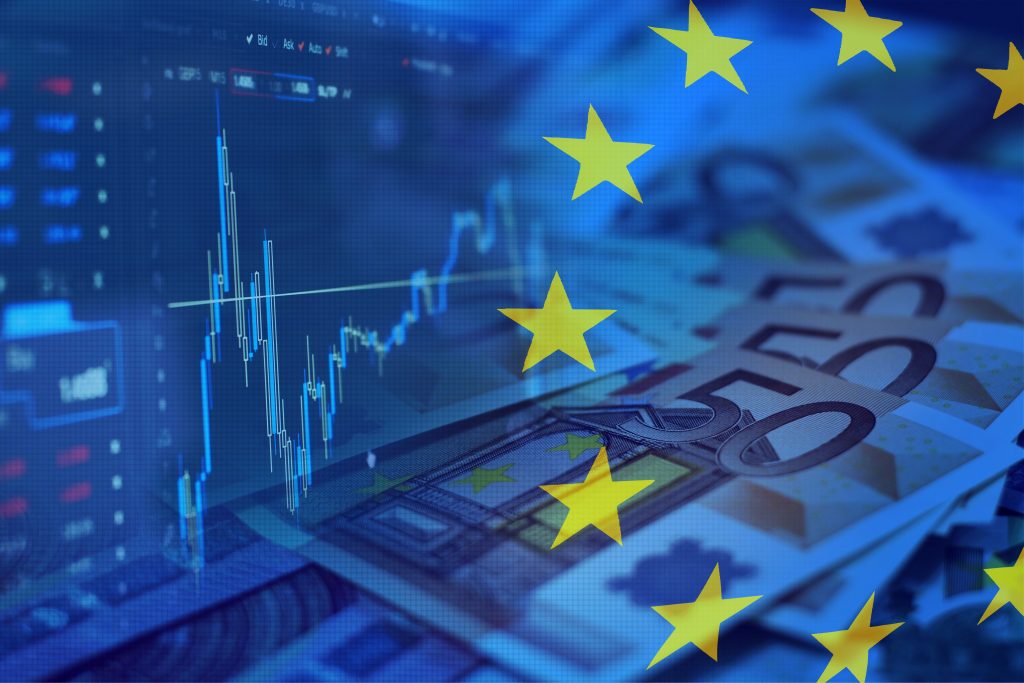
Affected by the news of possible interest rate cuts, all three major European stock indexes rose, and the FTSE index in London swung up after the opening today, once rising to 8273.76 points, up 0.3%; The CAC-40 in Paris turned positive after opening slightly lower, earlier rising more than 0.5% to 5,048.60; The DAX index in Frankfurt, Germany, went all the way higher, surging more than 200 points, up more than 1%, to 18,778.46 points, hitting a record high in the German stock market.

In terms of bonds, the market has digested the strong expectation of interest rate cuts in advance. The bond markets of Britain, France and Germany reacted differently, and the yield of German 10-year government bonds rose slightly by 2 basis points, fluctuating between 2.53% and 2.54%. French ten-year bond yields swung up, recovering the important 3% mark; Yields on UK 10-year gilts fell slightly before bouncing back in the afternoon to trade around 4.185%.

Euro zone inflation rose for the first time this year to 2.6% in May, according to Eurostat, and Bank of Italy governor Fabio Panetta said higher inflation was “neither good nor bad,” while Bank of Portugal Governor Mario Centeno said higher inflation was “not significantly overshooting” expectations and would not stop the ECB from starting to cut interest rates. But investors expect the ECB to take a more cautious approach to rate cuts for the rest of the year. Markets expect the ECB to cut interest rates two to three times this year, each by 0.25 percentage points. ECB chief economist Philippe Lane said the pace of further rate cuts would depend on the path of underlying inflation and the level of demand, warning that cuts were likely to be “bumpy and gradual”.

Analysts: Lower interest rates will create more financing opportunities for European economic growth

So what was the main reason behind the ECB’s 25 basis point rate cut? And how will it affect financial markets? Will the ECB start an “easing cycle” in the future? Let’s hear it from a professional.

This is the first time that the European Central Bank has cut interest rates since 2019, marking its formal joining the camp of major global central banks that have taken the lead in cutting interest rates, and the monetary policies of European and American central banks have significantly differentiated.
Su Jian, Professor of Economics at Peking University: On the one hand, the current unemployment rate is relatively low, and the inflation rate is already below 3%. The problem is that the economy is growing at a low rate, 0.3% last quarter and 0% the quarter before that. At this point, [the ECB] has some room to cut interest rates to focus more on promoting [economic] growth.

Inflation in major developed economies has continued to fall this year, but the US Federal Reserve and the Bank of England have opted to “sit tight” and the Bank of Japan is seen as more likely to continue raising interest rates.

Analysts believe that the interest rate cut will create more financing opportunities for European economic growth, and the outlook for corporate earnings will also improve, which will benefit the European stock market, especially small and medium-sized stocks.

Dirk Steffen, global Chief investment strategist at Deutsche Bank Group: We expect the euro may weaken slightly as the ECB cuts rates first, but this is unlikely to last too long, and looking ahead, as interest rates edge lower. Coupled with a slightly better euro economy, it should also be a positive environment for small – and mid-cap stocks.

Although the ECB cut rates earlier than the US Federal Reserve and the Bank of England, economists believe this does not signal the start of an “easing cycle”. In the future, the ECB’s decision to cut interest rates will be more “moderate” and “measured”.
Xing Ziqiang, chief China economist at Morgan Stanley: If it (the European Central Bank) cuts interest rates too fast and too sharply, the euro will weaken relative to the dollar, and in this process, this imported inflation may rise again, so we estimate that the next time it (the European Central Bank) will cut interest rates gently and gradually, for example, maybe three times this year, one time in June, September and December.

Tags: EuropeEurope and Americafinancefutures
ShareTweetShare

Related Posts

The New Inflation Puzzle: Why Europe and the United States Are Struggling With Different Price Pressures
Europe and America

The New Economic Landscape of Europe and the United States: How 2025 is Reshaping Growth Models

December 3, 2025
The New Inflation Puzzle: Why Europe and the United States Are Struggling With Different Price Pressures
Europe and America

Transatlantic Trade Shifts: How Europe and the United States Are Redefining Economic Partnerships in 2025

December 3, 2025
The New Inflation Puzzle: Why Europe and the United States Are Struggling With Different Price Pressures
Europe and America

The Energy Transition Divide: How Europe and the United States Are Taking Different Paths Toward a Green Economy

December 3, 2025
The New Inflation Puzzle: Why Europe and the United States Are Struggling With Different Price Pressures
Europe and America

The New Workforce Challenge: How Europe and the United States Are Struggling With Talent Shortages and Productivity Slowdowns

December 3, 2025
The New Inflation Puzzle: Why Europe and the United States Are Struggling With Different Price Pressures
Europe and America

The New Inflation Puzzle: Why Europe and the United States Are Struggling With Different Price Pressures

December 3, 2025
Europe

The Social Foundations of Economic Stability: How France and Germany Are Managing Inequality, Welfare, and the Future of Work

December 2, 2025
Load More
Leave Comment
  • Bitcoin on a rollercoaster ride The whole network more than 110,000 people exploded warehouse 2.9 billion yuan evaporation in 24 hours! What’s going on?

    Bitcoin on a rollercoaster ride The whole network more than 110,000 people exploded warehouse 2.9 billion yuan evaporation in 24 hours! What’s going on?

    0 shares
    Share 0 Tweet 0
  • There are always unconvinced want to try! The size of Nvidia’s short position is now comparable to Apple and Tesla combined

    0 shares
    Share 0 Tweet 0
  • The probability is about 75%! Will the G7 fall?

    0 shares
    Share 0 Tweet 0
  • A number of data point to the Japanese government intervention in the currency market after the “5 trillion” still depends on the United States

    0 shares
    Share 0 Tweet 0
  • How far can Tech stocks go to split on Fed expectations?

    0 shares
    Share 0 Tweet 0

Hot

The New Inflation Puzzle: Why Europe and the United States Are Struggling With Different Price Pressures

The New Economic Landscape of Europe and the United States: How 2025 is Reshaping Growth Models

December 3, 2025
The New Inflation Puzzle: Why Europe and the United States Are Struggling With Different Price Pressures

Transatlantic Trade Shifts: How Europe and the United States Are Redefining Economic Partnerships in 2025

December 3, 2025
The New Inflation Puzzle: Why Europe and the United States Are Struggling With Different Price Pressures

The Energy Transition Divide: How Europe and the United States Are Taking Different Paths Toward a Green Economy

December 3, 2025
The New Inflation Puzzle: Why Europe and the United States Are Struggling With Different Price Pressures

The New Workforce Challenge: How Europe and the United States Are Struggling With Talent Shortages and Productivity Slowdowns

December 3, 2025
The New Inflation Puzzle: Why Europe and the United States Are Struggling With Different Price Pressures

The New Inflation Puzzle: Why Europe and the United States Are Struggling With Different Price Pressures

December 3, 2025

The Social Foundations of Economic Stability: How France and Germany Are Managing Inequality, Welfare, and the Future of Work

December 2, 2025

The Energy Transition Challenge: How France and Germany Are Rebuilding Their Economic Power Through Green Transformation

December 2, 2025

France and Germany in a Shifting Global Economy: How Both Countries Are Rebuilding Their Competitiveness

December 2, 2025

Germany’s Economy at a Turning Point: Slow Growth, Industrial Pressure, and the Search for a New Future

December 2, 2025

France’s Economy in a Time of Slow Growth and Social Pressure

December 2, 2025
The New Inflation Puzzle: Why Europe and the United States Are Struggling With Different Price Pressures
Europe and America

The New Economic Landscape of Europe and the United States: How 2025 is Reshaping Growth Models

December 3, 2025
The New Inflation Puzzle: Why Europe and the United States Are Struggling With Different Price Pressures
Europe and America

Transatlantic Trade Shifts: How Europe and the United States Are Redefining Economic Partnerships in 2025

December 3, 2025
The New Inflation Puzzle: Why Europe and the United States Are Struggling With Different Price Pressures
Europe and America

The Energy Transition Divide: How Europe and the United States Are Taking Different Paths Toward a Green Economy

December 3, 2025
The New Inflation Puzzle: Why Europe and the United States Are Struggling With Different Price Pressures
Europe and America

The New Workforce Challenge: How Europe and the United States Are Struggling With Talent Shortages and Productivity Slowdowns

December 3, 2025
wealthtrend

WealthTrend, as the leading financial information service platform in the industry, provides comprehensive, timely and accurate financial information services for investors and financial practitioners by virtue of its deep industry background, clear service purpose and unique characteristics.

Copyright © 2025 Contact: [email protected]

No Result
View All Result
  • Home
  • Top News
  • Global
  • Asia-Pacific
  • Europe
  • viewpoint
  • America
  • Europe and America

Copyright © 2025 Contact: [email protected]

Welcome Back!

Login to your account below

Forgotten Password?

Retrieve your password

Please enter your username or email address to reset your password.

Log In