















wealthtrend
  • Home
  • Top News
  • Global

    The Global Interest Rate Turning Point: How Central Banks Are Changing Their Policies

    The New Shape of Global Trade and Finance: How Supply Chains and Currencies Are Moving

    The Rise of Digital Money:

    Finance in a Time of Geopolitical Tension:

    The New Shape of Work: How Technology Is Changing U.S. Jobs

    The New Forces Driving Global Markets:Technology, Demographics, and the Rise of Emerging Economies

    Global Payments at an Inflection Point: How Infrastructure, Regulation, and Geopolitics Are Rewriting the Future of Money

  • Asia-Pacific
    Japan’s Slow but Steady Recovery: How an Aging Nation Is Searching for New Growth

    Japan and South Korea: Comparative Economic Analysis and Future Prospects

    Japan’s Slow but Steady Recovery: How an Aging Nation Is Searching for New Growth

    South Korea’s Economy in Transition: Challenges, Opportunities, and the Path Ahead

    Japan’s Slow but Steady Recovery: How an Aging Nation Is Searching for New Growth

    South Korea’s Economic Transformation: From Manufacturing to Technology and Services

    Japan’s Slow but Steady Recovery: How an Aging Nation Is Searching for New Growth

    Japan’s Slow but Steady Recovery: How an Aging Nation Is Searching for New Growth

    Japan’s Slow but Steady Recovery: How an Aging Nation Is Searching for New Growth

    The Rise of Asia as the Next Global Financial Center

  • Europe

    The Social Foundations of Economic Stability: How France and Germany Are Managing Inequality, Welfare, and the Future of Work

    The Energy Transition Challenge: How France and Germany Are Rebuilding Their Economic Power Through Green Transformation

    France and Germany in a Shifting Global Economy: How Both Countries Are Rebuilding Their Competitiveness

    Germany’s Economy at a Turning Point: Slow Growth, Industrial Pressure, and the Search for a New Future

    France’s Economy in a Time of Slow Growth and Social Pressure

    The New Monetary Landscape of Europe: How the Eurozone Is Redefining Its Financial Future

  • viewpoint
  • America
  • Europe and America
wealthtrend
  • Home
  • Top News
  • Global

    The Global Interest Rate Turning Point: How Central Banks Are Changing Their Policies

    The New Shape of Global Trade and Finance: How Supply Chains and Currencies Are Moving

    The Rise of Digital Money:

    Finance in a Time of Geopolitical Tension:

    The New Shape of Work: How Technology Is Changing U.S. Jobs

    The New Forces Driving Global Markets:Technology, Demographics, and the Rise of Emerging Economies

    Global Payments at an Inflection Point: How Infrastructure, Regulation, and Geopolitics Are Rewriting the Future of Money

  • Asia-Pacific
    Japan’s Slow but Steady Recovery: How an Aging Nation Is Searching for New Growth

    Japan and South Korea: Comparative Economic Analysis and Future Prospects

    Japan’s Slow but Steady Recovery: How an Aging Nation Is Searching for New Growth

    South Korea’s Economy in Transition: Challenges, Opportunities, and the Path Ahead

    Japan’s Slow but Steady Recovery: How an Aging Nation Is Searching for New Growth

    South Korea’s Economic Transformation: From Manufacturing to Technology and Services

    Japan’s Slow but Steady Recovery: How an Aging Nation Is Searching for New Growth

    Japan’s Slow but Steady Recovery: How an Aging Nation Is Searching for New Growth

    Japan’s Slow but Steady Recovery: How an Aging Nation Is Searching for New Growth

    The Rise of Asia as the Next Global Financial Center

  • Europe

    The Social Foundations of Economic Stability: How France and Germany Are Managing Inequality, Welfare, and the Future of Work

    The Energy Transition Challenge: How France and Germany Are Rebuilding Their Economic Power Through Green Transformation

    France and Germany in a Shifting Global Economy: How Both Countries Are Rebuilding Their Competitiveness

    Germany’s Economy at a Turning Point: Slow Growth, Industrial Pressure, and the Search for a New Future

    France’s Economy in a Time of Slow Growth and Social Pressure

    The New Monetary Landscape of Europe: How the Eurozone Is Redefining Its Financial Future

  • viewpoint
  • America
  • Europe and America
wealthtrend
Home Asia-Pacific

Does a Weakening Yen Signal a Lasting Bull Market for Japanese Equities?

July 29, 2025
in Asia-Pacific, Financial express, Futures information
Does a Weakening Yen Signal a Lasting Bull Market for Japanese Equities?

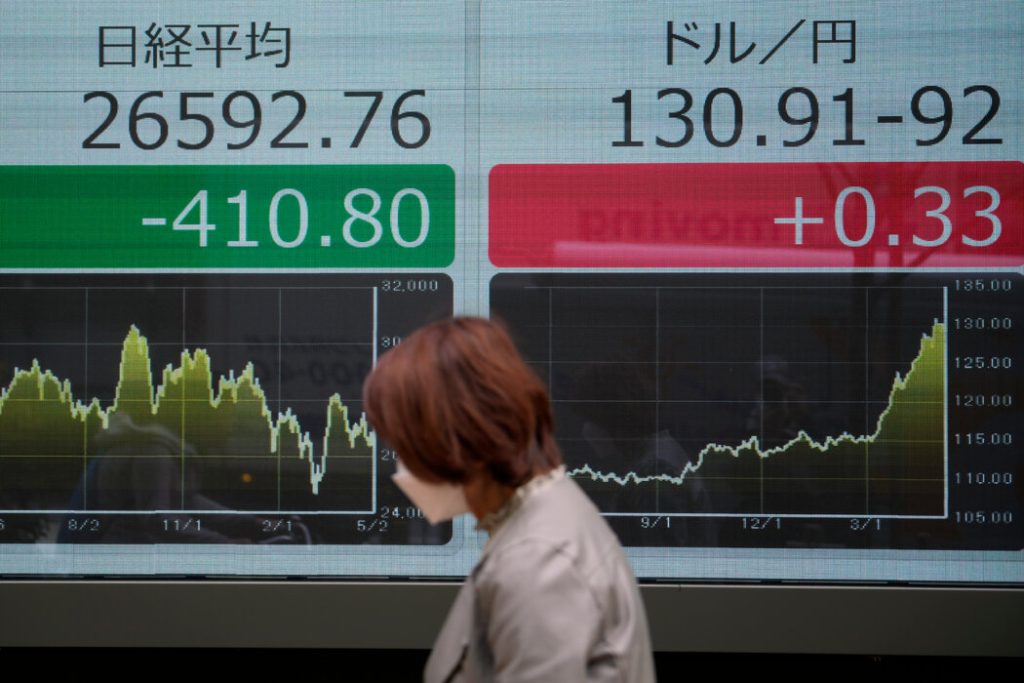
In 2025, Japan’s stock market is in the spotlight. The Nikkei 225 has surged past 41,000, reaching levels not seen since the late 1980s. While much of this strength is credited to Japan’s depreciating yen, behind the currency slide lies a more complex story of foreign investment, corporate reform, and shifting global capital flows.

But the burning question remains: Can Japan’s equity rally endure, or is it overly reliant on a fragile dollar‑yen relationship?

This article provides a comprehensive, website‑style exploration into the forces driving Japan’s market rally, the stability of its drivers, and whether the momentum reflects genuine structural change—or just macro tailwinds.


I. Understanding the Yen’s Decline: More Than Just Forex Volatility

Since mid‑2023, the Japanese yen has weakened more than 20% against the U.S. dollar, hitting multi‑decade lows in early 2025. Multiple factors are contributing:

  • A widening interest rate gap: The Federal Reserve and European Central Bank have aggressively raised rates, while the Bank of Japan (BOJ) remains largely accommodative.
  • Structural current account challenges: Japan’s trade surplus has narrowed, and the country remains dependent on energy and food imports priced in dollars.
  • Speculative carry trades: International traders often borrow yen at ultra-low rates and invest in higher-yielding assets elsewhere.

That said, the impact on equities goes well beyond forex. The weak yen influences corporate profits, investor psychology, and the overall attractiveness of yen-denominated assets to global investors.


II. How Yen Weakness Powers Equity Gains

1. Exporter Earnings Explosion

  • Japan’s largest public companies—including Toyota, Sony, Hitachi, and Fanuc—generate significant revenue overseas.
  • A weak yen directly translates into higher yen‑denominated earnings when foreign revenue is converted, improving profits and EPS, especially for export-intensive sectors like autos and machinery.
  • Many issuers have upgraded earnings guidance solely based on FX assumptions.

2. Surge in Foreign Investment

  • Global institutional investors have shifted capital into Japan, viewing it as cheap and structurally improving relative to more volatile emerging markets.
  • Between 2024–2025, foreigners poured over ¥10 trillion into Japanese equities. Although still a small portion of global asset bases, the concentration of capital in select sectors has added up.
  • Hedge funds and sovereign wealth funds are attracted by the double benefit of capital gains and FX returns, especially via hedged equity positions that still benefit from yen depreciation.

3. Retail Uptick via Savings Incentives

  • Reforms to the NISA (tax-advantaged savings plan) have raised contribution limits and broadened eligible securities, bringing a surge of retail investors into domestic equities.
  • With the yen weakening and savings accounts yielding little, many Japanese households are repositioning into dividend-paying, export-oriented stocks to preserve purchasing power.

III. Sectoral Strengths: Where Capital Is Concentrated

Export-Driven Leaders

  • Automotive companies (Toyota, Honda, Mazda): benefiting from global demand and currency gains.
  • Industrial automation and semiconductor parts: Japan retains leadership through firms like Tokyo Electron, Keyence, and Advantest.
  • Precision machinery and electronics: Exporters are locked into rising demand cycles in AI, automation, and industrial tech.

Lagging Domestic Sectors

  • Consumer goods, retail, utilities, and real estate have underperformed. Rising import costs and weak real wages have limited domestic consumption—areas that do not benefit from a weak yen.
  • Consumer confidence remains fragile amid inflationary pressures, mitigating upside for inward-focused industries.

IV. Risks That Could Upend the Rally

1. Sudden Yen Strength

  • If the BOJ signals or delivers renewed monetary tightening, or if global risk sentiment shifts dramatically, the yen could rebound.
  • This would immediately impact exporter margins and reduce returns on yen-based assets for foreign holders.

2. Overreliance on Short-Term Capital

  • A large share of inflows comes from macro-driven, short-duration capital, including hedge funds and carry trades. These investors can exit quickly if conditions change—creating sudden volatility.
  • In contrast, homegrown retail and GPIF-related flows are steadier but still modest in size.

3. Inflation and Margin Compression

  • Strong import-driven inflation could impact corporate net margins, especially in low-margins sectors.
  • Wage growth, while accelerating in some areas, has lagged behind consumer price inflation—pressuring household incomes.

4. Geopolitical Fragility

  • Japan is geopolitically sensitive—issues like Taiwan tensions, North Korean behavior, or China–Japan friction could spook global investors.
  • Heightened regional security risk could reverse sentiment rapidly, particularly among foreign capital allocators.
V. Is the Rally Sustainable? Three Conditions to Watch

1. Divergence in Monetary Policy: Will the BOJ Hold Its Course?

  • If the BOJ remains distant from Fed or ECB tightening cycles and maintains negative real rates, exporters retain tailwinds.
  • BOJ minutes and governor speeches will be critical indicators for market positioning.

2. Corporate Behavior and Governance Reform

  • The market narrative is increasingly focused on ROE improvement, better capital discipline, and shareholder-friendly policies.
  • Continued growth in dividends, buybacks, and strategic capital allocation will reinforce equity investor confidence beyond FX help.

3. External Demand and Global Growth

  • Japan’s export-dependent economy benefits from a stable global tech and autos cycle.
  • Signs of synchronized global growth—especially a rebound in China and demand in Asia for capital goods—would buttress the rally’s foundation.

VI. Investor Implications: Strategies and Alignment

For Foreign Investors

  • Long exposure to export-heavy equities may capture both company fundamentals and FX tailwinds, but hedging decisions are pivotal.
  • Watch for equity derivatives and USD/JPY dynamics—a sudden FX move could alter ideal entry/exit thresholds.
  • Consider exposure to managed dividend and restructuring plays, especially through corporate governance ETFs.

For Domestic Investors

  • High-dividend, global-facing stocks offer natural protection against inflation and currency risk.
  • Be cautious of sectors without global exposure—many will struggle if domestic wage growth lags.
  • Use NISA and long-term savings accounts to hold a core equity position, but remain diversified across themes.

For Policy Observers and Analysts

  • The yen-equity relationship is now inseparable. Monitoring BOJ decisions, foreign flow patterns, and political commentary is critical.
  • Macro stability still depends on steady inflation, tight fiscal control, and proactive corporate reform to sustain confidence.

VII. Conclusion: Currency Catalyst or Structural Rebound?

Yes: The yen’s weakness has undeniably played a pivotal role in reigniting Japan’s equity markets—opening the door to a meaningful rally.

But clear differentiators are emerging:

  • Exporters and global-integrated firms are the clear winners.
  • Rising domestic investor confidence and corporate discipline lend promise of a deeper equity culture.
  • However, overexposure to FX dynamics and regional geopolitics remains a concern.

The sustainability of the rally will hinge on whether public and private investors continue to see Japan as more than a low-yen macro trade—but as a structurally improving, globally integrated equity opportunity.

For now, capital is flowing, corporate reforms are accumulating traction, and the yen remains weak. Japan has solidity—but whether it builds momentum or just swings with currency winds depends on execution.


Tags: Asia-PacificDevaluationeconomyfinanceFinance and economicsFinancial expressFutures informationglobalJapan
ShareTweetShare

Related Posts

Japan’s Slow but Steady Recovery: How an Aging Nation Is Searching for New Growth
Asia-Pacific

Japan and South Korea: Comparative Economic Analysis and Future Prospects

December 1, 2025
Japan’s Slow but Steady Recovery: How an Aging Nation Is Searching for New Growth
Asia-Pacific

South Korea’s Economy in Transition: Challenges, Opportunities, and the Path Ahead

December 1, 2025
Japan’s Slow but Steady Recovery: How an Aging Nation Is Searching for New Growth
Asia-Pacific

South Korea’s Economic Transformation: From Manufacturing to Technology and Services

December 1, 2025
Japan’s Slow but Steady Recovery: How an Aging Nation Is Searching for New Growth
Asia-Pacific

December 1, 2025
Japan’s Slow but Steady Recovery: How an Aging Nation Is Searching for New Growth
Asia-Pacific

Japan’s Slow but Steady Recovery: How an Aging Nation Is Searching for New Growth

December 1, 2025
Asia-Pacific

The Rise of Asia as the Next Global Financial Center

November 27, 2025
Load More
Leave Comment
  • Bitcoin on a rollercoaster ride The whole network more than 110,000 people exploded warehouse 2.9 billion yuan evaporation in 24 hours! What’s going on?

    Bitcoin on a rollercoaster ride The whole network more than 110,000 people exploded warehouse 2.9 billion yuan evaporation in 24 hours! What’s going on?

    0 shares
    Share 0 Tweet 0
  • There are always unconvinced want to try! The size of Nvidia’s short position is now comparable to Apple and Tesla combined

    0 shares
    Share 0 Tweet 0
  • The probability is about 75%! Will the G7 fall?

    0 shares
    Share 0 Tweet 0
  • A number of data point to the Japanese government intervention in the currency market after the “5 trillion” still depends on the United States

    0 shares
    Share 0 Tweet 0
  • How far can Tech stocks go to split on Fed expectations?

    0 shares
    Share 0 Tweet 0

Hot

The New Inflation Puzzle: Why Europe and the United States Are Struggling With Different Price Pressures

The New Economic Landscape of Europe and the United States: How 2025 is Reshaping Growth Models

December 3, 2025
The New Inflation Puzzle: Why Europe and the United States Are Struggling With Different Price Pressures

Transatlantic Trade Shifts: How Europe and the United States Are Redefining Economic Partnerships in 2025

December 3, 2025
The New Inflation Puzzle: Why Europe and the United States Are Struggling With Different Price Pressures

The Energy Transition Divide: How Europe and the United States Are Taking Different Paths Toward a Green Economy

December 3, 2025
The New Inflation Puzzle: Why Europe and the United States Are Struggling With Different Price Pressures

The New Workforce Challenge: How Europe and the United States Are Struggling With Talent Shortages and Productivity Slowdowns

December 3, 2025
The New Inflation Puzzle: Why Europe and the United States Are Struggling With Different Price Pressures

The New Inflation Puzzle: Why Europe and the United States Are Struggling With Different Price Pressures

December 3, 2025

The Social Foundations of Economic Stability: How France and Germany Are Managing Inequality, Welfare, and the Future of Work

December 2, 2025

The Energy Transition Challenge: How France and Germany Are Rebuilding Their Economic Power Through Green Transformation

December 2, 2025

France and Germany in a Shifting Global Economy: How Both Countries Are Rebuilding Their Competitiveness

December 2, 2025

Germany’s Economy at a Turning Point: Slow Growth, Industrial Pressure, and the Search for a New Future

December 2, 2025

France’s Economy in a Time of Slow Growth and Social Pressure

December 2, 2025
The New Inflation Puzzle: Why Europe and the United States Are Struggling With Different Price Pressures
Europe and America

The New Economic Landscape of Europe and the United States: How 2025 is Reshaping Growth Models

December 3, 2025
The New Inflation Puzzle: Why Europe and the United States Are Struggling With Different Price Pressures
Europe and America

Transatlantic Trade Shifts: How Europe and the United States Are Redefining Economic Partnerships in 2025

December 3, 2025
The New Inflation Puzzle: Why Europe and the United States Are Struggling With Different Price Pressures
Europe and America

The Energy Transition Divide: How Europe and the United States Are Taking Different Paths Toward a Green Economy

December 3, 2025
The New Inflation Puzzle: Why Europe and the United States Are Struggling With Different Price Pressures
Europe and America

The New Workforce Challenge: How Europe and the United States Are Struggling With Talent Shortages and Productivity Slowdowns

December 3, 2025
wealthtrend

WealthTrend, as the leading financial information service platform in the industry, provides comprehensive, timely and accurate financial information services for investors and financial practitioners by virtue of its deep industry background, clear service purpose and unique characteristics.

Copyright © 2025 Contact: [email protected]

No Result
View All Result
  • Home
  • Top News
  • Global
  • Asia-Pacific
  • Europe
  • viewpoint
  • America
  • Europe and America

Copyright © 2025 Contact: [email protected]

Welcome Back!

Login to your account below

Forgotten Password?

Retrieve your password

Please enter your username or email address to reset your password.

Log In