














wealthtrend
  • Home
  • Top News
  • Global

    The Global Interest Rate Turning Point: How Central Banks Are Changing Their Policies

    The New Shape of Global Trade and Finance: How Supply Chains and Currencies Are Moving

    The Rise of Digital Money:

    Finance in a Time of Geopolitical Tension:

    The New Shape of Work: How Technology Is Changing U.S. Jobs

    The New Forces Driving Global Markets:Technology, Demographics, and the Rise of Emerging Economies

    Global Payments at an Inflection Point: How Infrastructure, Regulation, and Geopolitics Are Rewriting the Future of Money

  • Asia-Pacific
    Japan’s Slow but Steady Recovery: How an Aging Nation Is Searching for New Growth

    Japan and South Korea: Comparative Economic Analysis and Future Prospects

    Japan’s Slow but Steady Recovery: How an Aging Nation Is Searching for New Growth

    South Korea’s Economy in Transition: Challenges, Opportunities, and the Path Ahead

    Japan’s Slow but Steady Recovery: How an Aging Nation Is Searching for New Growth

    South Korea’s Economic Transformation: From Manufacturing to Technology and Services

    Japan’s Slow but Steady Recovery: How an Aging Nation Is Searching for New Growth

    Japan’s Slow but Steady Recovery: How an Aging Nation Is Searching for New Growth

    Japan’s Slow but Steady Recovery: How an Aging Nation Is Searching for New Growth

    The Rise of Asia as the Next Global Financial Center

  • Europe

    The Social Foundations of Economic Stability: How France and Germany Are Managing Inequality, Welfare, and the Future of Work

    The Energy Transition Challenge: How France and Germany Are Rebuilding Their Economic Power Through Green Transformation

    France and Germany in a Shifting Global Economy: How Both Countries Are Rebuilding Their Competitiveness

    Germany’s Economy at a Turning Point: Slow Growth, Industrial Pressure, and the Search for a New Future

    France’s Economy in a Time of Slow Growth and Social Pressure

    The New Monetary Landscape of Europe: How the Eurozone Is Redefining Its Financial Future

  • viewpoint
  • America
  • Europe and America
wealthtrend
  • Home
  • Top News
  • Global

    The Global Interest Rate Turning Point: How Central Banks Are Changing Their Policies

    The New Shape of Global Trade and Finance: How Supply Chains and Currencies Are Moving

    The Rise of Digital Money:

    Finance in a Time of Geopolitical Tension:

    The New Shape of Work: How Technology Is Changing U.S. Jobs

    The New Forces Driving Global Markets:Technology, Demographics, and the Rise of Emerging Economies

    Global Payments at an Inflection Point: How Infrastructure, Regulation, and Geopolitics Are Rewriting the Future of Money

  • Asia-Pacific
    Japan’s Slow but Steady Recovery: How an Aging Nation Is Searching for New Growth

    Japan and South Korea: Comparative Economic Analysis and Future Prospects

    Japan’s Slow but Steady Recovery: How an Aging Nation Is Searching for New Growth

    South Korea’s Economy in Transition: Challenges, Opportunities, and the Path Ahead

    Japan’s Slow but Steady Recovery: How an Aging Nation Is Searching for New Growth

    South Korea’s Economic Transformation: From Manufacturing to Technology and Services

    Japan’s Slow but Steady Recovery: How an Aging Nation Is Searching for New Growth

    Japan’s Slow but Steady Recovery: How an Aging Nation Is Searching for New Growth

    Japan’s Slow but Steady Recovery: How an Aging Nation Is Searching for New Growth

    The Rise of Asia as the Next Global Financial Center

  • Europe

    The Social Foundations of Economic Stability: How France and Germany Are Managing Inequality, Welfare, and the Future of Work

    The Energy Transition Challenge: How France and Germany Are Rebuilding Their Economic Power Through Green Transformation

    France and Germany in a Shifting Global Economy: How Both Countries Are Rebuilding Their Competitiveness

    Germany’s Economy at a Turning Point: Slow Growth, Industrial Pressure, and the Search for a New Future

    France’s Economy in a Time of Slow Growth and Social Pressure

    The New Monetary Landscape of Europe: How the Eurozone Is Redefining Its Financial Future

  • viewpoint
  • America
  • Europe and America
wealthtrend
Home Asia-Pacific

Asian Banking and Credit Risk in 2025: Challenges of Debt, Property & Non-Performing Loans

November 10, 2025
in Asia-Pacific
  1. Introduction: The End of Easy Money
    By 2025, Asia’s banking landscape stands at a crucial inflection point. The era of ultra-low interest rates and abundant liquidity—conditions that defined the 2010s and cushioned the early 2020s—has definitively ended. Across major economies from China to Indonesia, policymakers are wrestling with a painful reality: the cost of money has risen, leverage is heavier than ever, and the risks embedded in property and credit markets are starting to surface.
    The International Monetary Fund warns that Asian financial systems are showing “pockets of vulnerability,” especially where banks are overexposed to real estate or local government borrowing. Meanwhile, credit growth has slowed, margins are compressed, and asset quality is deteriorating unevenly across the region.
    Asia’s growth story is intact—but beneath the surface, its banking systems are entering a phase of structural adjustment.
  2. China: The Property Hangover
    Nowhere is the adjustment more visible than in China. The property-driven boom that fueled over two decades of urban expansion has turned into a drag on the balance sheets of both developers and banks.
    The People’s Bank of China (PBoC) has spent much of 2024 and early 2025 managing liquidity injections and targeted credit easing. Yet the deeper issue remains: local banks’ exposure to the property sector.
    Official data show that real-estate-related loans still account for roughly 25% of total banking assets, and local government financing vehicles (LGFVs) add another layer of opaque risk. In smaller city and rural banks, non-performing loans (NPLs) have quietly crept above 4–5%, despite official figures claiming less than half that level.
    The government’s “three red lines” policy, intended to deleverage the real-estate sector, has forced developers to scale back borrowing—but that same policy has squeezed bank cash flows, leading to refinancing stress. Beijing’s 2025 focus, therefore, is less about new credit growth and more about containing contagion risk within a managed restructuring framework.
  3. Japan: Profitability Over Risk
    In Japan, the story looks different—but equally complex. After decades of deflation and zero interest rates, the Bank of Japan’s modest tightening cycle in 2024 gave commercial banks their first real margin expansion in years.
    However, the positive interest differential comes with new challenges: the value of bond portfolios has declined as yields rise, and mark-to-market losses are pressuring smaller institutions.
    Japanese megabanks—Mizuho, MUFG, and SMBC—remain well-capitalized, with global operations providing a cushion. But regional banks, dependent on local real estate and SME loans, face structural profitability risks. Their exposure to aging demographics and shrinking local economies means credit demand is weak, while risk-adjusted returns are low.
    For Japan, 2025 is not a crisis year, but a slow-burn structural risk year—a period where profitability and credit quality diverge sharply between large and small lenders.
  4. South Korea and Taiwan: Export-Linked Credit Exposure
    South Korea and Taiwan illustrate the tight link between industrial cycles and credit conditions.
    Both economies have high exposure to global tech exports, semiconductors, and manufacturing supply chains. When global demand dips—as it did in early 2024—banks face a rise in corporate delinquencies, especially among mid-tier suppliers and electronics exporters.
    South Korea’s household debt, at over 100% of GDP, remains among the world’s highest. Mortgage rates have climbed, and while the Bank of Korea has been cautious in tightening, the pressure on consumer credit is evident. Taiwan’s banking system is better capitalized, but its export concentration leaves it vulnerable to cyclical downturns.
    The key risk in both markets is correlated exposure—when trade slowdowns, property stagnation, and household leverage combine to amplify stress within banks’ loan books.
  5. Southeast Asia: The Growth-Credit Tradeoff
    In Southeast Asia, the story is more uneven but deeply interconnected.
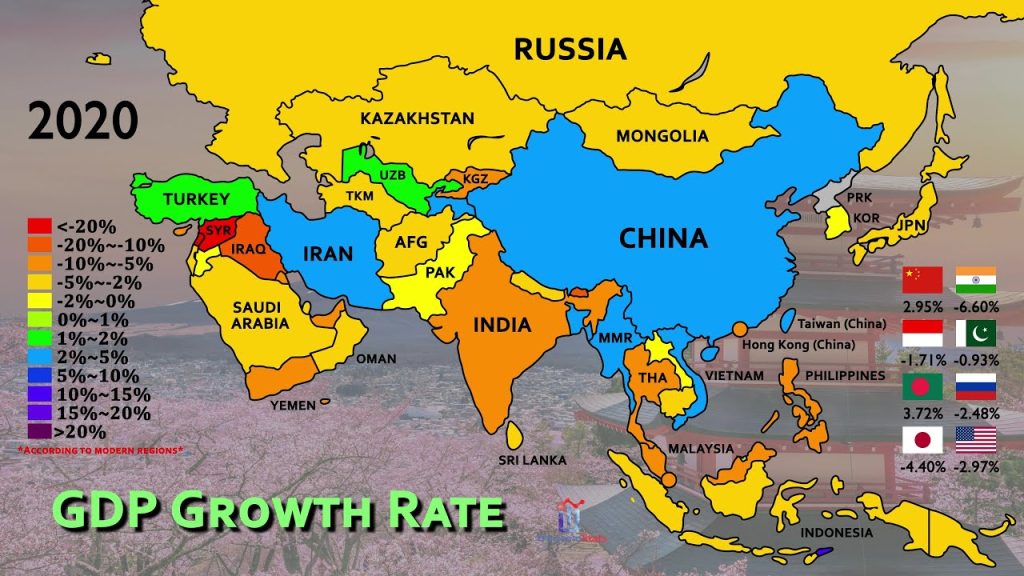
  • Singapore has emerged as a regional financial hub benefiting from capital inflows and wealth management expansion. Its banks—DBS, OCBC, and UOB—remain well-positioned with strong digital platforms and regional diversification.
  • Malaysia and Thailand are balancing credit expansion with prudential tightening; both face risks from SME defaults and external borrowing.
  • Indonesia and the Philippines, meanwhile, are navigating rapid credit growth as domestic demand surges.
    Yet beneath this dynamism lies a familiar warning: credit booms in emerging Asia often sow the seeds of future instability. IMF data show private-sector credit growth outpacing nominal GDP in several ASEAN countries—a potential signal of overheating.
    Moreover, global liquidity tightening and dollar strength have raised the cost of foreign borrowing, pressuring corporate balance sheets that rely on offshore financing.
  1. The Real Estate Web
    Across Asia, real estate remains the most visible—and dangerous—channel of systemic risk.
    In China, unsold housing inventory and falling land revenues constrain both developers and local governments. In Korea and Singapore, soaring housing prices have triggered new macroprudential limits. Japan’s property sector is stable but sluggish, with low yields deterring fresh investment.
    Real estate not only affects household wealth and confidence but also defines the collateral foundation of Asia’s banking systems. When property values stagnate or fall, the ripple effects on collateralized lending, construction credit, and local fiscal revenue are immediate.
    Thus, while Asia’s banks appear solvent on paper, their exposure to property cycles remains a latent vulnerability.
  2. Non-Performing Loans: The Silent Build-Up
    Non-performing loans (NPLs) are quietly rising across the region. Official numbers often understate the real magnitude because of evergreening practices and loan restructuring.
    China’s headline NPL ratio stands at around 1.6%, but analysts estimate the effective rate is closer to 8–10% once special-mention loans and shadow exposures are included. In Southeast Asia, NPLs remain moderate but are trending upward, especially in consumer and SME segments.
    Japanese and Korean banks report low NPLs, but this stability masks credit concentration risks in aging or export-sensitive sectors.
    In 2025, regulators from Hong Kong to Jakarta are tightening disclosure standards and provisioning rules, signaling growing concern over asset quality.
  3. The Policy Tightrope
    Asian policymakers are navigating a difficult balance:
  • Too much tightening risks choking growth and triggering defaults.
  • Too much easing risks fueling new bubbles and moral hazard.
    Central banks have thus adopted “targeted” approaches—liquidity support to specific sectors (e.g., green infrastructure, tech manufacturing) while curbing speculative lending.
    The regional trend is toward macroprudential regulation, including loan-to-value caps, stress tests, and capital adequacy reforms under Basel IV. However, implementation varies widely across jurisdictions, with smaller economies lagging behind.
  1. Digital and Structural Shifts
    The rise of digital banking and fintech lending introduces both opportunities and risks.
    On one hand, technology enables better credit scoring, inclusion, and efficiency. On the other, unregulated digital lenders often extend high-risk consumer loans, amplifying systemic vulnerability.
    In countries like Indonesia, Vietnam, and India, the fintech sector’s rapid growth outpaces regulatory oversight. Cross-border data flows, cybersecurity, and algorithmic lending models are new frontiers of financial risk.
    At the same time, ESG and green finance are gaining traction, with Asian banks increasingly channeling credit toward sustainability projects. Yet this shift requires strong frameworks to prevent “greenwashing” and ensure genuine impact.
  2. Outlook: Toward a More Resilient Banking Future
    As 2025 unfolds, Asia’s banking sector is not facing an immediate crisis—but it is undergoing a stress test of resilience.
    The region’s fundamentals remain robust: high savings rates, prudent regulators, and diversified growth engines. Yet debt overhangs, property dependencies, and uneven transparency continue to weigh on confidence.
    The next phase for Asian banking will be about adaptation, not expansion—rebuilding balance sheets, improving governance, and embracing digital transformation while managing new types of risk.
    If managed well, Asia’s banks could emerge leaner, more transparent, and better aligned with sustainable growth. But if complacency sets in, the quiet buildup of credit stress could evolve into the next major test of the region’s financial stability.

Tags: AsiaAsia-Pacificeconomyfinance
ShareTweetShare

Related Posts

Japan’s Slow but Steady Recovery: How an Aging Nation Is Searching for New Growth
Asia-Pacific

Japan and South Korea: Comparative Economic Analysis and Future Prospects

December 1, 2025
Japan’s Slow but Steady Recovery: How an Aging Nation Is Searching for New Growth
Asia-Pacific

South Korea’s Economy in Transition: Challenges, Opportunities, and the Path Ahead

December 1, 2025
Japan’s Slow but Steady Recovery: How an Aging Nation Is Searching for New Growth
Asia-Pacific

South Korea’s Economic Transformation: From Manufacturing to Technology and Services

December 1, 2025
Japan’s Slow but Steady Recovery: How an Aging Nation Is Searching for New Growth
Asia-Pacific

December 1, 2025
Japan’s Slow but Steady Recovery: How an Aging Nation Is Searching for New Growth
Asia-Pacific

Japan’s Slow but Steady Recovery: How an Aging Nation Is Searching for New Growth

December 1, 2025
Asia-Pacific

The Rise of Asia as the Next Global Financial Center

November 27, 2025
Load More
Leave Comment
  • Bitcoin on a rollercoaster ride The whole network more than 110,000 people exploded warehouse 2.9 billion yuan evaporation in 24 hours! What’s going on?

    Bitcoin on a rollercoaster ride The whole network more than 110,000 people exploded warehouse 2.9 billion yuan evaporation in 24 hours! What’s going on?

    0 shares
    Share 0 Tweet 0
  • There are always unconvinced want to try! The size of Nvidia’s short position is now comparable to Apple and Tesla combined

    0 shares
    Share 0 Tweet 0
  • The probability is about 75%! Will the G7 fall?

    0 shares
    Share 0 Tweet 0
  • A number of data point to the Japanese government intervention in the currency market after the “5 trillion” still depends on the United States

    0 shares
    Share 0 Tweet 0
  • How far can Tech stocks go to split on Fed expectations?

    0 shares
    Share 0 Tweet 0

Hot

The New Inflation Puzzle: Why Europe and the United States Are Struggling With Different Price Pressures

The New Economic Landscape of Europe and the United States: How 2025 is Reshaping Growth Models

December 3, 2025
The New Inflation Puzzle: Why Europe and the United States Are Struggling With Different Price Pressures

Transatlantic Trade Shifts: How Europe and the United States Are Redefining Economic Partnerships in 2025

December 3, 2025
The New Inflation Puzzle: Why Europe and the United States Are Struggling With Different Price Pressures

The Energy Transition Divide: How Europe and the United States Are Taking Different Paths Toward a Green Economy

December 3, 2025
The New Inflation Puzzle: Why Europe and the United States Are Struggling With Different Price Pressures

The New Workforce Challenge: How Europe and the United States Are Struggling With Talent Shortages and Productivity Slowdowns

December 3, 2025
The New Inflation Puzzle: Why Europe and the United States Are Struggling With Different Price Pressures

The New Inflation Puzzle: Why Europe and the United States Are Struggling With Different Price Pressures

December 3, 2025

The Social Foundations of Economic Stability: How France and Germany Are Managing Inequality, Welfare, and the Future of Work

December 2, 2025

The Energy Transition Challenge: How France and Germany Are Rebuilding Their Economic Power Through Green Transformation

December 2, 2025

France and Germany in a Shifting Global Economy: How Both Countries Are Rebuilding Their Competitiveness

December 2, 2025

Germany’s Economy at a Turning Point: Slow Growth, Industrial Pressure, and the Search for a New Future

December 2, 2025

France’s Economy in a Time of Slow Growth and Social Pressure

December 2, 2025
The New Inflation Puzzle: Why Europe and the United States Are Struggling With Different Price Pressures
Europe and America

The New Economic Landscape of Europe and the United States: How 2025 is Reshaping Growth Models

December 3, 2025
The New Inflation Puzzle: Why Europe and the United States Are Struggling With Different Price Pressures
Europe and America

Transatlantic Trade Shifts: How Europe and the United States Are Redefining Economic Partnerships in 2025

December 3, 2025
The New Inflation Puzzle: Why Europe and the United States Are Struggling With Different Price Pressures
Europe and America

The Energy Transition Divide: How Europe and the United States Are Taking Different Paths Toward a Green Economy

December 3, 2025
The New Inflation Puzzle: Why Europe and the United States Are Struggling With Different Price Pressures
Europe and America

The New Workforce Challenge: How Europe and the United States Are Struggling With Talent Shortages and Productivity Slowdowns

December 3, 2025
wealthtrend

WealthTrend, as the leading financial information service platform in the industry, provides comprehensive, timely and accurate financial information services for investors and financial practitioners by virtue of its deep industry background, clear service purpose and unique characteristics.

Copyright © 2025 Contact: [email protected]

No Result
View All Result
  • Home
  • Top News
  • Global
  • Asia-Pacific
  • Europe
  • viewpoint
  • America
  • Europe and America

Copyright © 2025 Contact: [email protected]

Welcome Back!

Login to your account below

Forgotten Password?

Retrieve your password

Please enter your username or email address to reset your password.

Log In