








wealthtrend
  • Home
  • Top News
  • Global

    The Global Interest Rate Turning Point: How Central Banks Are Changing Their Policies

    The New Shape of Global Trade and Finance: How Supply Chains and Currencies Are Moving

    The Rise of Digital Money:

    Finance in a Time of Geopolitical Tension:

    The New Shape of Work: How Technology Is Changing U.S. Jobs

    The New Forces Driving Global Markets:Technology, Demographics, and the Rise of Emerging Economies

    Global Payments at an Inflection Point: How Infrastructure, Regulation, and Geopolitics Are Rewriting the Future of Money

  • Asia-Pacific
    Japan’s Slow but Steady Recovery: How an Aging Nation Is Searching for New Growth

    Japan and South Korea: Comparative Economic Analysis and Future Prospects

    Japan’s Slow but Steady Recovery: How an Aging Nation Is Searching for New Growth

    South Korea’s Economy in Transition: Challenges, Opportunities, and the Path Ahead

    Japan’s Slow but Steady Recovery: How an Aging Nation Is Searching for New Growth

    South Korea’s Economic Transformation: From Manufacturing to Technology and Services

    Japan’s Slow but Steady Recovery: How an Aging Nation Is Searching for New Growth

    Japan’s Slow but Steady Recovery: How an Aging Nation Is Searching for New Growth

    Japan’s Slow but Steady Recovery: How an Aging Nation Is Searching for New Growth

    The Rise of Asia as the Next Global Financial Center

  • Europe

    The Social Foundations of Economic Stability: How France and Germany Are Managing Inequality, Welfare, and the Future of Work

    The Energy Transition Challenge: How France and Germany Are Rebuilding Their Economic Power Through Green Transformation

    France and Germany in a Shifting Global Economy: How Both Countries Are Rebuilding Their Competitiveness

    Germany’s Economy at a Turning Point: Slow Growth, Industrial Pressure, and the Search for a New Future

    France’s Economy in a Time of Slow Growth and Social Pressure

    The New Monetary Landscape of Europe: How the Eurozone Is Redefining Its Financial Future

  • viewpoint
  • America
  • Europe and America
wealthtrend
  • Home
  • Top News
  • Global

    The Global Interest Rate Turning Point: How Central Banks Are Changing Their Policies

    The New Shape of Global Trade and Finance: How Supply Chains and Currencies Are Moving

    The Rise of Digital Money:

    Finance in a Time of Geopolitical Tension:

    The New Shape of Work: How Technology Is Changing U.S. Jobs

    The New Forces Driving Global Markets:Technology, Demographics, and the Rise of Emerging Economies

    Global Payments at an Inflection Point: How Infrastructure, Regulation, and Geopolitics Are Rewriting the Future of Money

  • Asia-Pacific
    Japan’s Slow but Steady Recovery: How an Aging Nation Is Searching for New Growth

    Japan and South Korea: Comparative Economic Analysis and Future Prospects

    Japan’s Slow but Steady Recovery: How an Aging Nation Is Searching for New Growth

    South Korea’s Economy in Transition: Challenges, Opportunities, and the Path Ahead

    Japan’s Slow but Steady Recovery: How an Aging Nation Is Searching for New Growth

    South Korea’s Economic Transformation: From Manufacturing to Technology and Services

    Japan’s Slow but Steady Recovery: How an Aging Nation Is Searching for New Growth

    Japan’s Slow but Steady Recovery: How an Aging Nation Is Searching for New Growth

    Japan’s Slow but Steady Recovery: How an Aging Nation Is Searching for New Growth

    The Rise of Asia as the Next Global Financial Center

  • Europe

    The Social Foundations of Economic Stability: How France and Germany Are Managing Inequality, Welfare, and the Future of Work

    The Energy Transition Challenge: How France and Germany Are Rebuilding Their Economic Power Through Green Transformation

    France and Germany in a Shifting Global Economy: How Both Countries Are Rebuilding Their Competitiveness

    Germany’s Economy at a Turning Point: Slow Growth, Industrial Pressure, and the Search for a New Future

    France’s Economy in a Time of Slow Growth and Social Pressure

    The New Monetary Landscape of Europe: How the Eurozone Is Redefining Its Financial Future

  • viewpoint
  • America
  • Europe and America
wealthtrend
Home Europe

Trade, Tariffs, and the New Economic Order: Europe’s External Headwinds

November 12, 2025
in Europe
The Asian Century in Flux: Financial Centers, Capital Flows, and Geopolitical Risk

Introduction

In 2025, Europe finds itself navigating an increasingly fragmented global trading system. Once a champion of open markets and multilateralism, the continent now faces a harsh new reality — one shaped by rising protectionism, shifting alliances, and the weaponization of trade.

From the lingering effects of Brexit to the ripple shocks of the U.S.–China rivalry, Europe’s export-driven economies are under pressure. The European Union (EU), long dependent on global demand for machinery, automobiles, and luxury goods, must now reinvent its trade model in an era where economic security often trumps free trade.

The global trading order that underpinned Europe’s prosperity for decades is being rewritten — and Europe must decide whether to adapt, lead, or be sidelined.


1. Europe’s Export Engine Loses Steam

For decades, exports were Europe’s growth engine. Germany’s industrial machine, Italy’s precision manufacturing, and France’s luxury brands collectively powered a global trade surplus that symbolized European efficiency.

But by 2025, the cracks are showing. Sluggish global growth, weakened demand from China, and a strong U.S. dollar have weighed on European exports. The Eurozone’s trade surplus, once exceeding €300 billion annually, has narrowed sharply.

Even traditional export powerhouses like Germany and the Netherlands are now reporting consecutive quarters of contraction in goods exports, particularly in automobiles and chemical products. Meanwhile, new export restrictions on dual-use technologies and critical materials have further complicated Europe’s trade calculus.

The European Commission’s latest projections estimate overall export growth at just 0.6% for 2025, compared with 4–5% in the pre-pandemic decade — a sign of both global cooling and structural vulnerability.


2. De-Globalization and the Rise of “Friend-Shoring”

The rules of global trade are being redrawn.

“Friend-shoring” — the strategy of concentrating supply chains within political or ideological allies — has become the new mantra among advanced economies. The U.S. and Japan have already taken major steps to realign supply chains away from China, particularly in semiconductors and clean-tech materials.

Europe, too, is adapting — but cautiously. While Brussels acknowledges the geopolitical logic, it remains wary of fragmenting global markets entirely. Still, Europe’s Critical Raw Materials Act (CRMA) and Net-Zero Industry Act (NZIA) reflect a strategic pivot toward self-reliance in sectors like energy storage, hydrogen, and digital infrastructure.

This reorientation carries both risks and rewards:

  • Pros: Reduced exposure to geopolitical shocks, enhanced technological sovereignty.
  • Cons: Higher production costs, slower innovation, and trade retaliation from excluded partners.

The EU’s challenge is to strike a balance — securing strategic autonomy without descending into isolationism.


3. The U.S.–China Tug-of-War and Europe’s Dilemma

Few issues test Europe’s strategic patience more than the U.S.–China rivalry.

Washington’s aggressive industrial policy — through the Inflation Reduction Act and CHIPS Act — has pulled investment and supply chains toward North America. Meanwhile, China’s export push in electric vehicles, solar panels, and batteries has triggered a wave of anti-dumping investigations in Brussels.

Caught in the middle, Europe risks becoming a regulatory referee rather than a competitive player.

While the EU and the U.S. share security interests, their trade relations are far from frictionless. Disputes over subsidies, digital taxes, and agricultural standards continue to resurface. At the same time, Europe’s trade with China, once a pillar of growth, is politically sensitive and economically lopsided.

In 2025, the European Commission officially labeled China a “systemic rival” while maintaining dialogue on climate and finance — an uneasy duality that reflects Europe’s dependence on Chinese goods even as it seeks to diversify.
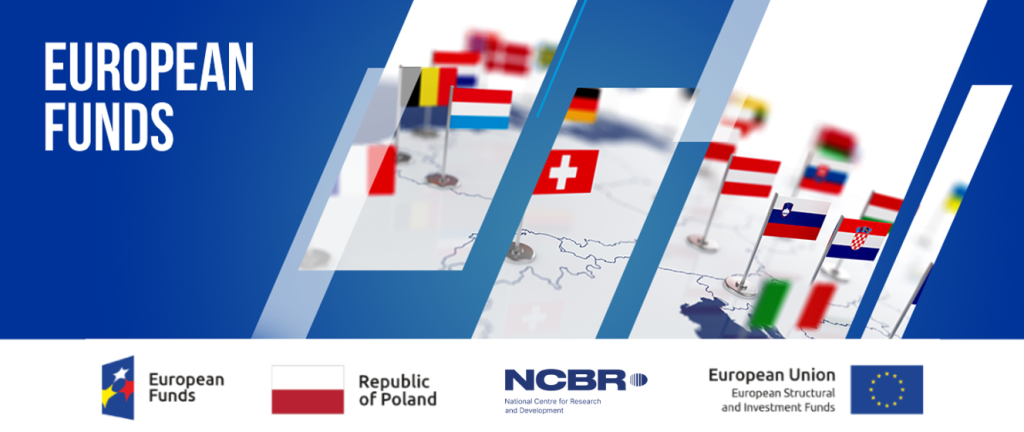

4. Tariff Battles and Trade Defense Instruments

Trade defense, once an afterthought, has become a core part of Europe’s economic strategy.

In the past two years, the EU has imposed or threatened tariffs on Chinese EVs, steel products, and solar modules, citing unfair state subsidies and environmental dumping. In response, Beijing has hinted at retaliatory measures targeting European agriculture and luxury exports.

Meanwhile, Brussels has ramped up its Foreign Subsidies Regulation (FSR) to screen foreign investments and ensure a “level playing field.” Critics argue that this proliferation of defensive tools risks undermining Europe’s own free-trade ethos, while supporters insist it’s long overdue to protect domestic industry.

Beyond China, new tariff tensions with the U.S. over green-tech tax credits and with Mercosur over environmental clauses in trade agreements highlight Europe’s growing isolation in trade diplomacy.


5. Energy, Sanctions, and Strategic Dependence

The Russia–Ukraine war remains the most disruptive force in European trade.
Energy sanctions have reshaped Europe’s import map: Russian gas imports have collapsed, replaced by LNG from the U.S., Qatar, and Norway. While this diversification has reduced geopolitical risk, it has also driven up costs, weakening Europe’s energy-intensive industries.

Additionally, secondary sanctions and export controls have complicated Europe’s trade with countries like India and Turkey, who maintain business ties with Moscow. These ripple effects underscore how geoeconomics — the intersection of power and trade — increasingly defines European commerce.

The EU’s new Economic Security Strategy, adopted in 2024, seeks to strengthen resilience through risk mapping, outbound investment screening, and supply-chain transparency. But execution remains uneven across member states, revealing once again the tension between EU-level ambition and national sovereignty.


6. The Digital Trade Frontier

Beyond goods, the next trade frontier is digital.

Europe has positioned itself as a global regulatory leader through the Digital Services Act (DSA), Digital Markets Act (DMA), and new rules on AI governance. These frameworks aim to set global standards — a “Brussels Effect” that extends Europe’s influence abroad.

However, the regulatory burden also risks slowing domestic innovation. Start-ups and digital exporters complain of compliance fatigue, while foreign investors question the EU’s openness.

Meanwhile, cross-border data flows with the U.S. remain fragile despite the EU–U.S. Data Privacy Framework, and digital decoupling from China appears inevitable. The result is a balkanized digital economy, where regulation substitutes for growth.


7. The Future of EU Trade Policy

In response to these challenges, Brussels is recalibrating its trade agenda around three pillars:

  1. Strategic Autonomy – Diversifying suppliers, especially in energy, rare earths, and semiconductors.
  2. Sustainability and Fairness – Integrating climate and labor standards into all trade deals.
  3. Resilience and Partnerships – Deepening ties with India, ASEAN, and Africa to replace lost momentum in China and Russia.

Negotiations with India, Australia, and Indonesia are advancing, albeit slowly, while new initiatives like the Global Gateway seek to provide infrastructure alternatives to China’s Belt & Road Initiative.

Still, internal divisions persist: France resists agricultural liberalization, while Eastern Europe prioritizes security ties over environmental clauses. This fragmentation hampers the EU’s ability to act decisively on the world stage.


8. Industry Response: Adaptation and Innovation

European businesses are adapting in pragmatic ways.
Manufacturers are localizing supply chains, building resilience through near-shoring and automation. The automotive industry, facing stiff Chinese competition, is accelerating its shift toward electric and software-defined vehicles.

Luxury brands and aerospace firms continue to thrive, leveraging global demand for premium and high-value goods. Yet small and medium-sized enterprises (SMEs), the backbone of European trade, struggle with compliance costs and export financing constraints.

To survive in this volatile environment, firms are investing more in trade intelligence, risk management, and sustainability reporting — tools once considered optional but now essential.


9. Conclusion: Europe Between Protection and Openness

Europe’s external trade environment in 2025 reflects a fundamental transformation: from liberal globalization to managed interdependence.

The continent’s prosperity will depend on its ability to balance defensive instincts with strategic openness — protecting key industries without retreating into protectionism.

Trade has always been Europe’s lifeblood and its soft power. But in the new order of global fragmentation, trade policy is no longer just economics — it is geopolitics.

To thrive, Europe must not only defend its interests but also redefine the principles of fair and sustainable globalization — ensuring that openness, once a virtue, does not become a vulnerability.

Tags: economyEuropefinance
ShareTweetShare

Related Posts

Europe

The Social Foundations of Economic Stability: How France and Germany Are Managing Inequality, Welfare, and the Future of Work

December 2, 2025
Europe

The Energy Transition Challenge: How France and Germany Are Rebuilding Their Economic Power Through Green Transformation

December 2, 2025
Europe

France and Germany in a Shifting Global Economy: How Both Countries Are Rebuilding Their Competitiveness

December 2, 2025
Europe

Germany’s Economy at a Turning Point: Slow Growth, Industrial Pressure, and the Search for a New Future

December 2, 2025
Europe

France’s Economy in a Time of Slow Growth and Social Pressure

December 2, 2025
Europe

The New Monetary Landscape of Europe: How the Eurozone Is Redefining Its Financial Future

November 26, 2025
Load More
Leave Comment
  • Bitcoin on a rollercoaster ride The whole network more than 110,000 people exploded warehouse 2.9 billion yuan evaporation in 24 hours! What’s going on?

    Bitcoin on a rollercoaster ride The whole network more than 110,000 people exploded warehouse 2.9 billion yuan evaporation in 24 hours! What’s going on?

    0 shares
    Share 0 Tweet 0
  • There are always unconvinced want to try! The size of Nvidia’s short position is now comparable to Apple and Tesla combined

    0 shares
    Share 0 Tweet 0
  • The probability is about 75%! Will the G7 fall?

    0 shares
    Share 0 Tweet 0
  • A number of data point to the Japanese government intervention in the currency market after the “5 trillion” still depends on the United States

    0 shares
    Share 0 Tweet 0
  • How far can Tech stocks go to split on Fed expectations?

    0 shares
    Share 0 Tweet 0

Hot

The New Inflation Puzzle: Why Europe and the United States Are Struggling With Different Price Pressures

The New Economic Landscape of Europe and the United States: How 2025 is Reshaping Growth Models

December 3, 2025
The New Inflation Puzzle: Why Europe and the United States Are Struggling With Different Price Pressures

Transatlantic Trade Shifts: How Europe and the United States Are Redefining Economic Partnerships in 2025

December 3, 2025
The New Inflation Puzzle: Why Europe and the United States Are Struggling With Different Price Pressures

The Energy Transition Divide: How Europe and the United States Are Taking Different Paths Toward a Green Economy

December 3, 2025
The New Inflation Puzzle: Why Europe and the United States Are Struggling With Different Price Pressures

The New Workforce Challenge: How Europe and the United States Are Struggling With Talent Shortages and Productivity Slowdowns

December 3, 2025
The New Inflation Puzzle: Why Europe and the United States Are Struggling With Different Price Pressures

The New Inflation Puzzle: Why Europe and the United States Are Struggling With Different Price Pressures

December 3, 2025

The Social Foundations of Economic Stability: How France and Germany Are Managing Inequality, Welfare, and the Future of Work

December 2, 2025

The Energy Transition Challenge: How France and Germany Are Rebuilding Their Economic Power Through Green Transformation

December 2, 2025

France and Germany in a Shifting Global Economy: How Both Countries Are Rebuilding Their Competitiveness

December 2, 2025

Germany’s Economy at a Turning Point: Slow Growth, Industrial Pressure, and the Search for a New Future

December 2, 2025

France’s Economy in a Time of Slow Growth and Social Pressure

December 2, 2025
The New Inflation Puzzle: Why Europe and the United States Are Struggling With Different Price Pressures
Europe and America

The New Economic Landscape of Europe and the United States: How 2025 is Reshaping Growth Models

December 3, 2025
The New Inflation Puzzle: Why Europe and the United States Are Struggling With Different Price Pressures
Europe and America

Transatlantic Trade Shifts: How Europe and the United States Are Redefining Economic Partnerships in 2025

December 3, 2025
The New Inflation Puzzle: Why Europe and the United States Are Struggling With Different Price Pressures
Europe and America

The Energy Transition Divide: How Europe and the United States Are Taking Different Paths Toward a Green Economy

December 3, 2025
The New Inflation Puzzle: Why Europe and the United States Are Struggling With Different Price Pressures
Europe and America

The New Workforce Challenge: How Europe and the United States Are Struggling With Talent Shortages and Productivity Slowdowns

December 3, 2025
wealthtrend

WealthTrend, as the leading financial information service platform in the industry, provides comprehensive, timely and accurate financial information services for investors and financial practitioners by virtue of its deep industry background, clear service purpose and unique characteristics.

Copyright © 2025 Contact: [email protected]

No Result
View All Result
  • Home
  • Top News
  • Global
  • Asia-Pacific
  • Europe
  • viewpoint
  • America
  • Europe and America

Copyright © 2025 Contact: [email protected]

Welcome Back!

Login to your account below

Forgotten Password?

Retrieve your password

Please enter your username or email address to reset your password.

Log In