









wealthtrend
  • Home
  • Top News
  • Global

    The Global Interest Rate Turning Point: How Central Banks Are Changing Their Policies

    The New Shape of Global Trade and Finance: How Supply Chains and Currencies Are Moving

    The Rise of Digital Money:

    Finance in a Time of Geopolitical Tension:

    The New Shape of Work: How Technology Is Changing U.S. Jobs

    The New Forces Driving Global Markets:Technology, Demographics, and the Rise of Emerging Economies

    Global Payments at an Inflection Point: How Infrastructure, Regulation, and Geopolitics Are Rewriting the Future of Money

  • Asia-Pacific
    Japan’s Slow but Steady Recovery: How an Aging Nation Is Searching for New Growth

    Japan and South Korea: Comparative Economic Analysis and Future Prospects

    Japan’s Slow but Steady Recovery: How an Aging Nation Is Searching for New Growth

    South Korea’s Economy in Transition: Challenges, Opportunities, and the Path Ahead

    Japan’s Slow but Steady Recovery: How an Aging Nation Is Searching for New Growth

    South Korea’s Economic Transformation: From Manufacturing to Technology and Services

    Japan’s Slow but Steady Recovery: How an Aging Nation Is Searching for New Growth

    Japan’s Slow but Steady Recovery: How an Aging Nation Is Searching for New Growth

    Japan’s Slow but Steady Recovery: How an Aging Nation Is Searching for New Growth

    The Rise of Asia as the Next Global Financial Center

  • Europe

    The Social Foundations of Economic Stability: How France and Germany Are Managing Inequality, Welfare, and the Future of Work

    The Energy Transition Challenge: How France and Germany Are Rebuilding Their Economic Power Through Green Transformation

    France and Germany in a Shifting Global Economy: How Both Countries Are Rebuilding Their Competitiveness

    Germany’s Economy at a Turning Point: Slow Growth, Industrial Pressure, and the Search for a New Future

    France’s Economy in a Time of Slow Growth and Social Pressure

    The New Monetary Landscape of Europe: How the Eurozone Is Redefining Its Financial Future

  • viewpoint
  • America
  • Europe and America
wealthtrend
  • Home
  • Top News
  • Global

    The Global Interest Rate Turning Point: How Central Banks Are Changing Their Policies

    The New Shape of Global Trade and Finance: How Supply Chains and Currencies Are Moving

    The Rise of Digital Money:

    Finance in a Time of Geopolitical Tension:

    The New Shape of Work: How Technology Is Changing U.S. Jobs

    The New Forces Driving Global Markets:Technology, Demographics, and the Rise of Emerging Economies

    Global Payments at an Inflection Point: How Infrastructure, Regulation, and Geopolitics Are Rewriting the Future of Money

  • Asia-Pacific
    Japan’s Slow but Steady Recovery: How an Aging Nation Is Searching for New Growth

    Japan and South Korea: Comparative Economic Analysis and Future Prospects

    Japan’s Slow but Steady Recovery: How an Aging Nation Is Searching for New Growth

    South Korea’s Economy in Transition: Challenges, Opportunities, and the Path Ahead

    Japan’s Slow but Steady Recovery: How an Aging Nation Is Searching for New Growth

    South Korea’s Economic Transformation: From Manufacturing to Technology and Services

    Japan’s Slow but Steady Recovery: How an Aging Nation Is Searching for New Growth

    Japan’s Slow but Steady Recovery: How an Aging Nation Is Searching for New Growth

    Japan’s Slow but Steady Recovery: How an Aging Nation Is Searching for New Growth

    The Rise of Asia as the Next Global Financial Center

  • Europe

    The Social Foundations of Economic Stability: How France and Germany Are Managing Inequality, Welfare, and the Future of Work

    The Energy Transition Challenge: How France and Germany Are Rebuilding Their Economic Power Through Green Transformation

    France and Germany in a Shifting Global Economy: How Both Countries Are Rebuilding Their Competitiveness

    Germany’s Economy at a Turning Point: Slow Growth, Industrial Pressure, and the Search for a New Future

    France’s Economy in a Time of Slow Growth and Social Pressure

    The New Monetary Landscape of Europe: How the Eurozone Is Redefining Its Financial Future

  • viewpoint
  • America
  • Europe and America
wealthtrend
Home Europe

Sluggish Europe: Why Growth Has Stalled and What It Means

November 12, 2025
in Europe
The Asian Century in Flux: Financial Centers, Capital Flows, and Geopolitical Risk

Sluggish Europe: Why Growth Has Stalled and What It Means

Over the past two years, Europe’s economic engine has shown visible signs of fatigue. Once buoyed by post-pandemic recovery and generous fiscal stimulus, the continent now finds itself wrestling with stagnation, weak demand, and persistent inflationary pressures. GDP growth across the Eurozone remains anaemic—barely hovering above zero in several major economies such as Germany, France, and Italy. For many economists, this marks not a temporary slowdown but the start of a structural deceleration, reflecting deep-seated weaknesses in Europe’s competitiveness, productivity, and energy security.

1. The Post-Pandemic Hangover

Europe entered 2024 with optimism. Supply chains were recovering, tourism was rebounding, and labor markets remained resilient. Yet, as the effects of COVID-era stimulus faded, so too did consumer confidence. Households faced high costs of living, and businesses suffered from falling real incomes and rising interest rates. The European Central Bank (ECB), battling inflation above its 2% target, was forced to maintain a restrictive monetary stance far longer than anticipated.

This combination—tight monetary policy and fiscal retrenchment—effectively strangled short-term growth. Economies like Germany, heavily reliant on industrial exports, saw output contract under pressure from high energy prices and weakening Chinese demand. Meanwhile, southern European countries, though benefiting from tourism, could not offset continent-wide stagnation.

2. Structural Weaknesses Resurface

Europe’s slowdown is not just cyclical—it’s structural. Productivity growth has remained stagnant for more than a decade, particularly when compared to the U.S. and parts of Asia. Investment in digital infrastructure and innovation lags behind, while regulatory fragmentation continues to limit cross-border scalability for startups and emerging industries.
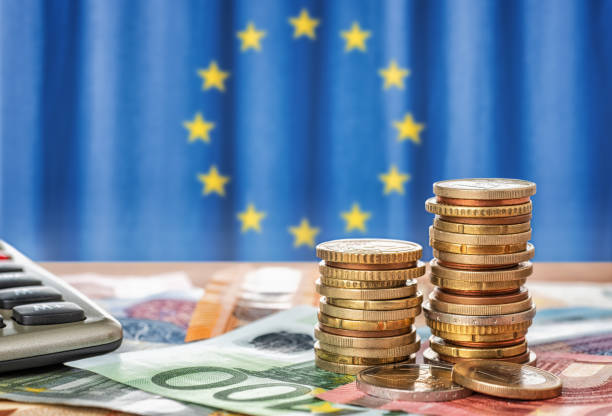
Banknotes and coins in front of the flag of the European Union

Moreover, demographic decline—an aging population combined with low birth rates—reduces the labor supply and raises fiscal burdens on healthcare and pensions. As one European economist quipped, “Europe is growing older faster than it is growing richer.”

3. The Energy Factor

The energy crisis triggered by the Russia-Ukraine conflict has fundamentally altered Europe’s industrial landscape. Despite significant progress in diversifying energy imports, the cost of energy in Europe remains far higher than in the U.S. or China. This erodes the competitiveness of energy-intensive sectors like chemicals, metals, and automotive manufacturing.

While the push toward renewables is commendable, the transition is uneven. Some regions have achieved substantial decarbonization; others remain dependent on imported gas. The European Green Deal aims to create a more resilient, sustainable economy, but in the short term, the green transition also raises production costs and complicates supply chains.

4. The Shadow of Geopolitics

Europe’s economic outlook is also constrained by geopolitical uncertainty. The ongoing war in Ukraine, strained relations with China, and the evolving transatlantic relationship all weigh heavily on trade and investment. As the U.S. pursues industrial policy through the Inflation Reduction Act (IRA), European firms worry about losing competitiveness and capital outflows to more attractive investment environments overseas.

The EU’s response—through initiatives like the European Sovereignty Fund and industrial support for green technologies—remains fragmented. Without greater fiscal coordination, national-level policies risk undermining collective goals.

5. The Social Dimension

Behind macroeconomic statistics lies a growing social unease. Income inequality and cost-of-living crises have fueled political fragmentation, strengthening populist movements across Europe. Governments face increasing pressure to balance fiscal prudence with social protection, while public sentiment grows wary of Brussels’ bureaucratic constraints.

This political tension further complicates decision-making at the EU level. Ambitious reforms—on energy, defense, and fiscal integration—require consensus, but consensus is harder to achieve in a polarized environment.

6. Looking Forward: A Fork in the Road

Europe stands at a crossroads. It can either embrace bold structural reform—investing in innovation, digital transformation, and unified fiscal frameworks—or risk a “lost decade” of stagnation. The potential for a mild rebound in 2025 exists, driven by easing inflation and cautious rate cuts, but without renewed competitiveness, growth will remain fragile.

The continent’s future hinges on whether it can translate its regulatory strength into industrial dynamism. Europe remains a global standard-setter in sustainability and digital ethics, yet it must now learn to combine those values with speed, scale, and risk-taking—the very qualities that have powered other global economies.

Conclusion

The European story today is one of contrasts: technological ambition versus bureaucratic inertia, social cohesion versus political fragmentation, and long-term vision versus short-term pressures. Growth may have stalled, but it is not lost. Europe’s challenge lies not in finding demand but in rediscovering its capacity to adapt—to turn structural constraints into opportunities for reinvention.

Tags: economyEuropefinance
ShareTweetShare

Related Posts

Europe

The Social Foundations of Economic Stability: How France and Germany Are Managing Inequality, Welfare, and the Future of Work

December 2, 2025
Europe

The Energy Transition Challenge: How France and Germany Are Rebuilding Their Economic Power Through Green Transformation

December 2, 2025
Europe

France and Germany in a Shifting Global Economy: How Both Countries Are Rebuilding Their Competitiveness

December 2, 2025
Europe

Germany’s Economy at a Turning Point: Slow Growth, Industrial Pressure, and the Search for a New Future

December 2, 2025
Europe

France’s Economy in a Time of Slow Growth and Social Pressure

December 2, 2025
Europe

The New Monetary Landscape of Europe: How the Eurozone Is Redefining Its Financial Future

November 26, 2025
Load More
Leave Comment
  • Bitcoin on a rollercoaster ride The whole network more than 110,000 people exploded warehouse 2.9 billion yuan evaporation in 24 hours! What’s going on?

    Bitcoin on a rollercoaster ride The whole network more than 110,000 people exploded warehouse 2.9 billion yuan evaporation in 24 hours! What’s going on?

    0 shares
    Share 0 Tweet 0
  • There are always unconvinced want to try! The size of Nvidia’s short position is now comparable to Apple and Tesla combined

    0 shares
    Share 0 Tweet 0
  • The probability is about 75%! Will the G7 fall?

    0 shares
    Share 0 Tweet 0
  • A number of data point to the Japanese government intervention in the currency market after the “5 trillion” still depends on the United States

    0 shares
    Share 0 Tweet 0
  • How far can Tech stocks go to split on Fed expectations?

    0 shares
    Share 0 Tweet 0

Hot

The New Inflation Puzzle: Why Europe and the United States Are Struggling With Different Price Pressures

The New Economic Landscape of Europe and the United States: How 2025 is Reshaping Growth Models

December 3, 2025
The New Inflation Puzzle: Why Europe and the United States Are Struggling With Different Price Pressures

Transatlantic Trade Shifts: How Europe and the United States Are Redefining Economic Partnerships in 2025

December 3, 2025
The New Inflation Puzzle: Why Europe and the United States Are Struggling With Different Price Pressures

The Energy Transition Divide: How Europe and the United States Are Taking Different Paths Toward a Green Economy

December 3, 2025
The New Inflation Puzzle: Why Europe and the United States Are Struggling With Different Price Pressures

The New Workforce Challenge: How Europe and the United States Are Struggling With Talent Shortages and Productivity Slowdowns

December 3, 2025
The New Inflation Puzzle: Why Europe and the United States Are Struggling With Different Price Pressures

The New Inflation Puzzle: Why Europe and the United States Are Struggling With Different Price Pressures

December 3, 2025

The Social Foundations of Economic Stability: How France and Germany Are Managing Inequality, Welfare, and the Future of Work

December 2, 2025

The Energy Transition Challenge: How France and Germany Are Rebuilding Their Economic Power Through Green Transformation

December 2, 2025

France and Germany in a Shifting Global Economy: How Both Countries Are Rebuilding Their Competitiveness

December 2, 2025

Germany’s Economy at a Turning Point: Slow Growth, Industrial Pressure, and the Search for a New Future

December 2, 2025

France’s Economy in a Time of Slow Growth and Social Pressure

December 2, 2025
The New Inflation Puzzle: Why Europe and the United States Are Struggling With Different Price Pressures
Europe and America

The New Economic Landscape of Europe and the United States: How 2025 is Reshaping Growth Models

December 3, 2025
The New Inflation Puzzle: Why Europe and the United States Are Struggling With Different Price Pressures
Europe and America

Transatlantic Trade Shifts: How Europe and the United States Are Redefining Economic Partnerships in 2025

December 3, 2025
The New Inflation Puzzle: Why Europe and the United States Are Struggling With Different Price Pressures
Europe and America

The Energy Transition Divide: How Europe and the United States Are Taking Different Paths Toward a Green Economy

December 3, 2025
The New Inflation Puzzle: Why Europe and the United States Are Struggling With Different Price Pressures
Europe and America

The New Workforce Challenge: How Europe and the United States Are Struggling With Talent Shortages and Productivity Slowdowns

December 3, 2025
wealthtrend

WealthTrend, as the leading financial information service platform in the industry, provides comprehensive, timely and accurate financial information services for investors and financial practitioners by virtue of its deep industry background, clear service purpose and unique characteristics.

Copyright © 2025 Contact: [email protected]

No Result
View All Result
  • Home
  • Top News
  • Global
  • Asia-Pacific
  • Europe
  • viewpoint
  • America
  • Europe and America

Copyright © 2025 Contact: [email protected]

Welcome Back!

Login to your account below

Forgotten Password?

Retrieve your password

Please enter your username or email address to reset your password.

Log In