












wealthtrend
  • Home
  • Top News
  • Global

    The Global Interest Rate Turning Point: How Central Banks Are Changing Their Policies

    The New Shape of Global Trade and Finance: How Supply Chains and Currencies Are Moving

    The Rise of Digital Money:

    Finance in a Time of Geopolitical Tension:

    The New Shape of Work: How Technology Is Changing U.S. Jobs

    The New Forces Driving Global Markets:Technology, Demographics, and the Rise of Emerging Economies

    Global Payments at an Inflection Point: How Infrastructure, Regulation, and Geopolitics Are Rewriting the Future of Money

  • Asia-Pacific
    Japan’s Slow but Steady Recovery: How an Aging Nation Is Searching for New Growth

    Japan and South Korea: Comparative Economic Analysis and Future Prospects

    Japan’s Slow but Steady Recovery: How an Aging Nation Is Searching for New Growth

    South Korea’s Economy in Transition: Challenges, Opportunities, and the Path Ahead

    Japan’s Slow but Steady Recovery: How an Aging Nation Is Searching for New Growth

    South Korea’s Economic Transformation: From Manufacturing to Technology and Services

    Japan’s Slow but Steady Recovery: How an Aging Nation Is Searching for New Growth

    Japan’s Slow but Steady Recovery: How an Aging Nation Is Searching for New Growth

    Japan’s Slow but Steady Recovery: How an Aging Nation Is Searching for New Growth

    The Rise of Asia as the Next Global Financial Center

  • Europe

    The Social Foundations of Economic Stability: How France and Germany Are Managing Inequality, Welfare, and the Future of Work

    The Energy Transition Challenge: How France and Germany Are Rebuilding Their Economic Power Through Green Transformation

    France and Germany in a Shifting Global Economy: How Both Countries Are Rebuilding Their Competitiveness

    Germany’s Economy at a Turning Point: Slow Growth, Industrial Pressure, and the Search for a New Future

    France’s Economy in a Time of Slow Growth and Social Pressure

    The New Monetary Landscape of Europe: How the Eurozone Is Redefining Its Financial Future

  • viewpoint
  • America
  • Europe and America
wealthtrend
  • Home
  • Top News
  • Global

    The Global Interest Rate Turning Point: How Central Banks Are Changing Their Policies

    The New Shape of Global Trade and Finance: How Supply Chains and Currencies Are Moving

    The Rise of Digital Money:

    Finance in a Time of Geopolitical Tension:

    The New Shape of Work: How Technology Is Changing U.S. Jobs

    The New Forces Driving Global Markets:Technology, Demographics, and the Rise of Emerging Economies

    Global Payments at an Inflection Point: How Infrastructure, Regulation, and Geopolitics Are Rewriting the Future of Money

  • Asia-Pacific
    Japan’s Slow but Steady Recovery: How an Aging Nation Is Searching for New Growth

    Japan and South Korea: Comparative Economic Analysis and Future Prospects

    Japan’s Slow but Steady Recovery: How an Aging Nation Is Searching for New Growth

    South Korea’s Economy in Transition: Challenges, Opportunities, and the Path Ahead

    Japan’s Slow but Steady Recovery: How an Aging Nation Is Searching for New Growth

    South Korea’s Economic Transformation: From Manufacturing to Technology and Services

    Japan’s Slow but Steady Recovery: How an Aging Nation Is Searching for New Growth

    Japan’s Slow but Steady Recovery: How an Aging Nation Is Searching for New Growth

    Japan’s Slow but Steady Recovery: How an Aging Nation Is Searching for New Growth

    The Rise of Asia as the Next Global Financial Center

  • Europe

    The Social Foundations of Economic Stability: How France and Germany Are Managing Inequality, Welfare, and the Future of Work

    The Energy Transition Challenge: How France and Germany Are Rebuilding Their Economic Power Through Green Transformation

    France and Germany in a Shifting Global Economy: How Both Countries Are Rebuilding Their Competitiveness

    Germany’s Economy at a Turning Point: Slow Growth, Industrial Pressure, and the Search for a New Future

    France’s Economy in a Time of Slow Growth and Social Pressure

    The New Monetary Landscape of Europe: How the Eurozone Is Redefining Its Financial Future

  • viewpoint
  • America
  • Europe and America
wealthtrend
Home Asia-Pacific

The yen is on the brink again! Foreign exchange arbitrage trade popular intervention ‘efficacy has been difficult to sustain’?

June 5, 2024
in Asia-Pacific, Financial express, Top News, viewpoint
The yen is on the brink again! Foreign exchange arbitrage trade popular intervention ‘efficacy has been difficult to sustain’?

155, 156, 157 – For traders in the foreign exchange market, the all-too-familiar scenario of the yen’s depreciation late last month seems to be playing out again as the yen has steadily lost those round numbers again over the past week and started sliding back towards the 160 mark.

On Thursday, the dollar hit as high as 157.19 against the yen, its highest level in nearly four weeks and not far from a 34-year high of 160.20 hit in April. And this scene undoubtedly also indicates that although the Japanese authorities have twice suspected direct intervention in the yen exchange rate at the end of last month and the beginning of this month, the “efficacy” of these two intervention actions may be so far:

If the yen is to stop falling further any time soon, the Japanese authorities will either have to make another costly intervention, which clearly will not help at all, or find another way.

Of course, in the view of many currency traders, the Japanese authorities are now running out of new options, and even a Bank of Japan rate hike this summer may not save the yen. The paltry expected rise in Japanese interest rates will do little to rescue the beleaguered yen, they say, as long as the carry trade, one of the most lucrative bets in the currency market, remains in high demand.

The carry trade in currency markets is rife

In fact, the yen has been one of the hottest macro assets over the past few years, often sold as a funding currency for the so-called carry trade. The logic of this strategy is simple: Thanks to the Bank of Japan’s longstanding policy of zero or even negative interest rates, one can borrow yen at almost no cost and use those yen to buy dollar assets for a yield of more than 5%. The combination of a weaker yen and a stronger dollar added to the appeal of the carry trade, allowing total returns to rise to 18 per cent last year.
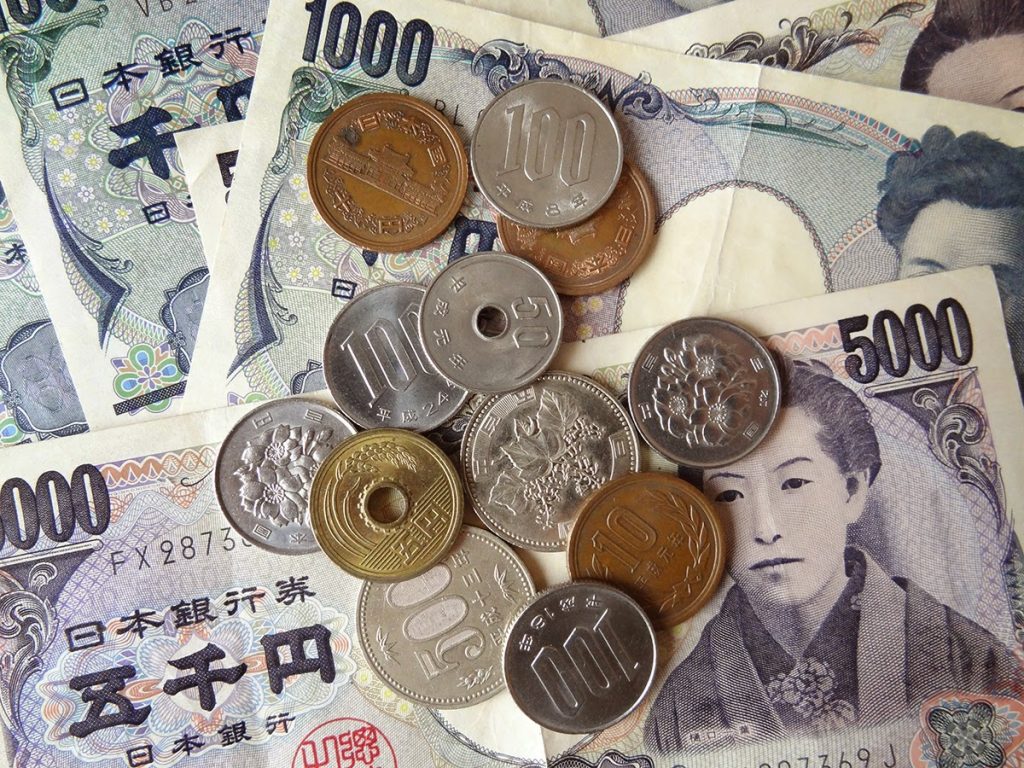
The current appeal of the yen carry trade is best illustrated by a set of intuitive comparisons:

Even though Japan’s 10-year bond yield hit a 12-year high on Friday, breaking through the 1 per cent mark, there is still a huge gap between the spread and the equivalent US bond yield: the 10-year yield was last around 4.64 per cent, or more than 360 basis points.

And that’s just the comparison between long bond yields. If you invest in short-term Treasury bills, the gap is obviously wider. For now, yields on 1-year and all shorter maturities remain above 5%, as the inversion of the entire yield curve remains pronounced.

“People are obsessed with carry trades,” said Antony Foster, head of G10 spot trading at Nomura International in London. Even if the boj does raise rates in June, which we forecast will be a small rate hike and then again later this year, the spread will still be there, so the market will be very reluctant to go long the yen.”

The yen has fallen about 10 per cent against the dollar this year, the biggest drop among G10 currencies. The fall in the value of the yen is due precisely to the mass selling of the currency by investors in favour of higher-yielding currencies. Some market participants have warned that as long as these arbitrage strategies remain popular, the yen risks falling back near the 34-year lows it hit last month.

How do Japanese authorities deal with the yen’s life and death situation?

It is worth noting that the Japanese authorities have recently appeared eager to curb the seemingly excessive pace of depreciation of the yen, which could trigger another tense showdown with the yen bears.

It was Japan that lobbied G7 finance ministers to renew their commitment to guard against excessive volatility in foreign exchange rates in a communique issued after Saturday’s meeting. The G7 statement came after Japan’s top foreign exchange official, Vice Finance Minister Masatsu Kanda, talked up the possibility of renewed intervention on Friday. He told reporters that the Japanese government stood ready to take action “at any time” to deal with excessive volatility in the yen.

“If there is excessive volatility that adversely affects the economy, we need to take action, and it is reasonable to do so,” Mr. Kanda said.
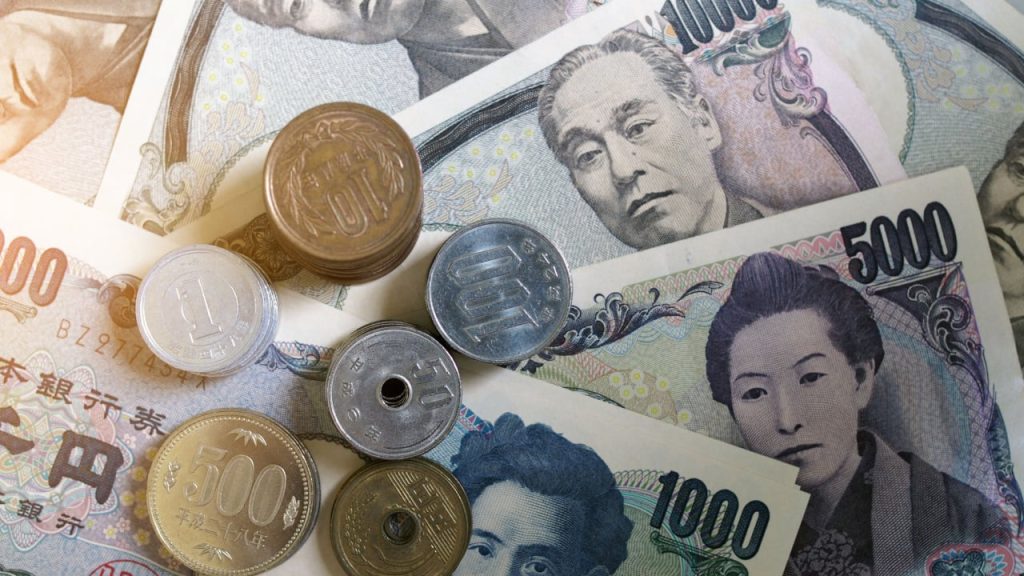
In addition to the potential return to direct intervention, the Bank of Japan has not ruled out further increases in its interest rate decision this summer. Interest rate swap markets are now pricing in a further 27 basis point rise this year, with a 90 per cent chance of a move as early as July.

However, many in the industry also said that any strong “hawkish” signal from the Bank of Japan next month may not be enough to prevent further yen weakness as traders have already factored in a rate rise.

‘Any (hawkish) move by the BOJ may come too late in the current market trend,’ said Mingze Wu, a currency trader at Stonex Financial Pte Ltd. in Singapore. ‘Carry trade demand is favorable for shorting the yen.’ Risks to USDJPY are tilted to the upside, back to pre-BOJ intervention levels.

Some investors are also watching closely to see if Kazuo Ueda, Bank of Japan governor, will try to halt the yen’s slide next month. Since the market does not see a high probability of the BOJ choosing to raise rates as early as June, carry traders will be watching closely to see if the BOJ adjusts its other policy tools.

Jane Foley, head of FX strategy at Rabobank in London, said: “Ueda is likely to choose his words very carefully to avoid appearing dovish compared to market expectations. He and the finance ministry may well hope that more intervention is not needed, but this cannot be guaranteed as long as Japanese data are weak and US data continue to signal recovery.”


Tags: Asia-PacificfinanceFinance and economicsincidentJapan
ShareTweetShare

Related Posts

Japan’s Slow but Steady Recovery: How an Aging Nation Is Searching for New Growth
Asia-Pacific

Japan and South Korea: Comparative Economic Analysis and Future Prospects

December 1, 2025
Japan’s Slow but Steady Recovery: How an Aging Nation Is Searching for New Growth
Asia-Pacific

South Korea’s Economy in Transition: Challenges, Opportunities, and the Path Ahead

December 1, 2025
Japan’s Slow but Steady Recovery: How an Aging Nation Is Searching for New Growth
Asia-Pacific

South Korea’s Economic Transformation: From Manufacturing to Technology and Services

December 1, 2025
Japan’s Slow but Steady Recovery: How an Aging Nation Is Searching for New Growth
Asia-Pacific

December 1, 2025
Japan’s Slow but Steady Recovery: How an Aging Nation Is Searching for New Growth
Asia-Pacific

Japan’s Slow but Steady Recovery: How an Aging Nation Is Searching for New Growth

December 1, 2025
Asia-Pacific

The Rise of Asia as the Next Global Financial Center

November 27, 2025
Load More
Leave Comment
  • Bitcoin on a rollercoaster ride The whole network more than 110,000 people exploded warehouse 2.9 billion yuan evaporation in 24 hours! What’s going on?

    Bitcoin on a rollercoaster ride The whole network more than 110,000 people exploded warehouse 2.9 billion yuan evaporation in 24 hours! What’s going on?

    0 shares
    Share 0 Tweet 0
  • There are always unconvinced want to try! The size of Nvidia’s short position is now comparable to Apple and Tesla combined

    0 shares
    Share 0 Tweet 0
  • The probability is about 75%! Will the G7 fall?

    0 shares
    Share 0 Tweet 0
  • A number of data point to the Japanese government intervention in the currency market after the “5 trillion” still depends on the United States

    0 shares
    Share 0 Tweet 0
  • How far can Tech stocks go to split on Fed expectations?

    0 shares
    Share 0 Tweet 0

Hot

The New Inflation Puzzle: Why Europe and the United States Are Struggling With Different Price Pressures

The New Economic Landscape of Europe and the United States: How 2025 is Reshaping Growth Models

December 3, 2025
The New Inflation Puzzle: Why Europe and the United States Are Struggling With Different Price Pressures

Transatlantic Trade Shifts: How Europe and the United States Are Redefining Economic Partnerships in 2025

December 3, 2025
The New Inflation Puzzle: Why Europe and the United States Are Struggling With Different Price Pressures

The Energy Transition Divide: How Europe and the United States Are Taking Different Paths Toward a Green Economy

December 3, 2025
The New Inflation Puzzle: Why Europe and the United States Are Struggling With Different Price Pressures

The New Workforce Challenge: How Europe and the United States Are Struggling With Talent Shortages and Productivity Slowdowns

December 3, 2025
The New Inflation Puzzle: Why Europe and the United States Are Struggling With Different Price Pressures

The New Inflation Puzzle: Why Europe and the United States Are Struggling With Different Price Pressures

December 3, 2025

The Social Foundations of Economic Stability: How France and Germany Are Managing Inequality, Welfare, and the Future of Work

December 2, 2025

The Energy Transition Challenge: How France and Germany Are Rebuilding Their Economic Power Through Green Transformation

December 2, 2025

France and Germany in a Shifting Global Economy: How Both Countries Are Rebuilding Their Competitiveness

December 2, 2025

Germany’s Economy at a Turning Point: Slow Growth, Industrial Pressure, and the Search for a New Future

December 2, 2025

France’s Economy in a Time of Slow Growth and Social Pressure

December 2, 2025
The New Inflation Puzzle: Why Europe and the United States Are Struggling With Different Price Pressures
Europe and America

The New Economic Landscape of Europe and the United States: How 2025 is Reshaping Growth Models

December 3, 2025
The New Inflation Puzzle: Why Europe and the United States Are Struggling With Different Price Pressures
Europe and America

Transatlantic Trade Shifts: How Europe and the United States Are Redefining Economic Partnerships in 2025

December 3, 2025
The New Inflation Puzzle: Why Europe and the United States Are Struggling With Different Price Pressures
Europe and America

The Energy Transition Divide: How Europe and the United States Are Taking Different Paths Toward a Green Economy

December 3, 2025
The New Inflation Puzzle: Why Europe and the United States Are Struggling With Different Price Pressures
Europe and America

The New Workforce Challenge: How Europe and the United States Are Struggling With Talent Shortages and Productivity Slowdowns

December 3, 2025
wealthtrend

WealthTrend, as the leading financial information service platform in the industry, provides comprehensive, timely and accurate financial information services for investors and financial practitioners by virtue of its deep industry background, clear service purpose and unique characteristics.

Copyright © 2025 Contact: [email protected]

No Result
View All Result
  • Home
  • Top News
  • Global
  • Asia-Pacific
  • Europe
  • viewpoint
  • America
  • Europe and America

Copyright © 2025 Contact: [email protected]

Welcome Back!

Login to your account below

Forgotten Password?

Retrieve your password

Please enter your username or email address to reset your password.

Log In