











wealthtrend
  • Home
  • Top News
  • Global
    Emerging Engines: Why the Next Growth Story May Come from the South

    Emerging Engines: Why the Next Growth Story May Come from the South

    Emerging Engines: Why the Next Growth Story May Come from the South

    The Technology Divide: Innovation, AI, and the New Competitive Frontier

    Emerging Engines: Why the Next Growth Story May Come from the South

    Debt, Deficits, and Disorder: The Politics of Economic Instability

    Emerging Engines: Why the Next Growth Story May Come from the South

    Emerging Engines: Why the Next Growth Story May Come from the South

    Emerging Market Debt Risks Are Rising — Could Developed Economies Feel the Blowback?

    Emerging Market Debt Risks Are Rising — Could Developed Economies Feel the Blowback?

  • Asia-Pacific

    Asia’s Capital Flows 2025: From Safe-Haven to Growth Play

    Asian Bond Markets in Transition: Renminbi, Local Currency, & Global Debt

    Fintech & Digital Finance Asia: How Innovation Is Remaking the Regional Financial Landscape

    Asian Banking and Credit Risk in 2025: Challenges of Debt, Property & Non-Performing Loans

    Regulation, Geopolitics & Asia’s Financial Integration: Navigating the New Order

    Can Rising ROE in Japan and Australia’s Core Corporates Sustain Local Market Rallies?

    Can Rising ROE in Japan and Australia’s Core Corporates Sustain Local Market Rallies?

  • Europe
    The Asian Century in Flux: Financial Centers, Capital Flows, and Geopolitical Risk

    Sluggish Europe: Why Growth Has Stalled and What It Means

    The Asian Century in Flux: Financial Centers, Capital Flows, and Geopolitical Risk

    Inflation and Interest Rates in Europe: The ECB’s Tightrope

    The Asian Century in Flux: Financial Centers, Capital Flows, and Geopolitical Risk

    Trade, Tariffs, and the New Economic Order: Europe’s External Headwinds

    The Asian Century in Flux: Financial Centers, Capital Flows, and Geopolitical Risk

    Europe’s Green Transition: Balancing Sustainability and Competitiveness

    The Asian Century in Flux: Financial Centers, Capital Flows, and Geopolitical Risk

    The Silent Strain: Europe’s Structural Challenges in a Post-Globalization Era

    Recent ECB Officials’ Remarks: How Should Markets Balance Long and Short Positions Going Forward?

    Recent ECB Officials’ Remarks: How Should Markets Balance Long and Short Positions Going Forward?

  • viewpoint
  • America
  • Europe and America
wealthtrend
  • Home
  • Top News
  • Global
    Emerging Engines: Why the Next Growth Story May Come from the South

    Emerging Engines: Why the Next Growth Story May Come from the South

    Emerging Engines: Why the Next Growth Story May Come from the South

    The Technology Divide: Innovation, AI, and the New Competitive Frontier

    Emerging Engines: Why the Next Growth Story May Come from the South

    Debt, Deficits, and Disorder: The Politics of Economic Instability

    Emerging Engines: Why the Next Growth Story May Come from the South

    Emerging Engines: Why the Next Growth Story May Come from the South

    Emerging Market Debt Risks Are Rising — Could Developed Economies Feel the Blowback?

    Emerging Market Debt Risks Are Rising — Could Developed Economies Feel the Blowback?

  • Asia-Pacific

    Asia’s Capital Flows 2025: From Safe-Haven to Growth Play

    Asian Bond Markets in Transition: Renminbi, Local Currency, & Global Debt

    Fintech & Digital Finance Asia: How Innovation Is Remaking the Regional Financial Landscape

    Asian Banking and Credit Risk in 2025: Challenges of Debt, Property & Non-Performing Loans

    Regulation, Geopolitics & Asia’s Financial Integration: Navigating the New Order

    Can Rising ROE in Japan and Australia’s Core Corporates Sustain Local Market Rallies?

    Can Rising ROE in Japan and Australia’s Core Corporates Sustain Local Market Rallies?

  • Europe
    The Asian Century in Flux: Financial Centers, Capital Flows, and Geopolitical Risk

    Sluggish Europe: Why Growth Has Stalled and What It Means

    The Asian Century in Flux: Financial Centers, Capital Flows, and Geopolitical Risk

    Inflation and Interest Rates in Europe: The ECB’s Tightrope

    The Asian Century in Flux: Financial Centers, Capital Flows, and Geopolitical Risk

    Trade, Tariffs, and the New Economic Order: Europe’s External Headwinds

    The Asian Century in Flux: Financial Centers, Capital Flows, and Geopolitical Risk

    Europe’s Green Transition: Balancing Sustainability and Competitiveness

    The Asian Century in Flux: Financial Centers, Capital Flows, and Geopolitical Risk

    The Silent Strain: Europe’s Structural Challenges in a Post-Globalization Era

    Recent ECB Officials’ Remarks: How Should Markets Balance Long and Short Positions Going Forward?

    Recent ECB Officials’ Remarks: How Should Markets Balance Long and Short Positions Going Forward?

  • viewpoint
  • America
  • Europe and America
wealthtrend
Home America

The Electoral Chessboard: How the U.S. Presidential Election Could Influence Federal Reserve’s Interest Rate Decisions

September 7, 2024
in America, viewpoint
The Electoral Chessboard: How the U.S. Presidential Election Could Influence Federal Reserve’s Interest Rate Decisions

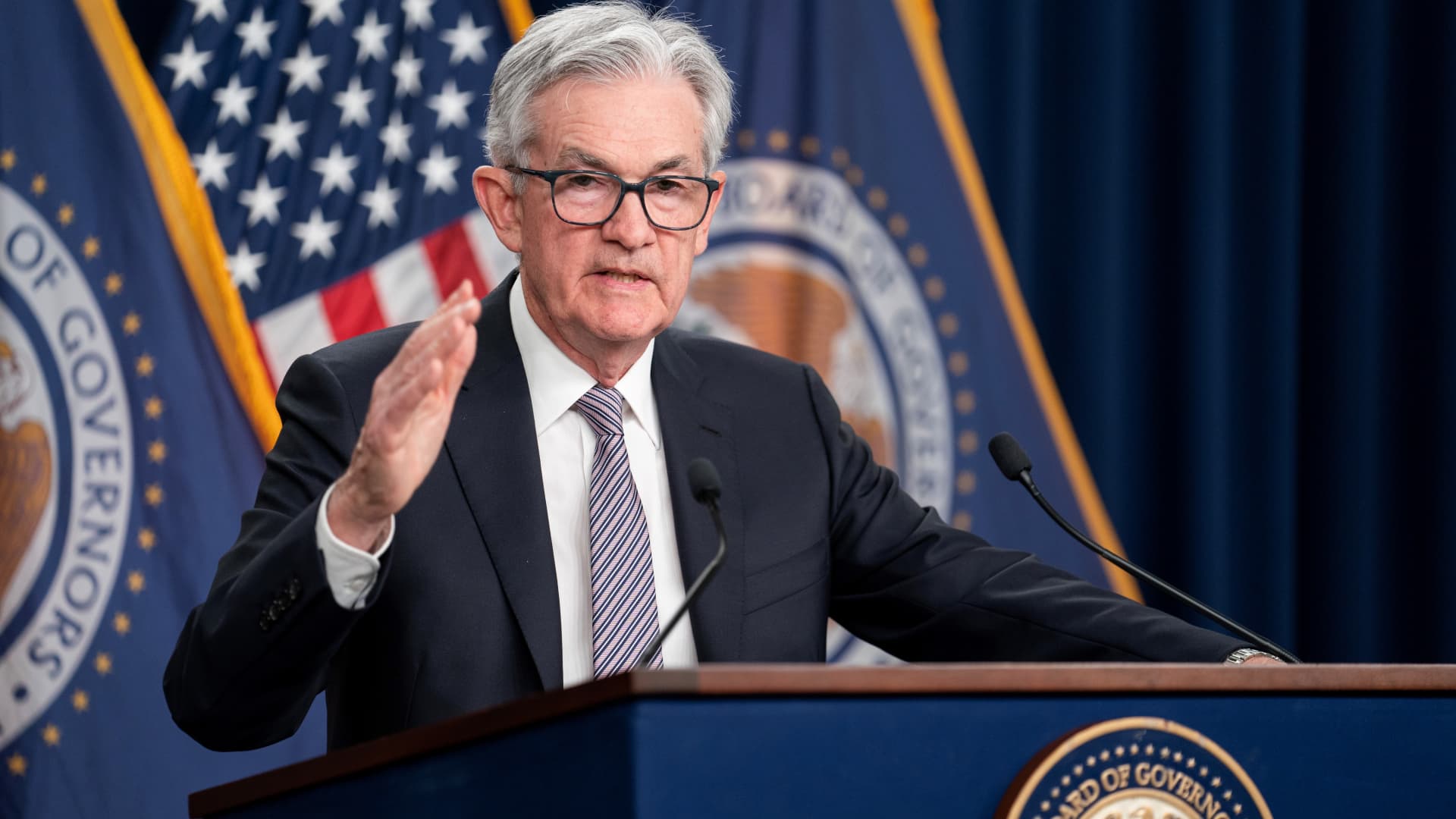
In the intricate dance of economic policy and political maneuvering, the United States’ electoral cycle casts long shadows on the Federal Reserve’s hallowed halls of monetary decision-making. The assassination attempt on former President Trump and the unexpected withdrawal of President Biden from the 2024 race have injected a potent dose of uncertainty into the upcoming U.S. elections. Concurrently, the U.S. economy, long beleaguered by persistent high inflation and interest rates, anticipates a potential easing by the Federal Reserve. Yet, the timing and extent of such monetary relief remain shrouded in mystery. One ponders, then, what unfolds when the Federal Reserve’s path crosses with the U.S. presidential elections?

Presidential Influence on the Federal Reserve’s Decisions

The Federal Reserve has historically hoisted the banner of independence. In theory, to ensure this autonomy, it is institutionally challenging for a U.S. president to directly alter the composition of the Federal Open Market Committee (FOMC), especially those responsible for interest rate decisions.

In practice, however, instances of presidents pressuring the Federal Reserve Chair, prompting adjustments in monetary policy, are not uncommon. Notable conflicts between U.S. presidents and Federal Reserve chairs include those between Nixon and Burns, as well as Reagan and Volcker. Nixon’s tenure was marked by pressures that impacted the Fed’s independence. Upon taking office, Nixon attempted to influence the Fed by reappointing Martin and later appointed Burns as chair, exerting continuous pressure. White House tapes revealed Nixon’s threats of dismissal and power plays, frequent phone calls demanding lax policies, and refusal to nominate Burns’ recommended candidates as governors.

Moreover, presidents can indirectly influence the Fed’s monetary policy decisions by placing allies within the Fed’s framework. Changes in the Fed’s composition typically occur due to term expiration, voluntary resignation, or dismissal for malfeasance. Presently, the terms of Fed members like Kugler, Powell, Barr, and Jefferson are nearing their end, suggesting that the next U.S. president could start placing allies in their second year of office. Voluntary resignations have occurred in the Fed’s history, such as Raskin’s withdrawal in 2014 due to opposition from Senate Republicans and Stein’s resignation to return to academia. Dismissals for malfeasance are more challenging, requiring a cause such as misconduct and a Supreme Court ruling before the president can dismiss a member.

The Fed’s Potential for Deeper Rate Cuts

With the U.S. election less than a hundred days away, Vice President Harris has emerged as the Democratic presidential candidate, setting the stage for a head-to-head battle with Trump for the 2024 presidency. Regardless of the victor, economic issues will remain a key challenge. However, historical tensions between the White House and the Fed often arise during periods of high inflation. Presidents, aiming to fulfill economic recovery promises made during campaigns, advocate for lower interest rates to stimulate the economy, while the Fed, tasked with combating inflation, may need to implement tighter monetary policies.

Post-election, the Fed is likely to delve deeper into interest rate reductions. After a significant round of rate hikes, multiple sectors, including banking, have accumulated risks under high inflation and interest rates. More substantial rate cuts by the Fed could not only facilitate credit prosperity and ease financial conditions but also bolster U.S. economic growth. Additionally, if the new president aims to revitalize domestic manufacturing, reduce trade deficits, and strengthen global competitiveness, a weaker dollar becomes indispensable. The dollar’s trajectory is influenced by the relative economic fundamentals of the U.S. and other economies and is linked to policy interest rate differentials. With the European Central Bank already cutting rates, a strong dollar index is not conducive to the international competitiveness of U.S. goods. Finally, from a fiscal perspective, high-interest rates constrain fiscal maneuverability and increase debt burdens. Hence, faster rate cuts by the Fed would benefit the new president’s ability to increase fiscal spending and stimulate economic growth.

Tags: ElectionsFederal Reserveinflationinterest ratesU.S. Economy
ShareTweetShare

Related Posts

U.S. Investment and Innovation in the Age of Uncertainty
America

The Slow-Motion Shift: Why U.S. Growth Is Grinding Lower

November 14, 2025
U.S. Investment and Innovation in the Age of Uncertainty
America

November 14, 2025
U.S. Investment and Innovation in the Age of Uncertainty
America

Debt, Deficits & Dollars: The U.S. Fiscal Puzzle

November 14, 2025
U.S. Investment and Innovation in the Age of Uncertainty
America

November 14, 2025
U.S. Investment and Innovation in the Age of Uncertainty
America

U.S. Investment and Innovation in the Age of Uncertainty

November 14, 2025
The Asian Century in Flux: Financial Centers, Capital Flows, and Geopolitical Risk
Europe

The Silent Strain: Europe’s Structural Challenges in a Post-Globalization Era

November 12, 2025
Load More
Leave Comment
  • Bitcoin on a rollercoaster ride The whole network more than 110,000 people exploded warehouse 2.9 billion yuan evaporation in 24 hours! What’s going on?

    Bitcoin on a rollercoaster ride The whole network more than 110,000 people exploded warehouse 2.9 billion yuan evaporation in 24 hours! What’s going on?

    0 shares
    Share 0 Tweet 0
  • There are always unconvinced want to try! The size of Nvidia’s short position is now comparable to Apple and Tesla combined

    0 shares
    Share 0 Tweet 0
  • The probability is about 75%! Will the G7 fall?

    0 shares
    Share 0 Tweet 0
  • A number of data point to the Japanese government intervention in the currency market after the “5 trillion” still depends on the United States

    0 shares
    Share 0 Tweet 0
  • How far can Tech stocks go to split on Fed expectations?

    0 shares
    Share 0 Tweet 0

Hot

U.S. Investment and Innovation in the Age of Uncertainty

The Slow-Motion Shift: Why U.S. Growth Is Grinding Lower

November 14, 2025
U.S. Investment and Innovation in the Age of Uncertainty

November 14, 2025
U.S. Investment and Innovation in the Age of Uncertainty

Debt, Deficits & Dollars: The U.S. Fiscal Puzzle

November 14, 2025
U.S. Investment and Innovation in the Age of Uncertainty

November 14, 2025
U.S. Investment and Innovation in the Age of Uncertainty

U.S. Investment and Innovation in the Age of Uncertainty

November 14, 2025

Eurozone at a Crossroads: Inflation, Energy, and Policy Dilemmas

November 13, 2025

The U.S. Labor Market in Flux: Wages, Productivity, and the Post-Pandemic Economy

November 13, 2025
Consumer Behavior and Digital Transformation: How Europeans and Americans Are Spending

Transatlantic Trade and Supply Chains: Resilience, Reconfiguration, and Risk

November 13, 2025
Consumer Behavior and Digital Transformation: How Europeans and Americans Are Spending

Green Finance and the Energy Transition: Opportunities and Challenges in Europe and the U.S.

November 13, 2025

Consumer Behavior and Digital Transformation: How Europeans and Americans Are Spending

November 13, 2025
U.S. Investment and Innovation in the Age of Uncertainty
America

The Slow-Motion Shift: Why U.S. Growth Is Grinding Lower

November 14, 2025
U.S. Investment and Innovation in the Age of Uncertainty
America

November 14, 2025
U.S. Investment and Innovation in the Age of Uncertainty
America

Debt, Deficits & Dollars: The U.S. Fiscal Puzzle

November 14, 2025
U.S. Investment and Innovation in the Age of Uncertainty
America

November 14, 2025
wealthtrend

WealthTrend, as the leading financial information service platform in the industry, provides comprehensive, timely and accurate financial information services for investors and financial practitioners by virtue of its deep industry background, clear service purpose and unique characteristics.

Copyright © 2025 Contact: [email protected]

No Result
View All Result
  • Home
  • Top News
  • Global
  • Asia-Pacific
  • Europe
  • viewpoint
  • America
  • Europe and America

Copyright © 2025 Contact: [email protected]

Welcome Back!

Login to your account below

Forgotten Password?

Retrieve your password

Please enter your username or email address to reset your password.

Log In