












wealthtrend
  • Home
  • Top News
  • Global

    The Global Interest Rate Turning Point: How Central Banks Are Changing Their Policies

    The New Shape of Global Trade and Finance: How Supply Chains and Currencies Are Moving

    The Rise of Digital Money:

    Finance in a Time of Geopolitical Tension:

    The New Shape of Work: How Technology Is Changing U.S. Jobs

    The New Forces Driving Global Markets:Technology, Demographics, and the Rise of Emerging Economies

    Global Payments at an Inflection Point: How Infrastructure, Regulation, and Geopolitics Are Rewriting the Future of Money

  • Asia-Pacific
    Japan’s Slow but Steady Recovery: How an Aging Nation Is Searching for New Growth

    Japan and South Korea: Comparative Economic Analysis and Future Prospects

    Japan’s Slow but Steady Recovery: How an Aging Nation Is Searching for New Growth

    South Korea’s Economy in Transition: Challenges, Opportunities, and the Path Ahead

    Japan’s Slow but Steady Recovery: How an Aging Nation Is Searching for New Growth

    South Korea’s Economic Transformation: From Manufacturing to Technology and Services

    Japan’s Slow but Steady Recovery: How an Aging Nation Is Searching for New Growth

    Japan’s Slow but Steady Recovery: How an Aging Nation Is Searching for New Growth

    Japan’s Slow but Steady Recovery: How an Aging Nation Is Searching for New Growth

    The Rise of Asia as the Next Global Financial Center

  • Europe

    The Social Foundations of Economic Stability: How France and Germany Are Managing Inequality, Welfare, and the Future of Work

    The Energy Transition Challenge: How France and Germany Are Rebuilding Their Economic Power Through Green Transformation

    France and Germany in a Shifting Global Economy: How Both Countries Are Rebuilding Their Competitiveness

    Germany’s Economy at a Turning Point: Slow Growth, Industrial Pressure, and the Search for a New Future

    France’s Economy in a Time of Slow Growth and Social Pressure

    The New Monetary Landscape of Europe: How the Eurozone Is Redefining Its Financial Future

  • viewpoint
  • America
  • Europe and America
wealthtrend
  • Home
  • Top News
  • Global

    The Global Interest Rate Turning Point: How Central Banks Are Changing Their Policies

    The New Shape of Global Trade and Finance: How Supply Chains and Currencies Are Moving

    The Rise of Digital Money:

    Finance in a Time of Geopolitical Tension:

    The New Shape of Work: How Technology Is Changing U.S. Jobs

    The New Forces Driving Global Markets:Technology, Demographics, and the Rise of Emerging Economies

    Global Payments at an Inflection Point: How Infrastructure, Regulation, and Geopolitics Are Rewriting the Future of Money

  • Asia-Pacific
    Japan’s Slow but Steady Recovery: How an Aging Nation Is Searching for New Growth

    Japan and South Korea: Comparative Economic Analysis and Future Prospects

    Japan’s Slow but Steady Recovery: How an Aging Nation Is Searching for New Growth

    South Korea’s Economy in Transition: Challenges, Opportunities, and the Path Ahead

    Japan’s Slow but Steady Recovery: How an Aging Nation Is Searching for New Growth

    South Korea’s Economic Transformation: From Manufacturing to Technology and Services

    Japan’s Slow but Steady Recovery: How an Aging Nation Is Searching for New Growth

    Japan’s Slow but Steady Recovery: How an Aging Nation Is Searching for New Growth

    Japan’s Slow but Steady Recovery: How an Aging Nation Is Searching for New Growth

    The Rise of Asia as the Next Global Financial Center

  • Europe

    The Social Foundations of Economic Stability: How France and Germany Are Managing Inequality, Welfare, and the Future of Work

    The Energy Transition Challenge: How France and Germany Are Rebuilding Their Economic Power Through Green Transformation

    France and Germany in a Shifting Global Economy: How Both Countries Are Rebuilding Their Competitiveness

    Germany’s Economy at a Turning Point: Slow Growth, Industrial Pressure, and the Search for a New Future

    France’s Economy in a Time of Slow Growth and Social Pressure

    The New Monetary Landscape of Europe: How the Eurozone Is Redefining Its Financial Future

  • viewpoint
  • America
  • Europe and America
wealthtrend
Home Financial express

Central Banks and the AI Revolution: Harnessing Opportunities and Navigating Risks

October 9, 2024
in Financial express, viewpoint
Central Banks and the AI Revolution: Harnessing Opportunities and Navigating Risks

The AI Vanguard:

Embracing Innovation in Central Banking
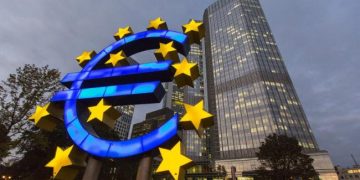
With the relentless march of progress and the rapid advancements in technology, artificial intelligence has made historic strides. AI has infiltrated our homes in various forms, from ChatGPT to Wen Xin Yi Yan, and its formidable computational prowess is widely applied within the financial sector’s market and trading operations, gaining favor with numerous central banks. The Federal Reserve is now researching how to incorporate AI into its operations. This year, the Bank of England stated that it’s leveraging artificial intelligence to bolster its capabilities, including forecasting economic growth, banking distress, and financial crises. The European Central Bank has also begun to accelerate mundane tasks such as drafting briefs, compiling banking data, writing software code, and translating documents with the aid of AI. In fact, AI is not just revolutionizing the global economic and financial landscape but is also bringing about significant impact to the operations of central banks worldwide.

The Regulators’ Dividend:

Central Banks Reaping AI Development Rewards
As regulators in the economic and financial realms, global central banks are the undoubted beneficiaries of AI’s developmental “dividend.” On one hand, AI will influence central banks’ core activities in economic management. Typically tasked with fostering price and financial stability, central banks will find AI impacting the financial system as well as productivity, consumption, investment, and the labor market—factors which inherently affect price and financial stability directly. AI’s widespread adoption could enhance businesses’ abilities to quickly adjust prices in response to macroeconomic shifts, thereby influencing inflation dynamics. Generative AI can drive cost-efficiency and heighten automation in financial tasks, fostering a data-driven transformation in the financial sector and pushing the boundaries of AI applications within the industry. On the other hand, the deployment of AI will have a direct impact on central banking regulation, as financial institutions like commercial banks increasingly turn to AI tools—altering their interactions with and regulation by central banks.

Mission Enhancement:

Central Banks Leveraging AI For Their Charter
Central banks and other regulatory bodies may increasingly utilize AI to fulfill their mandates in areas such as monetary policy, regulation, and financial stability. For instance, AI’s prowess in analyzing vast amounts of real-time data can aid central banks in devising “real-time forecasting” systems for financial risk accumulation or predicting economic downturns.

Anti-money Laundering Advances:

The AI-Powered Fight Against Financial Crimes
The efficacy of AI in tracking money laundering activities is notable. Anti-money laundering projects by several country’s central banks have tested AI’s ability to detect “dark money” in payment data, finding that machine learning models outperform traditional methods. Furthermore, AI can directly enhance cognitive tasks, making regulation by central banks more efficient.

The Coin’s Other Side:

AI Risks for Central Banks
However, “every coin has two sides,” and due to its inherent risks, AI could negatively impact central banks. For instance, AI models could be susceptible to “data poisoning attacks,” making them vulnerable to manipulation by unknown entities. Moreover, the widespread use of AI might lead to biases and discrimination, provoke data privacy issues, and create dependency on a few AI model providers. If numerous financial institutions employ identical algorithms, financial stability could be at risk. This might exacerbate herd behaviors and liquidity hoarding, runs on banks, and fire sales, amplifying procyclicality and market volatility.

Overall Assessment:

AI’s Broad Application—A Double-edged Sword for Central Banks
The rapid and extensive application of AI presents both benefits and challenges to global central banks. In facing these new challenges, whether as informed observers of technological impacts or as users of the technology themselves, central banks need to enhance their capabilities. As observers, central banks must monitor the shock AI imparts on aggregate supply and demand, staying ahead of how AI impacts economic activity. As users, central banks need to accumulate expertise in integrating AI and non-traditional data into their analytical tools. In employing external and internal AI models as well as collecting and sourcing internal data versus purchasing data from external suppliers, central banks must make more prudent trade-offs. Data availability and data governance are key enablers for central banks’ use of AI, both of which rely on international cooperation. Hence, central banks across the globe need to reinforce collaboration and establish a “community of practice” for sharing knowledge, data, and best practices.

Tags: Artificial IntelligenceCentral BanksFinancial StabilityMonetary PolicyRegulatory Challenges
ShareTweetShare

Related Posts

The Asian Century in Flux: Financial Centers, Capital Flows, and Geopolitical Risk
Europe

The Silent Strain: Europe’s Structural Challenges in a Post-Globalization Era

November 12, 2025
The Asian Century in Flux: Financial Centers, Capital Flows, and Geopolitical Risk
viewpoint

The Fragile Order: Rethinking Financial Regulation in a Post-Crisis World

November 11, 2025
The Asian Century in Flux: Financial Centers, Capital Flows, and Geopolitical Risk
viewpoint

The Asian Balance: How Emerging Markets Will Shape Global Finance in 2025

November 11, 2025
The Asian Century in Flux: Financial Centers, Capital Flows, and Geopolitical Risk
viewpoint

November 11, 2025
The Asian Century in Flux: Financial Centers, Capital Flows, and Geopolitical Risk
viewpoint

Ethics of Capital: The Human Cost of Financial Efficiency

November 11, 2025
The Asian Century in Flux: Financial Centers, Capital Flows, and Geopolitical Risk
viewpoint

The Asian Century in Flux: Financial Centers, Capital Flows, and Geopolitical Risk

November 11, 2025
Load More
Leave Comment
  • Bitcoin on a rollercoaster ride The whole network more than 110,000 people exploded warehouse 2.9 billion yuan evaporation in 24 hours! What’s going on?

    Bitcoin on a rollercoaster ride The whole network more than 110,000 people exploded warehouse 2.9 billion yuan evaporation in 24 hours! What’s going on?

    0 shares
    Share 0 Tweet 0
  • There are always unconvinced want to try! The size of Nvidia’s short position is now comparable to Apple and Tesla combined

    0 shares
    Share 0 Tweet 0
  • The probability is about 75%! Will the G7 fall?

    0 shares
    Share 0 Tweet 0
  • A number of data point to the Japanese government intervention in the currency market after the “5 trillion” still depends on the United States

    0 shares
    Share 0 Tweet 0
  • How far can Tech stocks go to split on Fed expectations?

    0 shares
    Share 0 Tweet 0

Hot

The New Inflation Puzzle: Why Europe and the United States Are Struggling With Different Price Pressures

The New Economic Landscape of Europe and the United States: How 2025 is Reshaping Growth Models

December 3, 2025
The New Inflation Puzzle: Why Europe and the United States Are Struggling With Different Price Pressures

Transatlantic Trade Shifts: How Europe and the United States Are Redefining Economic Partnerships in 2025

December 3, 2025
The New Inflation Puzzle: Why Europe and the United States Are Struggling With Different Price Pressures

The Energy Transition Divide: How Europe and the United States Are Taking Different Paths Toward a Green Economy

December 3, 2025
The New Inflation Puzzle: Why Europe and the United States Are Struggling With Different Price Pressures

The New Workforce Challenge: How Europe and the United States Are Struggling With Talent Shortages and Productivity Slowdowns

December 3, 2025
The New Inflation Puzzle: Why Europe and the United States Are Struggling With Different Price Pressures

The New Inflation Puzzle: Why Europe and the United States Are Struggling With Different Price Pressures

December 3, 2025

The Social Foundations of Economic Stability: How France and Germany Are Managing Inequality, Welfare, and the Future of Work

December 2, 2025

The Energy Transition Challenge: How France and Germany Are Rebuilding Their Economic Power Through Green Transformation

December 2, 2025

France and Germany in a Shifting Global Economy: How Both Countries Are Rebuilding Their Competitiveness

December 2, 2025

Germany’s Economy at a Turning Point: Slow Growth, Industrial Pressure, and the Search for a New Future

December 2, 2025

France’s Economy in a Time of Slow Growth and Social Pressure

December 2, 2025
The New Inflation Puzzle: Why Europe and the United States Are Struggling With Different Price Pressures
Europe and America

The New Economic Landscape of Europe and the United States: How 2025 is Reshaping Growth Models

December 3, 2025
The New Inflation Puzzle: Why Europe and the United States Are Struggling With Different Price Pressures
Europe and America

Transatlantic Trade Shifts: How Europe and the United States Are Redefining Economic Partnerships in 2025

December 3, 2025
The New Inflation Puzzle: Why Europe and the United States Are Struggling With Different Price Pressures
Europe and America

The Energy Transition Divide: How Europe and the United States Are Taking Different Paths Toward a Green Economy

December 3, 2025
The New Inflation Puzzle: Why Europe and the United States Are Struggling With Different Price Pressures
Europe and America

The New Workforce Challenge: How Europe and the United States Are Struggling With Talent Shortages and Productivity Slowdowns

December 3, 2025
wealthtrend

WealthTrend, as the leading financial information service platform in the industry, provides comprehensive, timely and accurate financial information services for investors and financial practitioners by virtue of its deep industry background, clear service purpose and unique characteristics.

Copyright © 2025 Contact: [email protected]

No Result
View All Result
  • Home
  • Top News
  • Global
  • Asia-Pacific
  • Europe
  • viewpoint
  • America
  • Europe and America

Copyright © 2025 Contact: [email protected]

Welcome Back!

Login to your account below

Forgotten Password?

Retrieve your password

Please enter your username or email address to reset your password.

Log In